Muslims Tried to Migrate Into Poland, Then Faced Rejection at the Border: Migration Pressure, Border Security, and Europe’sOngoing Debate

For several years, Poland has remained at the center of one of Europe’s most closely watched migration debates. Situated on the European Union’s eastern frontier, the country has experienced repeated attempts by groups of migrants to cross its borders through irregular routes, particularly along the frontier with Belarus. Videos circulating online frequently carry dramatic captions suggesting that large groups of Muslim migrants attempted to enter Poland only to be turned away by border authorities. While such footage often attracts millions of views, each incident requires careful examination because social media posts rarely provide complete context regarding when the videos were recorded, who the migrants were, or the legal circumstances surrounding individual cases.
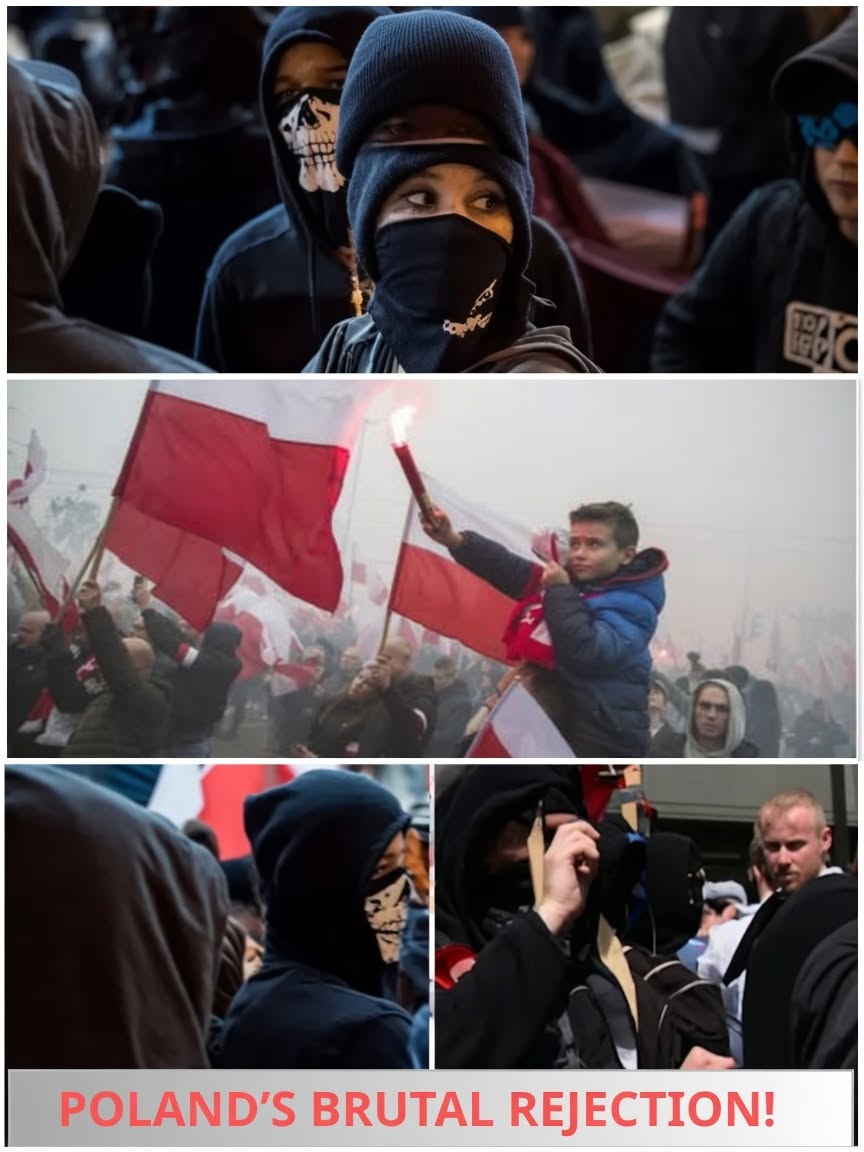
POLAND’S BRUTAL REJECTION!
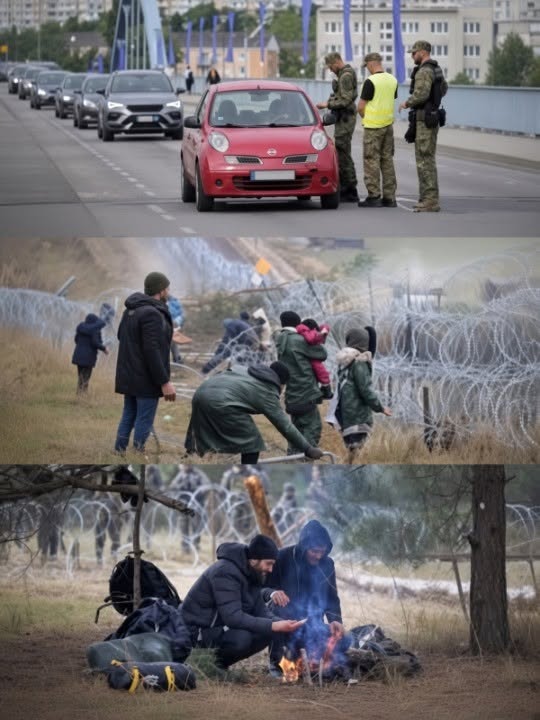
The Poland-Belarus border became a major focus of international attention in 2021 after thousands of migrants from countries including Iraq, Syria, Afghanistan, Yemen, Somalia, and several African nations gathered near crossing points into Poland, Lithuania, and Latvia. European Union officials accused Belarus of facilitating the movement of migrants toward the EU’s external borders in response to sanctions imposed by the bloc. Belarus rejected those accusations, while the humanitarian situation along the border rapidly deteriorated as migrants became stranded between border forces on both sides.
Since then, Polish authorities have maintained a firm policy aimed at preventing unauthorized crossings. Border Guard units, supported by police and the military, regularly patrol the frontier using surveillance cameras, drones, thermal imaging equipment, and physical barriers. The government has argued that these measures are necessary not only to protect Poland’s national security but also to safeguard the European Union’s external border. Officials have consistently stated that unauthorized entry into the country cannot become an accepted pathway into the EU’s Schengen Area.
Numerous videos shared on social media appear to show groups approaching the border fence before being intercepted or prevented from crossing. Some captions characterize these individuals broadly as “Muslim migrants.” However, religion is generally not a factor used by border authorities when enforcing immigration law. Instead, officials focus on whether individuals possess the legal documentation required to enter Poland, whether they are seeking asylum under applicable legal procedures, or whether they are attempting an irregular border crossing outside designated checkpoints.
Many of the migrants attempting to reach Poland originate from predominantly Muslim countries, but that does not necessarily mean every individual shown in online footage is Muslim, nor does it indicate that religion itself is the reason for any refusal of entry. International migration involves people from diverse backgrounds, and immigration enforcement decisions are based primarily on legal status rather than religious affiliation. Care should therefore be exercised when interpreting claims that attribute border outcomes to religion without supporting evidence.
Poland’s government has repeatedly emphasized that its approach distinguishes between legal immigration and irregular migration. Successive administrations have stated that individuals who qualify under established visa programs, work permits, or recognized asylum procedures may enter through lawful channels. At the same time, officials argue that attempts to cross the border illegally undermine immigration systems and create security challenges that require a firm response. This distinction forms the foundation of much of Poland’s migration policy.
Supporters of Poland’s border strategy argue that strict enforcement discourages human smuggling networks and reduces incentives for dangerous irregular migration. They contend that organized trafficking groups often exploit vulnerable migrants by charging significant sums for journeys that may ultimately fail. According to this perspective, consistently enforcing border laws sends a clear signal that unauthorized crossings will not guarantee entry into the European Union. Critics, however, have expressed concern about the humanitarian consequences of strict border enforcement. International organizations, humanitarian groups, and some legal experts have argued that migrants stranded at the frontier may face inadequate access to food, shelter, medical care, and legal assistance. Human rights advocates have also raised questions about the treatment of asylum seekers, emphasizing that international law requires states to assess certain protection claims under established procedures rather than automatically rejecting all arrivals.
The legal framework surrounding asylum is considerably more complex than many online discussions suggest. Under international refugee law, individuals fleeing persecution may have the right to seek protection. At the same time, countries retain the authority to control their borders and determine how asylum claims are processed. Balancing humanitarian obligations with national security responsibilities has become one of the defining policy challenges across Europe over the past decade.
Poland has invested heavily in physical border infrastructure as part of its strategy. The construction of a steel barrier along much of the Belarusian frontier, combined with advanced electronic surveillance systems, reflects the government’s long- term commitment to reducing unauthorized crossings. Officials argue that these investments have significantly lowered successful illegal entries compared with earlier phases of the migration crisis.
Border enforcement has also become closely linked to broader geopolitical tensions. European officials have repeatedly accused Belarus and, by extension, Russia of using migration as a form of political pressure against the European Union. According to these allegations, migrants were encouraged or facilitated in traveling toward EU borders as part of a wider strategy to create instability. Belarus has denied deliberately orchestrating such operations, but the issue remains an important aspect of European security discussions.
The migration debate extends well beyond Poland itself. Several European governments have introduced stricter border controls, expanded deportation policies, or proposed reforms to asylum procedures in response to increasing political pressure from voters concerned about migration. Countries including Germany, Italy, Austria, Denmark, the Netherlands, and others have all engaged in extensive debates over how best to balance humanitarian commitments with border security.
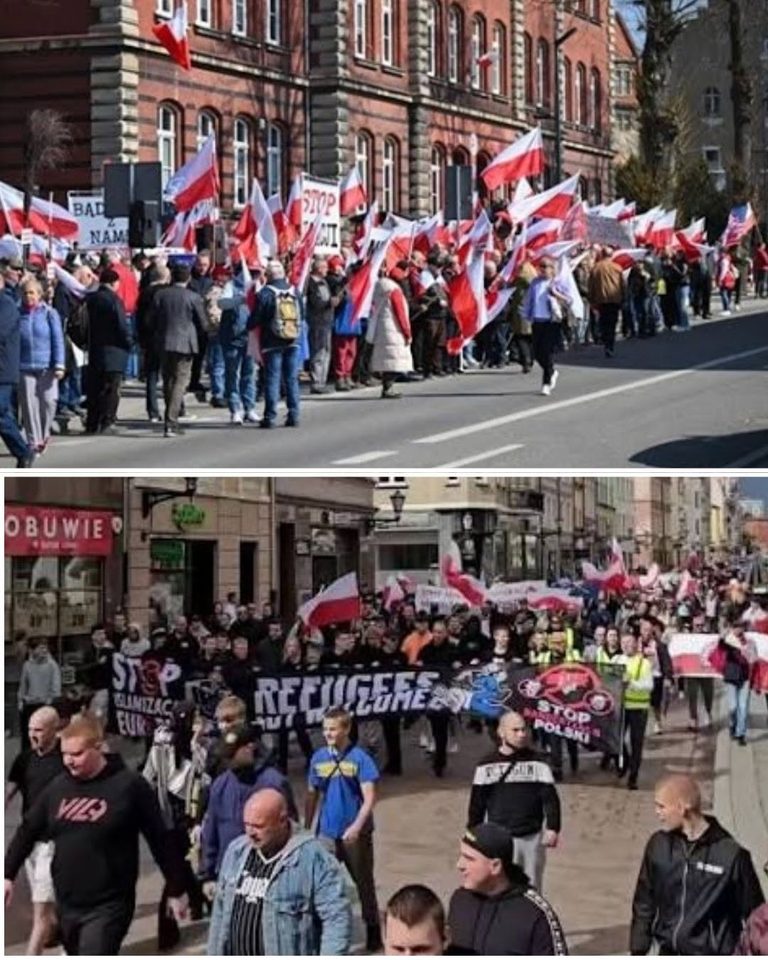
Within Poland, migration policy has become a significant political issue. Supporters of stronger controls argue that maintaining secure borders protects public safety, preserves the integrity of immigration systems, and reinforces national sovereignty. Opponents caution that overly restrictive measures risk undermining international legal obligations and may harm individuals with legitimate protection needs. Public opinion remains divided, reflecting broader debates occurring throughout Europe.
Social media has played a major role in shaping public perceptions of migration. Short video clips often capture only a few seconds of complex situations, leaving viewers without information about what occurred before or after the recording. Captions frequently use highly emotional language, including phrases such as “mass invasion,” “border storming,” or “rejected migrants,” even when official investigations or subsequent reporting provide additional context that may alter initial impressions.
Verification of viral claims has therefore become increasingly important. Independent journalists, fact-checking organizations, and official statements often reveal that some widely shared videos are recycled from earlier incidents, edited without context, or accompanied by misleading descriptions. While many recordings do depict genuine border enforcement operations, the precise circumstances surrounding each event should be confirmed before drawing broader conclusions.
Migration remains one of the European Union’s most contentious policy areas because it intersects with questions of humanitarian responsibility, national identity, labor markets, demographic change, security, and international diplomacy. Governments must weigh competing priorities that do not always align neatly. Measures intended to deter irregular migration may raise humanitarian concerns, while more permissive policies may generate political opposition from segments of the electorate.
Experts generally agree that migration pressures are unlikely to disappear in the near future. Armed conflicts, political instability, economic inequality, climate-related displacement, and demographic trends continue to influence migration flows toward Europe. Addressing these underlying drivers requires international cooperation extending well beyond border enforcement alone, including diplomatic engagement, development assistance, and coordinated asylum policies.
For migrants themselves, unsuccessful border crossings often represent only one stage of a much longer and more difficult journey. Many have traveled thousands of kilometers before reaching Europe’s external borders, frequently relying on smuggling networks and facing dangerous conditions along the way. Those who are denied entry may attempt alternative routes, seek legal pathways where available, return to their countries of origin, or remain stranded in transit locations while awaiting further opportunities.
Poland has repeatedly stated that it will continue strengthening its border management capabilities while cooperating with European partners on external security. Government officials argue that maintaining effective control over the EU’s easter frontier is essential to protecting both Poland and the broader Schengen Area. Future policy discussions are expected to focus on technological surveillance, international cooperation, and reforms to the European Union’s migration framework. Ultimately, headlines claiming that “Muslims tried to mass migrate into Poland and were rejected at the border” simplify a far more complex reality. While there have indeed been numerous documented attempts by migrants from predominantly Muslim countries to enter Poland irregularly, immigration outcomes depend on legal status, border procedures, asylum rules, and national policy rather than religion alone. As Europe continues grappling with migration challenges, informed public discussion benefits from careful attention to verified facts, legal frameworks, and the broader humanitarian and security context surrounding each individual incident.