Rupert Lowe’s Westminster Speech Reignites Debate Over Migration, Public Safety, and the Direction of UK Politics

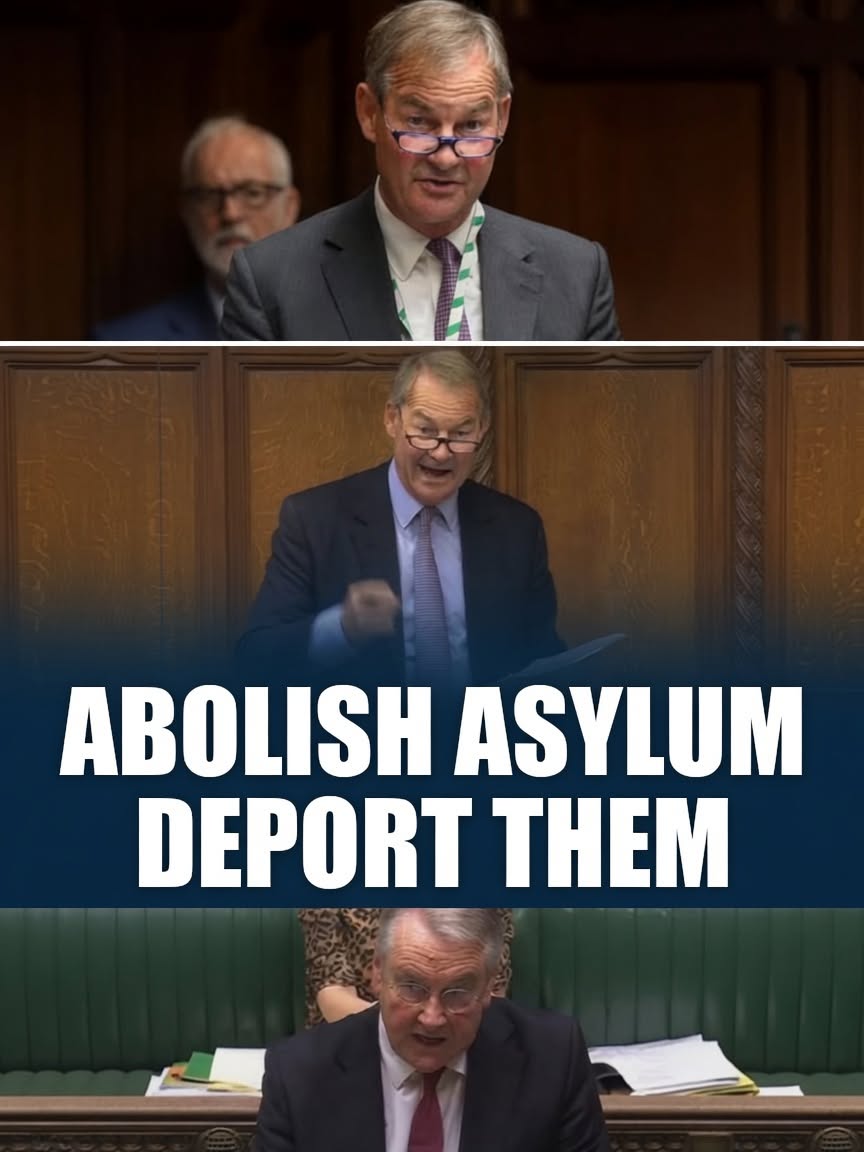
The debate over immigration and public safety has once again moved to the center of British political discussion following a speech delivered in Westminster by Reform UK MP Rupert Lowe. His remarks, which focused on migration policy, border security, and the government’s approach to public safety, rapidly attracted national attention. Supporters described the speech as a candid assessment of issues they believe have not been adequately addressed by successive governments. Critics, meanwhile, argued that the language and framing risked increasing political polarization and further inflaming an already sensitive national conversation.
“ABOLISH ASYLUM DEPORT THEM”
The speech arrived during a period when immigration remains one of the most significant political issues facing the United Kingdom. Questions surrounding legal migration, asylum processing, illegal Channel crossings, integration, housing, healthcare capacity, policing, and economic growth continue to dominate parliamentary discussions as well as public opinion surveys. Against this backdrop, almost every major intervention from senior political figures is closely scrutinized, particularly when it concerns migration policy.
Rupert Lowe has become one of Reform UK’s most recognizable parliamentary voices since entering Westminster. Known for his direct style of communication, he has frequently argued that Britain’s immigration system requires substantial reform. Throughout previous speeches and media appearances, he has maintained that stronger border enforcement and stricter migration controls are necessary to preserve public confidence in government institutions. His latest address continued many of those themes while also placing renewed emphasis on public safety.
According to reports surrounding the speech, Lowe argued that migration policy should be viewed not only through the lens of economics or humanitarian obligations but also as an issue connected to national security, community cohesion, and the effective functioning of public services. He suggested that governments should be willing to discuss these concerns openly, even when doing so generates political controversy. His supporters interpreted these remarks as an appeal for greater transparency and a willingness to confront difficult policy questions.
A significant portion of the discussion centered on the relationship between immigration and public confidence in state institutions. Lowe reportedly argued that citizens expect governments to maintain secure borders while ensuring that immigration systems operate efficiently and fairly. He suggested that when the public perceives immigration controls as ineffective, confidence in broader government institutions may also decline. This argument has appeared repeatedly in wider political debates across Europe as several governments reassess migration policies in response to changing public attitudes.
The issue of illegal migration across the English Channel has remained one of the defining political topics in Britain during recent years. Thousands of people have continued attempting to reach the United Kingdom by crossing one of the world’s busiest shipping lanes in small boats. Governments under different political leaderships have introduced various measures intended to discourage dangerous crossings while speeding up asylum processing and increasing removals where legally possible. However, the effectiveness of these policies continues to be debated by politicians, legal experts, humanitarian organizations, and migration specialists.
Lowe’s speech also appears to have touched upon the broader impact of migration on public services. Like many politicians advocating tighter immigration controls, he argued that rapid population growth can place additional pressure on housing availability, healthcare systems, schools, and local government resources. These concerns have featured prominently in political campaigns across multiple parties, although experts often differ over the extent to which migration alone accounts for pressures on public infrastructure, pointing instead to long-term investment decisions, demographic changes, and broader economic factors.
Supporters of Lowe’s speech praised what they viewed as a willingness to address subjects they believe have been overlooked or avoided by mainstream political leaders. Some argued that discussing migration and public safety openly should not automatically be regarded as controversial, maintaining that democratic societies benefit from robust debate on issues affecting national policy. They suggested that ignoring public concerns could ultimately strengthen political dissatisfaction and reduce trust in established institutions.
Critics, however, offered a different assessment. Some argued that linking migration too closely with public safety risks oversimplifying complex social issues and could contribute to negative perceptions of migrant communities. Others emphasized that the overwhelming majority of migrants follow the law and contribute positively to British society through employment, education, healthcare, business creation, and community engagement. They cautioned that political rhetoric should distinguish between legal migration, asylum seekers, refugees, and individuals involved in criminal activity rather than treating migration as a single issue.
The response from across the political spectrum illustrated how deeply immigration continues to divide British politics. Members of different parties have long disagreed over questions such as how many migrants the country should accept, how asylum claims should be processed, how illegal entry should be addressed, and what role migration should play in supporting the national economy. While there is often broad agreement that borders should be secure and laws should be enforced, significant differences remain regarding how those objectives should be achieved while respecting domestic and international legal obligations.
Britain’s immigration debate has evolved considerably over the past decade. The issue became one of the defining themes during the 2016 Brexit referendum, when control over borders and immigration policy featured prominently in campaign arguments. Since leaving the European Union, successive governments have pledged to establish an immigration system based on domestic priorities rather than EU free movement rules. Nevertheless, migration levels, asylum applications, and irregular Channel crossings have continued to generate political debate despite multiple legislative and administrative reforms.
Public opinion on immigration has remained complex rather than uniform. Surveys have shown that many Britons support legal migration for sectors facing labor shortages, including healthcare, scientific research, and higher education, while simultaneously expressing concerns about illegal immigration and pressures on housing and public services. Others prioritize humanitarian obligations toward refugees fleeing conflict or persecution. These differing priorities help explain why immigration remains one of the most politically sensitive issues in modern British politics.
The parliamentary setting of Lowe’s speech also added to its significance. Speeches delivered in Westminster often receive greater attention because they become part of the official political record and may influence subsequent debates, committee discussions, or media coverage. Parliamentary speeches can also shape broader political narratives, particularly when they coincide with ongoing legislative discussions or periods of heightened public interest in related issues.
Media coverage of the speech reflected the broader divisions within public debate. Different publications emphasized different aspects of Lowe’s remarks, with some focusing on his criticism of current migration policy and others highlighting concerns expressed by opponents regarding the potential social impact of his rhetoric. Such differences in reporting illustrate the broader challenge journalists face when covering politically contentious issues while seeking to provide balanced and accurate information.
Political analysts noted that speeches like Lowe’s often serve multiple purposes beyond immediate parliamentary debate. They can reinforce support among existing voters, attract attention from undecided audiences, influence policy discussions within other parties, and shape future election campaigns. Immigration has consistently ranked among the issues most likely to influence voting behavior, making it a central topic for parties seeking to distinguish themselves from political competitors.
The discussion surrounding public safety also extends beyond immigration itself. Crime prevention, policing resources, counterterrorism measures, neighborhood security, youth violence, and community relations all contribute to wider public perceptions of safety. Experts generally caution against attributing changes in crime rates to any single factor, noting that socioeconomic conditions, policing strategies, education, and local community dynamics all play significant roles in shaping public safety outcomes.
The United Kingdom is not alone in facing these debates. Across Europe, governments have increasingly revisited migration policies in response to changing geopolitical conditions, conflicts abroad, demographic trends, labor shortages, and public concerns regarding border management. Different countries have adopted varying approaches, ranging from stricter border controls to expanded legal migration pathways or revised asylum procedures. Britain’s domestic debate therefore reflects broader international discussions taking place across many democratic societies.
Human rights organizations continue to emphasize that migration policy must operate within established legal frameworks, including obligations under domestic law and international conventions relating to refugees and asylum seekers. These organizations argue that effective border management and humanitarian protections are not mutually exclusive and encourage policymakers to pursue solutions that balance security concerns with legal responsibilities. Others argue that governments possess both the authority and the obligation to strengthen immigration enforcement while continuing to meet international commitments.
Economists likewise remain divided regarding the long-term effects of migration. Some research suggests migration can contribute positively to economic growth, innovation, entrepreneurship, and labor market flexibility, particularly in sectors experiencing workforce shortages. Other analyses highlight challenges associated with rapid population growth, infrastructure demand, housing supply, and regional disparities. As a result, debates frequently focus less on whether migration has benefits or costs and more on the appropriate scale, pace, and management of immigration.
Rupert Lowe’s Westminster speech therefore represents more than a single parliamentary intervention. It reflects continuing disagreements over how Britain should balance economic needs, humanitarian responsibilities, border security, public confidence, and social cohesion. While supporters view his remarks as an overdue call for stronger action, opponents argue that the debate requires careful language and evidence-based policymaking to avoid increasing social divisions.
Ultimately, the controversy surrounding the speech demonstrates that immigration remains one of the defining issues in British public life. Whether future policy shifts emerge from Parliament, government proposals, or broader public discussion, the questions raised by Lowe’s remarks are unlikely to disappear soon. Instead, they are expected to remain central to political debate as lawmakers, experts, and citizens continue discussing how the United Kingdom should manage migration, maintain public safety, uphold the rule of law, and address the diverse expectations of a modem democratic society.