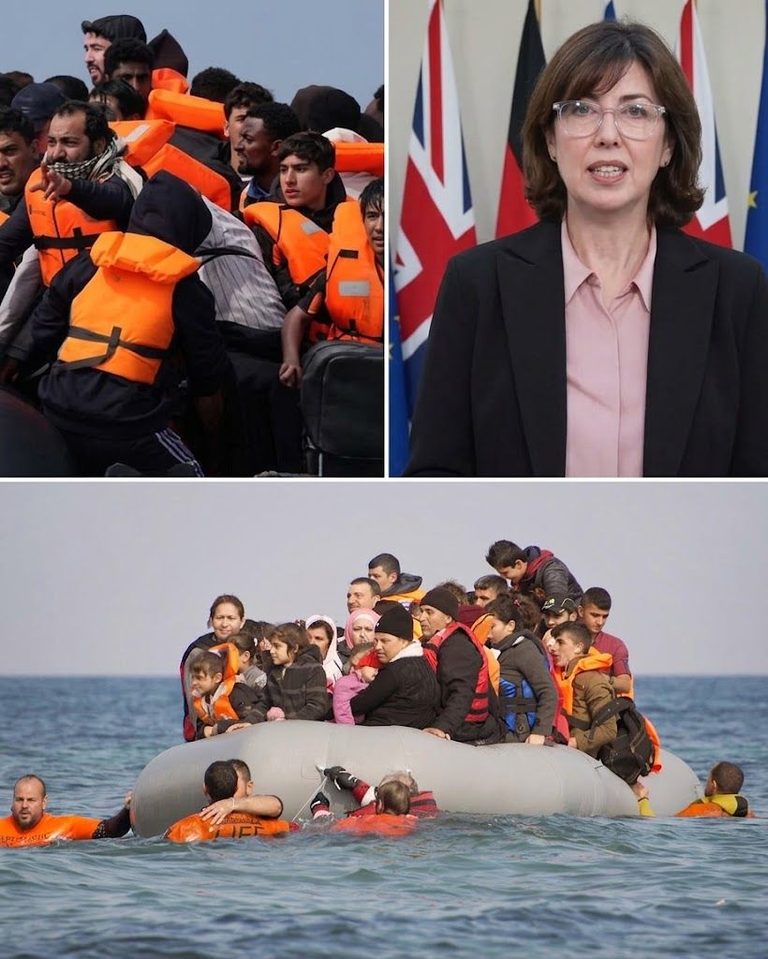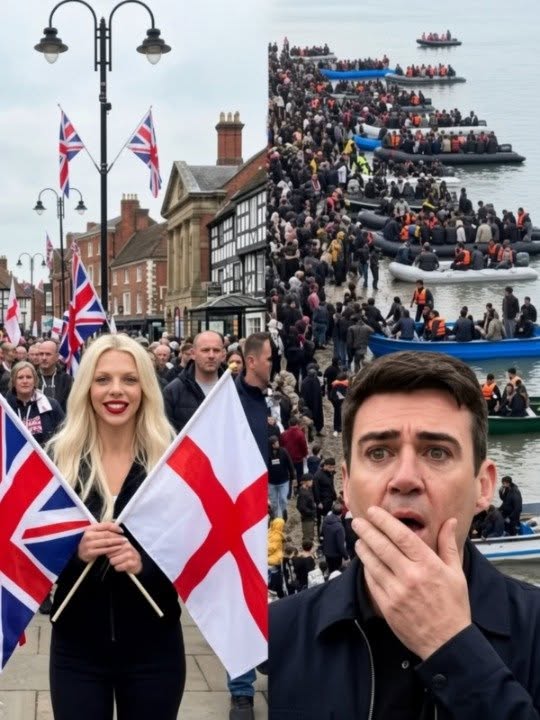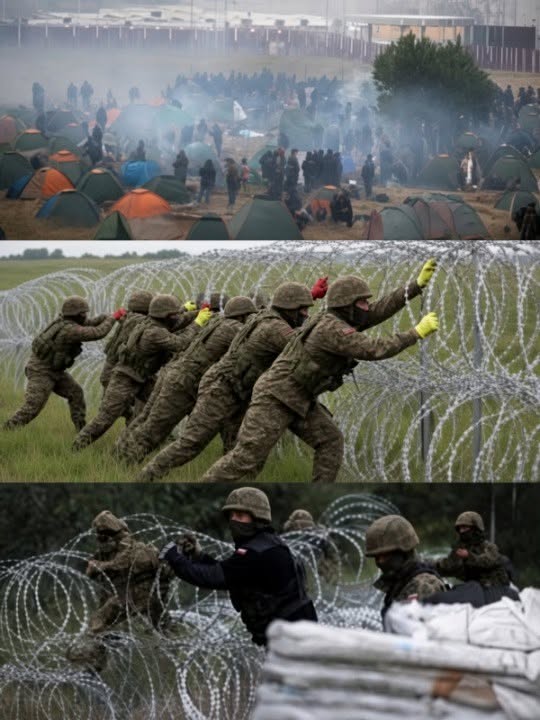

BORDER WARFARE: MASKED BRITISH VIGILANTES LAUNCH BRUTAL ON-CAMERA ATTACK ON MIGRANT DINGHIES!
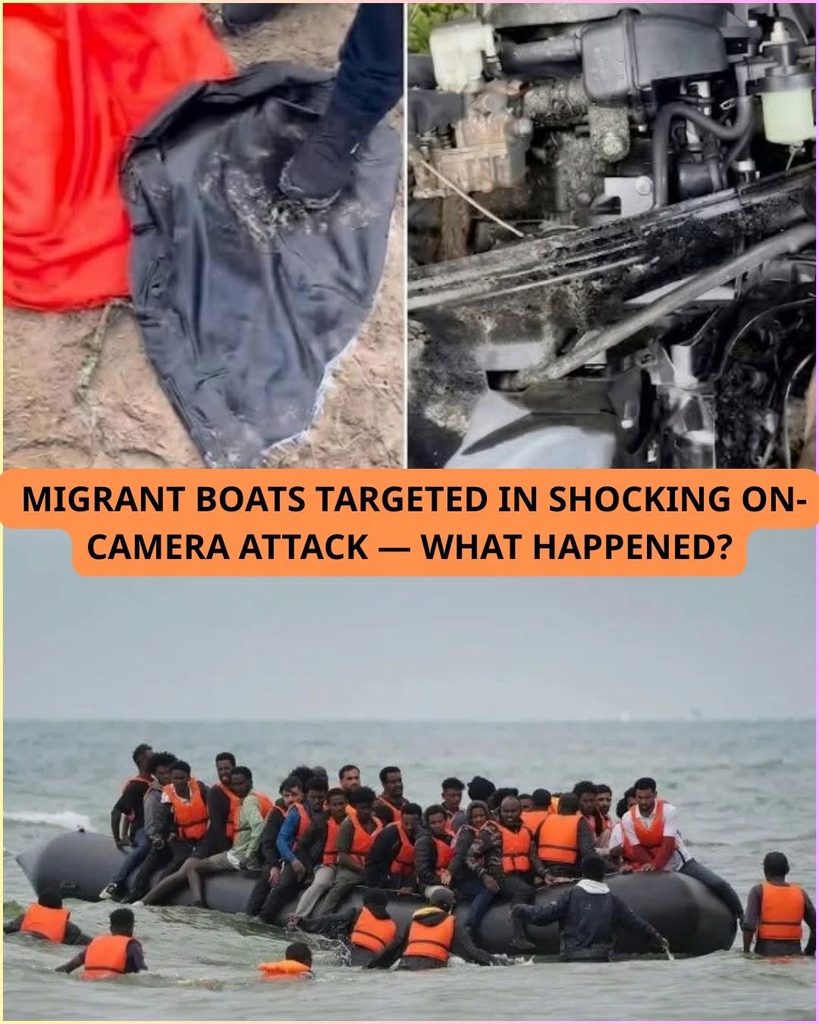
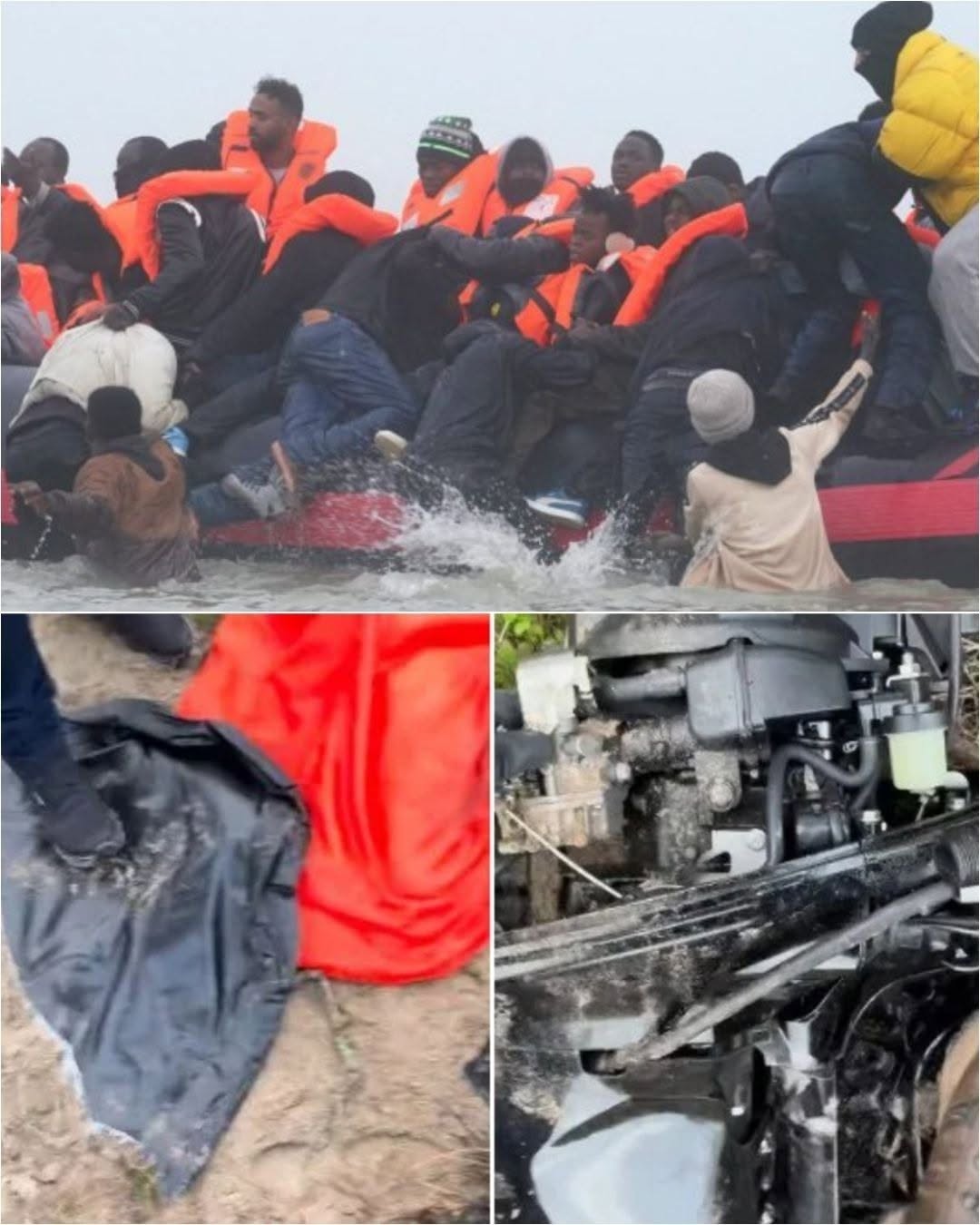
Masked Group Allegedly Targets Migrant Dinghies as Disturbing Footage Fuels Border Security Debate
Disturbing footage purportedly showing masked individuals attacking or attempting to sabotage dinghies associated with migrant crossings has ignited a fierce debate over vigilantism, border security and the increasingly volatile politics surrounding irregular migration to Britain.
The video, described in widely circulating social-media posts as showing “British vigilantes” targeting migrant boats, has been presented by some commentators as evidence that frustration over Channel crossings is escalating into direct action.
But significant questions remain unanswered.
Based on the information accompanying the footage, it is not yet possible to independently establish exactly where or when the incident occurred, who the masked individuals were, who owned the boats, or whether migrants were aboard or nearby when the alleged attack took place.
There is also insufficient evidence in the material provided to establish the attackers’ nationality, organizational affiliation or precise motive.
Those uncertainties matter.
Calling the incident “border warfare” may capture the intensity of online reaction, but it risks transforming an unclear episode into evidence of an organized conflict before investigators have established the facts.
What the footage does demonstrate, however, is how combustible the debate over Britain’s borders has become.
From Political Anger to Direct Action?
For years, small-boat crossings have occupied a central place in British politics.
Governments have promised tougher enforcement, closer cooperation with France, faster asylum decisions and stronger action against people-smuggling organizations. Opposition parties and campaign groups have proposed their own solutions, ranging from new returns agreements to sweeping changes in immigration and human-rights law.
But there is a fundamental difference between demanding tougher government policy and individuals taking enforcement into their own hands.
If masked civilians deliberately damaged boats in an attempt to prevent migrant crossings, that would raise serious legal and safety questions.
The fact that a vessel might eventually be used for an unlawful journey does not automatically give private individuals the right to destroy it.
And if people were aboard, preparing to board or dependent on the vessel for safety, interference could create potentially grave consequences.
That distinction is central to the controversy.
Opposition to irregular migration is a political position.
Vigilante violence is an entirely different matter.
What Does the Video Actually Prove?
Video can provide powerful evidence, but it rarely explains everything by itself.
A short recording may establish that certain actions occurred. It may show people damaging an object or confronting another group.
But it does not automatically establish identities, motivations or events immediately before and after the clip.
That is why claims surrounding the footage require independent verification.
Investigators would need to determine the location and date, identify those involved and establish whether the boats were connected to migrant smuggling as claimed.
They would also need to examine whether criminal offences occurred.
Until that work has been completed, describing the masked individuals as an organized British extremist group would go beyond the evidence currently available.
The same caution applies to claims that the incident was specifically designed to “sabotage illegal sea crossings.”
That may be the interpretation promoted by those sharing the video, but motive must be established rather than assumed.
The Danger of Sabotaging Boats
If the vessels were indeed intended for Channel crossings, the alleged actions raise another uncomfortable issue.
Small migrant boats are already extraordinarily dangerous.
Many are overcrowded and poorly suited to crossing one of the world’s busiest shipping routes. Engine failures, damaged tubes, bad weather and panic aboard can quickly create life-threatening emergencies.
Sabotaging a boat can therefore have consequences far beyond damage to property.
If defects are not discovered before departure, people could potentially take a compromised vessel to sea.
That is one reason enforcement against smuggling networks is normally conducted by trained police, border authorities and other official agencies.
Authorities can seize equipment, gather evidence, make arrests and disrupt criminal organizations through established legal processes.
A masked group acting independently has none of those safeguards.
Anger Over the Channel Has Been Building
The incident has attracted attention partly because it comes against a background of intense frustration over Britain’s inability to eliminate small-boat crossings.
For some voters, the boats have become a symbol of a border system they believe has lost credibility.
Each arrival can generate renewed questions about enforcement, asylum processing and the UK’s relationship with France.
Those concerns are politically significant and should not simply be dismissed.
Governments have a responsibility to enforce immigration laws and maintain public confidence in the border system.
But frustration with government performance does not transfer enforcement powers to private citizens.
If people conclude that authorities are failing and therefore decide to enforce their own interpretation of border law, the result risks being disorder rather than stronger borders.
Migrants and Smugglers Are Not the Same
Another important distinction concerns the people inside the boats.
People-smuggling networks profit from organizing dangerous journeys and are legitimate targets for criminal investigation.
Migrants are not automatically members of those organizations.
People attempting to reach Britain may have very different circumstances. Some may eventually qualify for protection; others may have asylum applications rejected. Those decisions belong to the legal process.
Reducing everyone involved to a single category can make dangerous actions easier to justify rhetorically.
That is particularly concerning when people are at sea.
Whatever a person’s immigration status, maritime rescue principles require preservation of life when someone is in danger.
Border enforcement and humanitarian obligations therefore operate simultaneously rather than being mutually exclusive.
Could Vigilantism Make Enforcement Harder?
There is also a practical argument against private intervention.
If civilians interfere with suspected smuggling operations, they could disrupt official investigations, destroy evidence or unintentionally place migrants and police officers in greater danger.
Organized smuggling networks are criminal enterprises.
Investigating them can involve surveillance, intelligence sharing, financial investigations and cooperation between authorities in several countries.
Damaging one dinghy may create a dramatic video.
It does not necessarily dismantle the organization that purchased it.
Smugglers may simply obtain another vessel, change location or alter their methods.
Effective enforcement requires targeting the business model behind the crossings, including organizers, supply chains, money flows and logistical networks.
International Consequences
The alleged incident could also become politically sensitive depending on where it occurred.
If the boats were located in France or another country rather than Britain, questions of jurisdiction become particularly important.
British citizens cannot simply travel abroad and independently enforce UK immigration policy.
Any confirmed involvement by organized British activists in violent activity on foreign territory could create legal and diplomatic complications.
That is another reason the location of the footage needs to be established before broader conclusions are drawn.
A Warning Sign for Britain’s Migration Debate
Perhaps the greatest significance of the video is what it reveals about the atmosphere surrounding immigration.
Political disagreement is normal in a democracy.
People can campaign for lower migration, tougher borders, more generous asylum policies or almost any position between those extremes.
They can protest, vote, petition politicians and challenge government decisions through the courts.
The boundary becomes clearer when political frustration turns into intimidation, destruction or violence.
If the footage is authenticated and investigators establish that masked individuals deliberately attacked migrant vessels as an act of private border enforcement, the episode would represent a troubling escalation.
It would not prove that Britain is experiencing “border warfare,” nor would it justify assigning responsibility to a broader political movement without evidence.
But it would raise a serious question about what happens when citizens cease believing that institutions can enforce the law effectively.
The answer cannot be to normalize masked groups deciding which laws they will personally enforce.
Britain’s government remains responsible for controlling its borders. Police and international partners remain responsible for confronting smuggling networks. Courts remain responsible for determining criminal liability.
The frustration surrounding Channel migration may be genuine.
But if individuals replace lawful enforcement with vigilantism, the result is unlikely to be greater control.
It risks creating another form of lawlessness altogether.