“Two-Tier Policing” or a Public-Order Crackdown? Britain’s Anti-Migration Protests Ignite a Fierce Debate Over Police Powers, Free Speech and the Asylum System
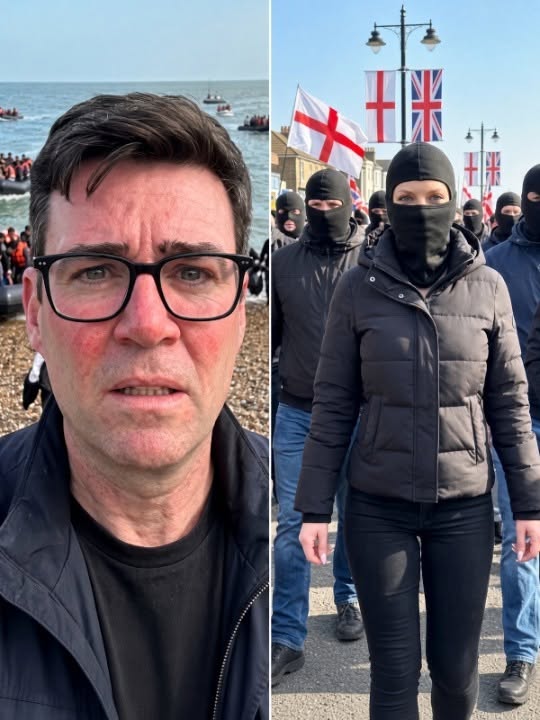
A new confrontation over immigration, protest rights and policing has erupted in Britain after disorder at demonstrations in Portsmouth and Dover prompted Home Secretary Shabana Mahmood to demand a tougher response from police. Critics accuse the government of applying different standards to different political movements, while ministers and police insist the issue is not what protesters believe but whether demonstrations cross the line into intimidation, obstruction or violence. Behind the rhetoric lies an equally serious problem: Britain has substantially reduced its backlog of initial asylum decisions, but tens of thousands of appeals are now waiting in the courts.
The scenes in Portsmouth have become the latest flashpoint in Britain’s increasingly bitter immigration debate. Hundreds of demonstrators gathered after asylum seekers arrived on England’s south coast, some wearing black clothing and balaclavas, while police formed lines around buses transporting the new arrivals away for processing. Roads were blocked. Officers were confronted. Police later said officers had been injured and property damaged during disorder surrounding the protest.
The government responded with unusually strong language.
Officials condemned what they called “intimidating and thuggish behaviour,” while stressing that peaceful protest remained a fundamental democratic right. Home Secretary Shabana Mahmood subsequently met senior police officers and made clear that she expected forces to use the powers available to them against people involved in intimidation, disorder and criminality at future demonstrations. (ITVX)
To supporters of that response, this is straightforward law enforcement. People are entitled to oppose immigration policy, demonstrate against asylum accommodation or demand stronger borders, but they are not entitled to assault police officers, block roads indefinitely or intimidate other people.
To critics, however, the government’s intervention has become evidence for a much broader allegation — that Britain now operates what they describe as “two-tier policing.”
Their argument is that anti-migration protesters are treated more aggressively than participants in causes favoured by the political and cultural establishment. Comparisons have been drawn with Black Lives Matter demonstrations, environmental activism and pro-Palestinian protests. Critics argue that ministers use the language of “peaceful protest” selectively, condemning right-wing demonstrations as dangerous while appearing more tolerant when disruption comes from the political left.
The police reject that characterisation.
And the events themselves are more complicated than either side’s slogans suggest.
What Actually Happened in Portsmouth?
The latest controversy followed the arrival of a small boat carrying asylum seekers in Portsmouth rather than the more familiar landing areas around Kent.
Hundreds of demonstrators gathered in the city, with some attempting to prevent the asylum seekers from being transported away for processing.
Footage showed groups of protesters confronting police officers equipped with shields. A number of demonstrators wore black clothing and face coverings.
A government spokesperson said:
“The right to peaceful protest is fundamental to our democracy, but it must never cross a line into disorder.”
That statement followed what authorities described as intimidating and disruptive behaviour. (ITVX)
Police subsequently said batons and incapacitant spray had been used during confrontations. Officers were injured during the disorder, according to authorities. (The Guardian)
By September 13, Hampshire and Isle of Wight Constabulary was investigating violent disorder involving around 200 anti-immigration activists. Seven officers had been injured and Coastguard and Border Force property had been damaged, according to police. One man was charged with violent disorder and assaulting a police officer, while investigators released images of additional people they wanted to identify. (The Guardian)
These details matter because there is a considerable difference between expressing opposition to immigration and physically obstructing police or damaging property.
Opposition to migration is lawful.
Criticising government immigration policy is lawful.
Carrying a Union Jack is lawful.
Peacefully demonstrating outside an asylum hotel is lawful.
But violence, assault and certain forms of obstruction are not protected merely because they take place during a protest.
The difficult question is whether those rules are enforced consistently.
Why “Two-Tier Policing” Has Become Such a Powerful Political Phrase
The concept of “two-tier policing” has moved rapidly from social-media commentary into mainstream British political debate.
The accusation usually takes one of two forms.
The first is that police respond differently depending on protesters’ political ideology.
The second is that people expressing anti-immigration views face harsher treatment from police and courts than individuals involved in demonstrations associated with left-wing causes.
Those allegations intensified after the riots and disturbances of previous years and have resurfaced following almost every major protest-related arrest.
Yet proving systematic political discrimination is much harder than identifying individual examples that appear inconsistent.
Protests vary dramatically in scale, location, tactics and risk.
A march involving tens of thousands of people walking along an agreed route presents different policing problems from several hundred masked people suddenly blocking a port.
A protest occupying a road may produce arrests under public-order laws.
A static demonstration that remains peaceful may not.
The presence of political slogans alone does not explain police tactics.
Nevertheless, public confidence depends on the appearance as well as the reality of impartiality.
If people repeatedly perceive that one movement is tolerated while another is aggressively policed, distrust grows even if operational explanations exist.
That is why the “two-tier” debate is politically dangerous for both the government and police.
Interestingly, Critics From the Left Are Making a Similar Argument
One complication often overlooked in partisan discussion is that accusations of unequal policing do not come exclusively from the right.
Some left-wing commentators have argued almost the reverse: that police have been too tolerant of masked anti-migration groups while taking aggressive action against environmental, anti-war or pro-Palestinian demonstrators.
A Guardian analysis following the Portsmouth and Dover incidents questioned why anti-immigration activists were initially able to cause significant disruption without widespread immediate arrests, contrasting the response with large arrest operations at other protests. (The Guardian)
Another recent analysis argued that authorities had underestimated organised far-right mobilisation around Dover. (The Guardian)
This produces a revealing contradiction.
Some conservative critics argue police are excessively harsh toward anti-migration protesters.
Some progressive critics argue police are excessively lenient toward them.
Both sides believe policing is politically biased — but in opposite directions.
That alone does not prove that policing is impartial.
It does, however, demonstrate why isolated examples cannot easily establish systematic political discrimination.
The Government Is Explicitly Demanding Stronger Policing
What is beyond dispute is that the Home Secretary has now demanded a more proactive approach.
Mahmood met police chiefs on September 10 and called for lessons to be learned from Dover and Portsmouth.
According to the Home Office, she wanted reassurance that forces could move rapidly against groups seeking to intimidate communities.
She highlighted masked protesters dressed in black and argued that this created what she described as a “fear factor.” (ITVX)
The government has also called for improved intelligence gathering before demonstrations.
That followed criticism that police had failed to anticipate the scale and tactics of groups mobilising around Dover and Portsmouth. (The Guardian)
Senior police officials subsequently said officers were ready to use their powers where criminality occurred.
That certainly represents a tougher posture.
But whether it constitutes political discrimination depends on what those powers are used against.
If they are deployed because someone opposes immigration, that would raise serious democratic concerns.
If they are deployed because people assault officers, hide their identities while committing offences, obstruct roads unlawfully or damage property, the legal justification is different.
New Rules on Masks Have Become Central to the Debate
One particularly controversial issue is the use of face coverings.
Many protesters involved in the recent demonstrations wore balaclavas.
Under powers being used in Portsmouth, police can prohibit face coverings intended to conceal identity during protest activity.
Hampshire Police announced that Section 158 of the Crime and Policing Act 2025 would be used during the September 12 demonstration.
Police also imposed a Section 60AA order allowing officers to require people to remove masks.
The force explicitly said the measures would apply to all groups at the demonstration and would be enforced “equally and impartially.” (hampshire.police.uk)
Police argued the measure was necessary because masks can make it significantly harder to identify individuals responsible for violence or intimidation.
Critics respond that face coverings themselves do not make someone violent and that some protesters may conceal their identities because they fear losing jobs or becoming targets online.
Both arguments have some force.
Anonymous political participation has a long history.
But anonymity during physical disorder also creates obvious enforcement difficulties.
The Following Weekend Looked Different
The government’s tougher approach was tested almost immediately.
Another anti-immigration protest was held in Portsmouth on September 12.
This time, police used the new face-covering powers and made several arrests.
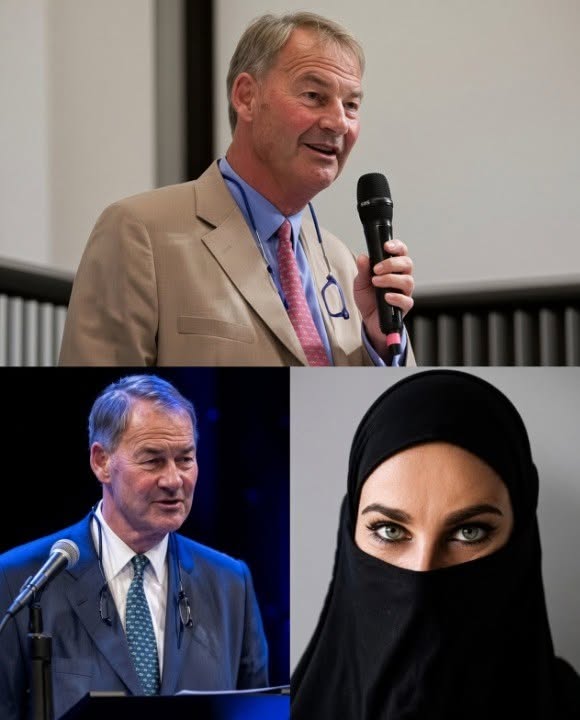
The Times reported that a 76-year-old man was charged after allegedly concealing his identity while wearing a burkha during the protest. Other arrests related to obstruction, attempted criminal damage and violent disorder. (The Times)
Yet police officials described much of the demonstration as peaceful.
That distinction is important.
The ability of police to allow a protest to proceed while targeting specific suspected offences would support their argument that they are policing behaviour rather than political beliefs.
Future demonstrations will provide further tests.
What About the Claim That “500 Brits” Could Suddenly Be Arrested?
Some commentary surrounding the protests has suggested that authorities are preparing hundreds of prison cells for people who criticise immigration online or attend demonstrations.
Such claims should be treated cautiously unless supported by specific police or government announcements.
Police have said they intend to identify and arrest individuals suspected of committing offences during recent disorder.
They have also warned that people making criminal threats online could face investigation.
That is not equivalent to saying hundreds of people will be imprisoned simply because they oppose immigration.
British law protects political expression, including highly critical views about migration and government policy.
The legal boundary usually arises when speech becomes threatening, incites violence, constitutes racial hatred under specific statutory tests or falls into another criminal category.
Exactly where that line should be drawn remains controversial.
The Lucy Connolly Case Remains Central to the Argument
Few cases are mentioned more often in debates about speech and policing than that of Lucy Connolly.
Connolly became a symbol for critics of Britain’s public-order laws after being prosecuted over a social-media post following the Southport killings.
Her case has been repeatedly invoked by those arguing that ordinary citizens can receive serious criminal punishment for inflammatory online speech while people involved in other forms of disorder appear to receive more sympathetic treatment.
But the case is sometimes simplified inaccurately.
Connolly was not imprisoned simply because she criticised immigration.
Her prosecution related to a post that prosecutors said encouraged serious violence against asylum hotels and the people inside them.
The central legal question therefore concerned incitement, not merely political opinion.
Critics are still entitled to question whether the sentence was proportionate.
They can also compare it with sentences imposed in other public-order cases.
But describing the matter as someone being jailed simply “for a tweet” removes the most important part of the prosecution’s case: what the tweet allegedly urged people to do.
That distinction is essential when discussing free speech.
Offensive Speech and Incitement Are Not Legally Identical
Free-expression disputes often become confused because several different categories are treated as though they were the same.
A person can say:
“I want immigration stopped.”
That is political speech.
A person can say:
“The government’s asylum policy is destroying the country.”
That is political speech.
Someone can express anger, use harsh language or advocate deportation policies.
Those views may be controversial, but controversy alone is not generally a criminal offence.
The situation changes when speech explicitly encourages violence, identifies targets or attempts to mobilise criminal acts.
British law has historically placed more restrictions on such speech than the First Amendment does in the United States.
Whether the UK has gone too far is a legitimate political debate.
But any serious comparison between cases should distinguish between opinion and incitement.
Britain’s Asylum Backlog: The “90,000 Cases” Claim Needs Context
The political commentary accompanying the protests also points to a roughly 90,000-case asylum backlog.
That figure has a real statistical basis — but again, it requires explanation.
Britain actually has different asylum backlogs.
The first concerns people waiting for an initial Home Office decision.
The second concerns people appealing after a decision has already been made.
At the end of June 2026, 40,168 people, representing 32,401 cases, were awaiting an initial asylum decision.
That figure was 56% lower than a year earlier and the lowest since June 2019. (GOV.UK)
So if someone claims that 90,000 people are currently waiting for the Home Office simply to look at their asylum applications for the first time, that would be incorrect.
The large backlog has increasingly shifted to the appeals system.
The Appeals Backlog Is Now the Bigger Problem
By March 2026, the First-tier Tribunal’s open caseload involving asylum, protection and revocation matters had reached 87,450.
More recent reporting has put the asylum appeals backlog above 90,000 cases. (GOV.UK)
That represents a dramatic increase.
One recent analysis reported more than 151,000 open cases across the wider immigration and asylum tribunal, including approximately 87,450 asylum-related cases, with lengthy waiting times for appeals. (The Times)
This is arguably the strongest part of the criticism aimed at the current system.
The government has successfully accelerated initial decisions.
But when applications are refused, many people appeal.
That has shifted pressure from Home Office caseworkers toward immigration courts.
A backlog has therefore been reduced in one part of the system while expanding in another.
That Does Not Mean 90,000 People Should Simply Be Deportated
Calls to “clear the backlog” can make the problem sound simpler than it is.
A pending appeal means a person is challenging an immigration decision through a legal process.
The government cannot simply deport everyone whose case is before a tribunal without effectively abolishing the right of appeal.
That would be an enormous constitutional and legal change.
Appeals also matter because a substantial proportion succeed.
Available data shows that roughly 39% of asylum appeals concluded in the year to March 2026 resulted in the Home Office’s earlier refusal being overturned.
That statistic can be interpreted in two ways.
Critics of the asylum system may say it shows lawyers are successfully using appeals to frustrate removals.
Others argue it reveals serious problems with the quality of initial Home Office decision-making.
If around four in ten appealed decisions are reversed, simply eliminating appeals would almost certainly result in some people being removed despite ultimately having valid protection claims.
Why Appeals Can Take So Long
Immigration appeals involve much more than paperwork.
Tribunals may examine claims involving political persecution, religious persecution, sexuality, trafficking, torture, medical conditions, family relationships or threats from armed groups.
Evidence may need to be obtained from foreign countries.
Interpreters may be needed.
Medical experts may give evidence.
The Home Office may need to verify documents.
Judges must consider both domestic immigration legislation and Britain’s international obligations.
The Times recently reported average waiting periods of around 67 weeks in parts of the asylum appeals system, with cases delayed by staffing shortages, inadequate Home Office representation and procedural problems. (The Times)
That delay creates consequences far beyond the courts.
The Backlog Keeps People in Government Accommodation
People cannot always be removed while appeals remain unresolved.
Many therefore remain in taxpayer-funded asylum support.
As of June 2026, 93,293 individuals were receiving asylum support.
Of those:
16,021 were in hotels.
73,068 were in non-hotel accommodation, including dispersal housing and other facilities.
4,204 were receiving subsistence-only support. (GOV.UK)
Those figures show both progress and continuing pressure.
Hotel use has fallen dramatically — down 50% from the previous year and 71% from its 2023 peak.
But tens of thousands of people remain within the support system.
The fundamental fiscal question has therefore shifted from hotels alone toward the overall length of time people remain unresolved.
The Government Can Reasonably Claim Progress on Initial Decisions
It is important not to overlook a substantial change.
At the height of the asylum crisis in June 2023, 175,457 people were waiting for initial decisions.
By June 2026, that had fallen to 40,168.
That is a 77% reduction from the peak. (GOV.UK)
The government can therefore credibly say that the initial-decision backlog has been dramatically reduced.
But solving one stage of the process exposed weaknesses in another.
When more decisions are made quickly, more refusals can generate more appeals.
If tribunal capacity does not increase at the same pace, cases accumulate there instead.
The political challenge is therefore not simply “make more decisions.”
It is creating an end-to-end system capable of deciding applications, resolving appeals and implementing final decisions without years of delay.
Britain’s Asylum Numbers Are Also Often Misrepresented
In the year ending June 2026, around 86,000 people claimed asylum in the UK, according to Home Office statistics.
That represented a 21% fall from the previous year, although applications remained elevated compared with most of the period before 2021. (GOV.UK)
More than half entered through irregular routes such as small boats.
But another 41% had previously entered Britain with a visa or other legal permission before later seeking asylum.
That distinction matters.
Not every asylum seeker crosses the Channel.
And not everyone who crosses the Channel will ultimately be judged ineligible for protection.
In the year ending June 2026, the initial grant rate was approximately 38%. (GOV.UK)
That means a significant proportion of claims were accepted, although the rate had fallen from earlier peaks.
The Small-Boats Problem Remains Politically Explosive
Even as asylum applications declined overall, Channel crossings continue to dominate public attention because of their visibility and symbolism.
For critics, every arrival represents evidence that Britain lacks control over its borders.
For the government, reducing crossings has become essential to demonstrating credibility on immigration.
Ministers say crossings during the summer period have fallen sharply following action against smuggling networks.
Government figures cited during the Portsmouth controversy said June-to-August arrivals were at their lowest level since 2020. (LBC)
But even lower numbers do not eliminate the political impact of boats arriving on British beaches.
One vessel carrying a large number of passengers can dominate headlines regardless of the broader trend.
That is exactly what happened in Portsmouth.
Why Portsmouth Became Such a Symbol
For years, much of the public imagery of small-boat migration centred on Dover.
Portsmouth represented something new.
The arrival of boats further west suggested that smugglers might be experimenting with different routes and longer Channel journeys.
Reports said one vessel had travelled from an area considerably farther west along the French coast than the traditional departure zones around Calais.
That raised concerns that successful enforcement in one area could simply push smuggling networks elsewhere. (LBC)
The protest therefore became about more than one boat.
For demonstrators, Portsmouth represented evidence that the Channel problem was expanding geographically.
For ministers, the protest demonstrated the risk that immigration anger could become organised street confrontation.
Peaceful Protest Is Not the Same as Vigilantism
This distinction sits at the heart of the government’s response.
People have a democratic right to oppose asylum policy.
They can campaign for deportations.
They can demand withdrawal from international conventions.
They can vote for parties promising radical immigration reductions.
They can demonstrate outside Parliament or local government buildings.
What creates legal problems is when private groups attempt to perform functions belonging to the state.
Trying physically to stop asylum seekers from being transported by government authorities is different from holding a protest demanding that those asylum seekers be removed.
Likewise, private citizens attempting to intercept migrant boats can create significant legal and safety risks.
The government increasingly describes such activity as vigilantism.
Critics reject that framing and describe participants as citizens responding to state failure.
That disagreement will probably intensify.
The Image of Masked Groups Changes the Politics
The decision of some anti-migration demonstrators to wear matching black clothing and balaclavas has also shaped public perception.
Organisers may view uniform appearance as a symbol of solidarity.
Others see it as deliberately intimidating.
Mahmood explicitly highlighted this aspect when discussing the protests with police chiefs.
She argued that groups dressed in black with their faces concealed projected a threatening message. (ITVX)
That does not prove that everyone wearing a mask intended violence.
But politically it makes it far easier for ministers to distinguish these demonstrations from conventional peaceful marches.
It also creates problems for immigration critics who want their movement to be regarded as mainstream.
Nigel Farage himself acknowledged public frustration around immigration while criticising the black-clad, masked appearance associated with some demonstrators. (The Guardian)
The Police Face an Impossible-Looking Balancing Act
The pressures on police are contradictory.
Act too early and they are accused of suppressing legitimate protest.
Act too late and they are accused of allowing violence.
Use riot equipment and they are accused of escalation.
Avoid confrontation and they are accused of weakness.
Arrest anti-migration activists and the right alleges political policing.
Fail to arrest them and the left alleges political policing.
Police therefore insist their standard must remain behaviour rather than ideology.
The Hampshire force’s public statement before the September 12 demonstration attempted to make precisely that point.
It said protest rights would be protected but violence, intimidation and attempts to conceal identity while offending would not be tolerated.
Most importantly, it explicitly promised that its powers would be applied to all groups impartially. (hampshire.police.uk)
Whether the public believes that promise is another matter.
Britain Has a Broader Crisis of Institutional Trust
The anger surrounding policing cannot be separated from a wider collapse in trust.
Many voters believe governments repeatedly promise immigration control but fail to deliver it.
Others believe Britain is becoming hostile to refugees and minorities.
Some believe police prioritise politically fashionable crimes.
Others believe authorities ignore far-right intimidation.
Some believe judges obstruct deportations.
Others believe courts are one of the few safeguards preventing wrongful removal.
Each group sees examples confirming its existing view.
Social media then amplifies the most provocative cases.
A video lasting 30 seconds may be presented as proof of nationwide police bias without showing what happened before or after the clip.
A controversial court sentence is compared with a completely different case while ignoring differences in charges or criminal histories.
The result is a political environment in which almost every enforcement decision becomes evidence of conspiracy to someone.
“Same Law for Everyone” Is the Principle Both Sides Claim
Interestingly, people on almost every side of the debate ultimately invoke the same principle.
The law should apply equally.
A nationalist protester who assaults an officer should face prosecution.
A left-wing activist who assaults an officer should face prosecution.
A masked anti-migration demonstrator committing criminal damage should face the same legal standard as a masked counter-protester doing the same thing.
A person advocating immigration restrictions should not be arrested for holding those views.
A person advocating open borders should receive the same protection.
The disagreement is not really over the principle.
It is over whether Britain is currently living up to it.
That question cannot be answered responsibly by political slogans alone.
It requires comparison of arrests, charging decisions, offences, sentences and circumstances across large numbers of cases.
The Government Also Faces a Credibility Problem Over Priorities
The commentary surrounding the demonstrations asks a politically potent question:
Why can government apparently find money and resources for some priorities but not others?
This argument regularly appears when foreign aid, overseas migration programmes, asylum accommodation, policing and public services are compared.
One recent programme that may contribute to such criticism was a £9 million expansion of UK-backed migration assistance across North Africa, announced in June.
The programme is intended to help migrants displaced by regional conflicts find work and rebuild their lives closer to their home countries and to support host communities. (GOV.UK)
Critics may reasonably question whether such overseas spending represents good value.
Supporters argue that spending relatively modest sums abroad can reduce migration pressures before people attempt dangerous journeys toward Europe.
But presenting such programmes as money simply “given away abroad” removes the government’s stated migration-control rationale.
Whether that strategy works is a separate evidence question.
Money Alone Cannot Fix the Asylum System
Britain’s asylum crisis is often framed as a budget problem.
It is partly that.
But it is equally a capacity and institutional-design problem.
The government can hire more Home Office caseworkers.
That reduces initial backlogs.
But more decisions generate more appeals.
More appeals require judges, tribunal staff, interpreters and Home Office presenting officers.
More rejected appeals require detention places and returns agreements.
More recognised refugees require housing outside the asylum system.
Every attempt to accelerate one part of the pipeline puts pressure on another.
This is why the asylum system has repeatedly moved from one bottleneck to the next.
Hotels were once the visible crisis.
Now the appeals tribunal is emerging as the next major pressure point.
A 72-Week Appeal Is Bad for Everyone
Long immigration appeals do not particularly benefit either side of the political argument.
For successful asylum seekers, delays mean months or years of uncertainty.
For unsuccessful applicants, delays postpone removal.
For taxpayers, delays mean longer accommodation and support costs.
For local authorities, they create unpredictable demand.
For communities, they sustain political tension around temporary accommodation.
Recent reporting suggests the average asylum appeal can take around 72 weeks in parts of the system. (The Sun)
A credible reform agenda would therefore need to reduce waiting times while preserving meaningful judicial review.
Doing only one of those things is relatively easy.
Doing both simultaneously is far harder.
Mahmood Wants to Reform the Appeals System
The government has proposed creating an independent immigration appeals body intended to deal with cases more quickly.
The idea is to reduce the enormous backlog currently burdening the First-tier Tribunal.
Supporters argue specialist processes could reach decisions faster and reduce opportunities for repeated delays.
Critics will inevitably scrutinise whether procedural protections are being weakened.
That debate will become one of the most important immigration-policy battles of the coming year.
The challenge is obvious:
If the government makes appeals too difficult, legitimate refugees may be wrongly removed.
If appeals remain excessively slow and open-ended, enforcement decisions can become practically meaningless.
Public Frustration Is Real Even When Some Claims Are Exaggerated
It would be a mistake to dismiss public anger over immigration simply because extreme language sometimes accompanies it.
There are legitimate reasons for concern.
The asylum system has been expensive.
Court backlogs are enormous.
Some applicants remain in government accommodation for prolonged periods.
Small-boat crossings demonstrate organised criminal activity.
Failed asylum seekers can be difficult to remove.
Local communities sometimes receive little warning before accommodation sites open.
Those are genuine policy problems.
At the same time, describing everyone in the asylum system as an “illegal migrant” creates its own distortion.
International and British law allows people to claim asylum.
Some are eventually recognised as refugees.
Others are refused.
The system exists precisely to determine which category applies.
Until that process is completed, political language often outruns legal reality.
The Government Cannot Police Its Way Out of the Immigration Debate
Even if every future demonstration is managed perfectly, the underlying political conflict will remain.
Public-order policing can prevent roads being blocked.
It can arrest people who assault officers.
It can enforce restrictions on masks.
It cannot resolve the asylum backlog.
It cannot stop organised smuggling networks in France.
It cannot make international returns agreements work.
And it cannot restore public confidence in immigration policy by itself.
That requires measurable outcomes from government.
If Channel crossings decline significantly, appeals are resolved quickly, unsuccessful claimants are removed and asylum accommodation costs fall, the political temperature may decline.
If not, demonstrations are likely to continue.
Nor Can Immigration Anger Justify Disorder
The opposite principle also applies.
Government failure does not create a general licence for private groups to enforce immigration law themselves.
A person may believe the state has completely lost control of the border.
They may believe deportations are too low.
They may believe judges are obstructive.
They may believe politicians have betrayed voters.
None of those beliefs gives them lawful authority to assault police, block ambulances, destroy government property or physically seize migrants.
That distinction is essential in a democratic society.
Otherwise any political faction could claim government failure as justification for coercion.
The “Two-Tier” Question Ultimately Requires Evidence
The charge of two-tier policing is politically powerful because it appeals to a basic sense of fairness.
But establishing it requires more than comparing two viral videos.
The meaningful questions are:
Were comparable offences treated differently?
Were arrest thresholds different?
Were prosecutors applying inconsistent charging standards?
Were sentences materially different after accounting for criminal records and offences?
Were police operational decisions based on ideology rather than risk?
Those are testable questions.
They deserve investigation.
But selective examples are not enough.
One of the most striking features of the current dispute is that both right-wing and left-wing activists believe police favour the other side.
That suggests Britain’s deeper problem may be a collapse of trust in institutional neutrality itself.
What the Latest Evidence Shows
Several conclusions can currently be stated with confidence.
The government’s condemnation of the Portsmouth disorder was real.
The Home Secretary has instructed police leaders to take a stronger and more coordinated approach toward future anti-migration demonstrations involving intimidation or criminality. (ITVX)
Police have introduced and used powers against face coverings at protests.
They say those powers apply equally to competing groups. (hampshire.police.uk)
Police officers were injured in the Portsmouth disorder and authorities are pursuing additional suspects. (The Guardian)
Britain does have a very large asylum appeals backlog approaching or exceeding 90,000 cases.
But the backlog of people awaiting their initial asylum decision has fallen dramatically to around 40,000 people. (GOV.UK)
Those distinctions matter.
What the Evidence Does Not Yet Prove
There is no evidence establishing that carrying a Union Jack or opposing immigration is itself grounds for arrest.
There is no demonstrated government policy instructing police to arrest anti-migration demonstrators simply because of their political beliefs.
Nor does the available evidence prove that Britain has no problem with inconsistent policing.
Police tactics and charging decisions deserve scrutiny.
So do allegations of ideological bias.
But they should be assessed case by case and through aggregate evidence rather than assumed from the outset.
Likewise, the claim that authorities have ignored a “90,000-case backlog” is incomplete.
Government has dramatically reduced initial cases while the courts have accumulated an enormous appeals backlog.
Both facts are true.
The Bigger Question Is Whether Britain Can Rebuild Trust
The confrontation over Portsmouth exposes something deeper than another argument about immigration.
It reveals how little confidence many citizens now have that institutions apply rules impartially.
That mistrust extends to police, courts, politicians, journalists and the immigration system itself.
Once that happens, every controversial event becomes interpreted through political identity.
If police arrest one side, it is persecution.
If they do not arrest that side, it is favouritism.
If courts overturn an asylum refusal, judges are accused of stopping deportations.
If courts uphold a refusal, campaigners accuse government of cruelty.
That environment is extremely difficult for any democracy.
The only sustainable answer is transparency.
Police must explain why powers were used.
Prosecutors should explain charging decisions where legally possible.
Courts should provide clear sentencing reasoning.
Government should publish comprehensible immigration statistics.
And politicians should avoid turning every operational decision into evidence of either fascism or conspiracy.
A Test for Burnham’s Government
For Prime Minister Andy Burnham’s government, the challenge is particularly acute.
Ministers want to appear tough on disorder without giving credibility to claims that they are criminalising immigration criticism.
They want to reduce migration pressures without abandoning Britain’s asylum obligations.
They want faster deportations without creating unlawful removals.
They want to close hotels while appeals remain unresolved.
And they want police to respond decisively without appearing politically directed.
Every one of those objectives involves trade-offs.
Rhetoric about “thugs” may reassure people alarmed by masked groups confronting police.
But it can also reinforce suspicion among voters who already believe government views them with contempt.
That is why ministerial language matters almost as much as police operations.
A Test for the Anti-Migration Movement
The same applies to activists campaigning for lower immigration.
If demonstrations remain peaceful, organisers can argue they represent legitimate public frustration.
If masked groups engage in violence or intimidation, the movement risks allowing government opponents to dismiss the entire cause as extremism.
That strategic question is already dividing immigration critics.
Some believe confrontation is necessary because conventional politics has failed.
Others fear confrontational tactics make border-control arguments easier to marginalise.
Farage’s own criticism of the appearance and tactics of masked demonstrators illustrates that tension. (The Guardian)
The future direction of the movement may depend on which side wins that internal argument.
The Principle That Should Matter Most
There is ultimately one standard capable of cutting through the political noise.
The law should apply according to conduct rather than ideology.
A demonstrator carrying a Palestinian flag and a demonstrator carrying a Union Jack should receive the same legal protection for peaceful political expression.
Neither should be protected if they assault another person.
Neither should be prosecuted merely for holding unpopular political views.
Neither should be excused from criminal liability because authorities sympathise with their cause.
And police should be able to explain their decisions consistently enough that the public can see those principles in practice.
That sounds simple.
Recent events demonstrate how difficult it has become.
Britain’s Immigration Crisis Is Now Also a Crisis of Trust
The anger surrounding Portsmouth is not really only about one demonstration.
It is about borders.
It is about courts.
It is about police.
It is about political speech.
And increasingly, it is about whether millions of people believe institutions treat them fairly.
There is evidence supporting part of the criticism aimed at the asylum system.
Britain’s appeals backlog is extraordinarily large.
Tens of thousands of cases remain unresolved.
People can wait more than a year for tribunal decisions.
The system costs taxpayers substantial sums.
Those problems deserve urgent reform. (The Times)
But the claim that ministers ordered police to “smash anti-migrant demonstrations” simply because participants oppose immigration goes beyond the available evidence.
The stated government position is narrower: peaceful protest is protected, while intimidation, violence, unlawful obstruction and attempts to hide identities during disorder should face enforcement.
Whether police uphold that principle impartially will determine how credible those assurances remain.
The coming months are therefore likely to provide an important test.
If anti-immigration groups demonstrate peacefully and police allow them to do so, accusations of systematic political suppression will become harder to sustain.
If comparable groups are treated differently for comparable behaviour, scrutiny will intensify.
Meanwhile, Britain’s underlying asylum challenge will continue regardless of what happens on the streets.
The government has substantially reduced the initial-decision backlog, but the pressure has moved into the appeals system. At the end of June, around 40,000 people were waiting for initial decisions, while the tribunal system was dealing with an asylum-related backlog approaching 90,000 cases. (GOV.UK)
That is the political reality behind the slogans.
Britain does not face a simple choice between “supporting migrants” and “supporting protesters.”
It faces a much harder task: enforcing immigration law effectively, resolving legitimate asylum claims quickly, removing people who have exhausted their legal rights, protecting communities, preserving peaceful dissent and convincing citizens that exactly the same laws apply regardless of which flag they carry.
If the government cannot demonstrate all of those things at the same time, the argument over “two-tier policing” is unlikely to disappear.