MASKED VIGILANTES IN THE ENGLISH CHANNEL SPARK NATIONAL OUTRAGE AS BORDER TENSIONS REACH NEW HEIGHTS
MASKED VIGILANTES IN THE ENGLISH CHANNEL SPARK NATIONAL OUTRAGE AS BORDER TENSIONS REACH NEW HEIGHTS
SHOCKING FOOTAGE IGNITES A NEW BATTLE OVER MIGRATION AND PUBLIC ORDER
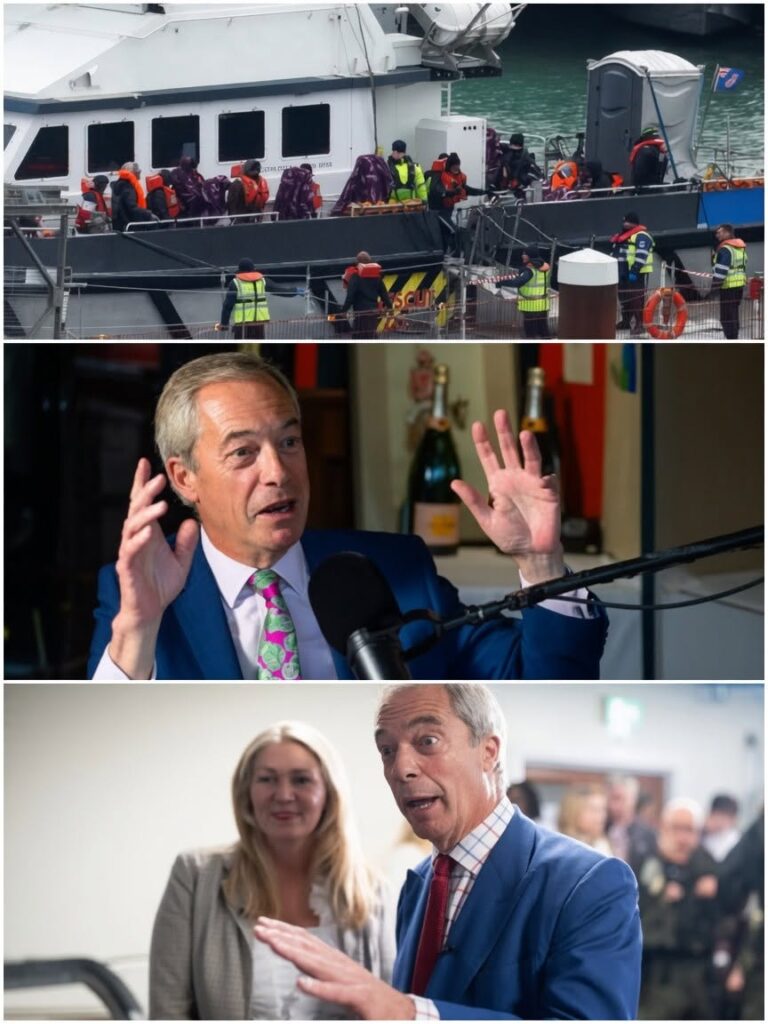
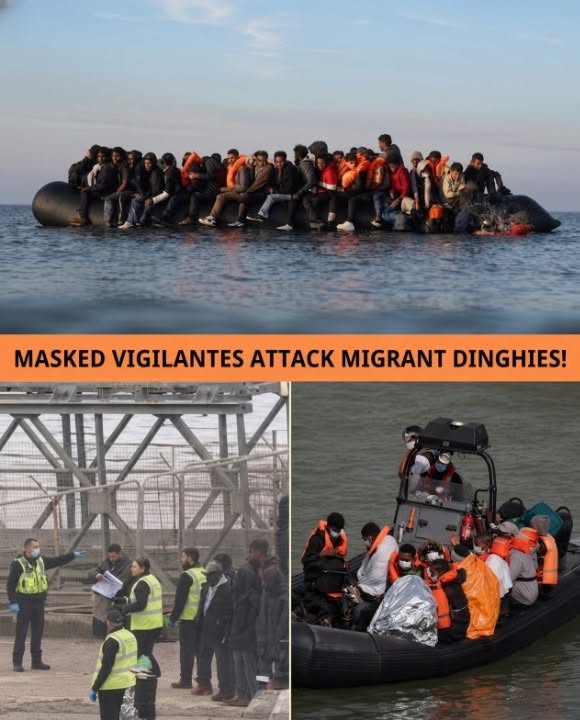
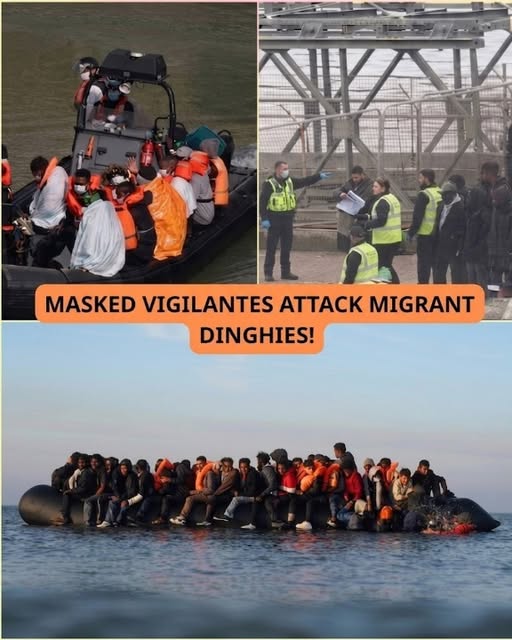
A wave of controversy has erupted in Britain after footage reportedly showing masked individuals confronting migrant boats in the English Channel triggered a fierce national debate over border security, illegal crossings and the growing presence of vigilante groups. The images, which quickly spread online, have raised urgent questions about what exactly happened at sea, who was involved and what drove ordinary individuals to take matters into their own hands. For some observers, the scenes represent a sign of deep frustration among communities that feel ignored by government policy and overwhelmed by years of debate surrounding small boat crossings. For others, the appearance of unofficial groups attempting to intervene in migration operations represents a dangerous development that could undermine law enforcement and create new risks in an already sensitive situation. As Britain continues to struggle with record political pressure over Channel crossings, the confrontation has become another flashpoint in one of the country’s most divisive issues.
THE ENGLISH CHANNEL BECOMES THE CENTRE OF A GROWING MIGRATION CRISIS
The English Channel has become one of the most politically significant migration routes in Europe. Thousands of people have attempted the dangerous journey from northern France to Britain in small inflatable boats, often travelling across one of the world’s busiest shipping lanes. Supporters of stronger border controls argue that the continued crossings demonstrate a failure of enforcement and create pressure on housing, public services and local communities. They say criminal smuggling networks are exploiting weaknesses in the system by convincing migrants that reaching British territory will eventually lead to permission to stay. However, humanitarian organisations have warned that those making the journey are often fleeing conflict, persecution or desperate economic conditions, and that dangerous crossings are partly driven by the lack of safe legal routes. The result is a political conflict where questions of security, compassion and national sovereignty collide.
WHO ARE THE MASKED GROUPS AND WHY DID THEY INTERVENE?
The identity and motives of the individuals shown in the footage have become central questions following the incident. Reports describing the group as “vigilantes” have intensified the debate because the term suggests people acting outside official authority. Supporters of the action claim they were responding to what they see as a failure by authorities to secure Britain’s borders. They argue that communities have been left watching repeated migrant arrivals while politicians debate solutions without delivering visible change. Critics, however, argue that border enforcement is a responsibility for trained authorities, including police, coastguard services and immigration officials. They warn that allowing unofficial groups to confront boats or individuals at sea could create unpredictable and potentially dangerous situations. The fundamental question is whether frustration over government policy can ever justify private citizens stepping into a role normally reserved for state institutions.
ANGER OVER SMALL BOAT CROSSINGS CONTINUES TO DRIVE POLITICAL PRESSURE
The incident comes at a time when immigration remains one of the most emotionally charged political issues in Britain. For many voters, small boat arrivals have become a symbol of a wider concern that the government has lost control of the country’s borders. They argue that a system allowing people to arrive illegally and then enter lengthy asylum procedures encourages more crossings and weakens public confidence. Political parties across the spectrum have responded with different proposals, ranging from tougher enforcement and faster deportations to expanded legal pathways and international cooperation. The disagreement reflects a deeper divide: one side believes the priority must be deterrence and border control, while the other argues that Britain must balance enforcement with humanitarian obligations.
POLICE AND AUTHORITIES FACE A DIFFICULT BALANCING ACT
For law enforcement agencies, incidents involving vigilante activity create a complicated challenge. Authorities must protect the right of citizens to express political opinions and demonstrate peacefully, while also preventing individuals from interfering with official operations or putting lives at risk. The Channel itself presents unique dangers. The waters between Britain and France are unpredictable, with heavy commercial traffic, changing weather conditions and strong currents. Any unofficial attempt to approach migrant boats could potentially create additional hazards for passengers, volunteers and emergency responders. Police and maritime authorities are therefore likely to focus on establishing exactly what happened, whether any laws were broken and whether anyone involved placed others in danger.
SUPPORTERS SAY THE GOVERNMENT HAS FAILED TO ADDRESS PUBLIC FRUSTRATION
Those sympathetic to the protesters argue that the rise of vigilante groups is a symptom of a wider political failure rather than the original problem itself. They claim that years of promises to stop illegal crossings have not produced results quickly enough, leaving many communities feeling powerless. For these supporters, the dramatic images from the Channel represent anger from people who believe their concerns have repeatedly been dismissed. They argue that governments must restore confidence by demonstrating stronger border enforcement, increasing returns of people whose asylum claims fail and reducing reliance on temporary accommodation. Without visible action, they fear public frustration will continue to grow and more people may attempt to take direct action.
CRITICS WARN THAT VIGILANTE ACTION COULD MAKE THE SITUATION WORSE
Opponents strongly reject the idea that private citizens should intervene in migration enforcement. They argue that border policy must be controlled through democratic institutions and professional agencies, not groups operating independently. Human rights advocates have warned that confrontations with migrants, many of whom may be vulnerable people seeking protection, could increase fear and create the possibility of harassment or violence. They also argue that the focus should remain on dismantling criminal smuggling networks rather than targeting individuals attempting the crossing. According to this view, stronger enforcement does not require abandoning legal standards or allowing unofficial actors to decide who belongs in Britain.
THE MIGRATION DEBATE HAS BECOME MORE POLARISED THAN EVER
The controversy surrounding the Channel footage highlights how deeply divided Britain has become over migration. Nearly every aspect of the issue has become politically sensitive: border patrols, asylum accommodation, deportations, international agreements and even public demonstrations. Social media has intensified the debate by allowing dramatic images to spread rapidly, often before full details are confirmed. Supporters of tougher measures see these videos as evidence that the current system is failing. Critics argue that emotional reactions to individual incidents can lead to policies based on anger rather than careful planning. The challenge for politicians is finding a way to address public concerns while preventing misinformation, hostility and unlawful actions.
THE ROLE OF FRANCE AND INTERNATIONAL COOPERATION
The Channel migration issue cannot be solved by Britain alone. Because many boats depart from French territory, cooperation between London and Paris has become a central part of efforts to reduce crossings. British governments have repeatedly negotiated agreements with France involving police cooperation, border patrols and attempts to disrupt smuggling networks. However, the continuing arrivals demonstrate how difficult the challenge remains. Smuggling organisations adapt quickly, changing routes and methods whenever authorities introduce new measures. This has created a constant battle between governments attempting to enforce borders and criminal networks seeking new ways to bypass controls.
WHAT HAPPENS NEXT COULD SHAPE BRITAIN’S RESPONSE TO MIGRATION PROTESTS
The latest controversy is likely to increase pressure on the government to explain how it intends to manage both migration and growing public anger. Authorities will face questions about whether current enforcement measures are effective and whether additional action is needed to prevent illegal crossings. At the same time, they must send a clear message that public frustration cannot become a reason for individuals to interfere with official operations or endanger vulnerable people.
The incident also raises a broader question about trust between citizens and the state. When people believe governments are failing to solve major problems, some may feel motivated to act themselves. But allowing unofficial groups to replace official systems carries serious risks. A functioning democracy depends on laws being enforced by accountable institutions, even during moments of intense public disagreement.
BRITAIN’S CHANNEL CRISIS REMAINS FAR FROM RESOLVED
The images of masked individuals confronting migrant boats have become another powerful symbol in Britain’s ongoing migration debate. To supporters of tougher border controls, they represent the anger of communities demanding action. To critics, they represent a worrying move toward vigilante behaviour and the breakdown of trust in established systems.
The reality is that the Channel crisis contains no simple answers. Britain must deal with illegal crossings, protect its borders and maintain public confidence, while also ensuring that decisions are made according to law and humanitarian principles.
As political pressure continues to build, the question facing Britain is not only how to stop dangerous crossings — but also how to prevent frustration over migration from creating a new conflict on the streets, at sea and across the wider national debate.