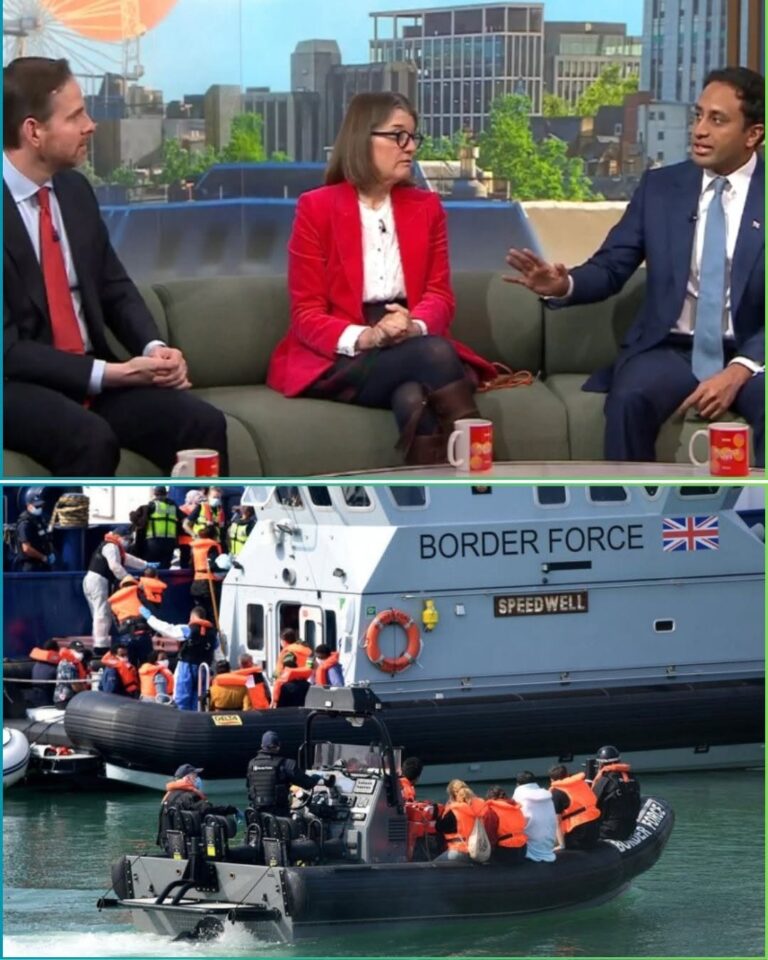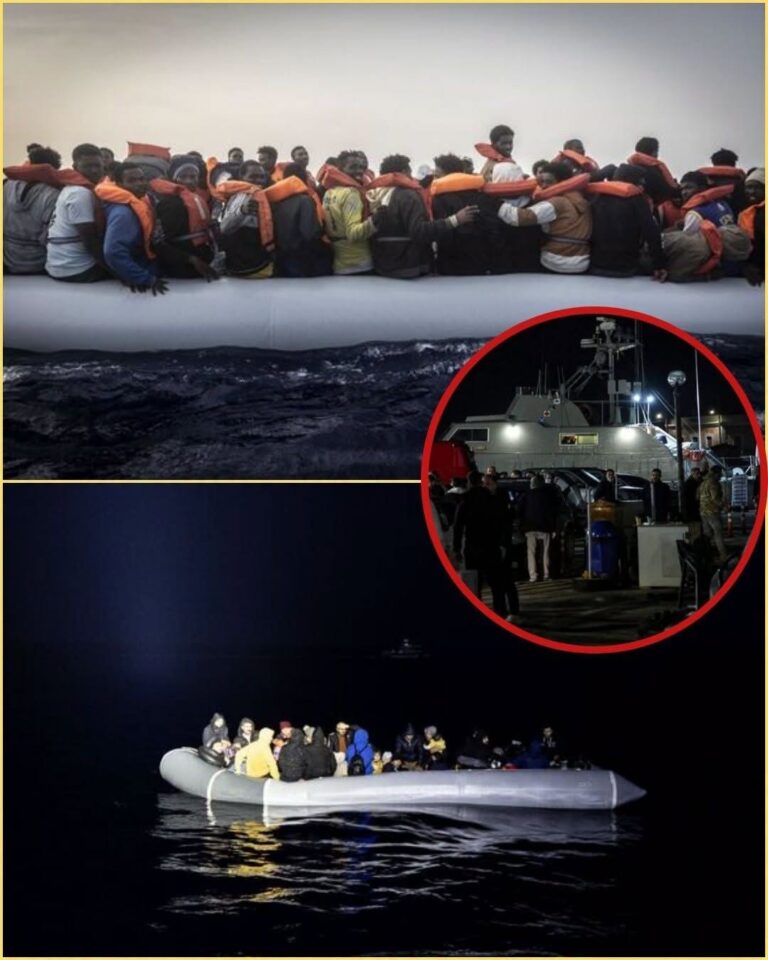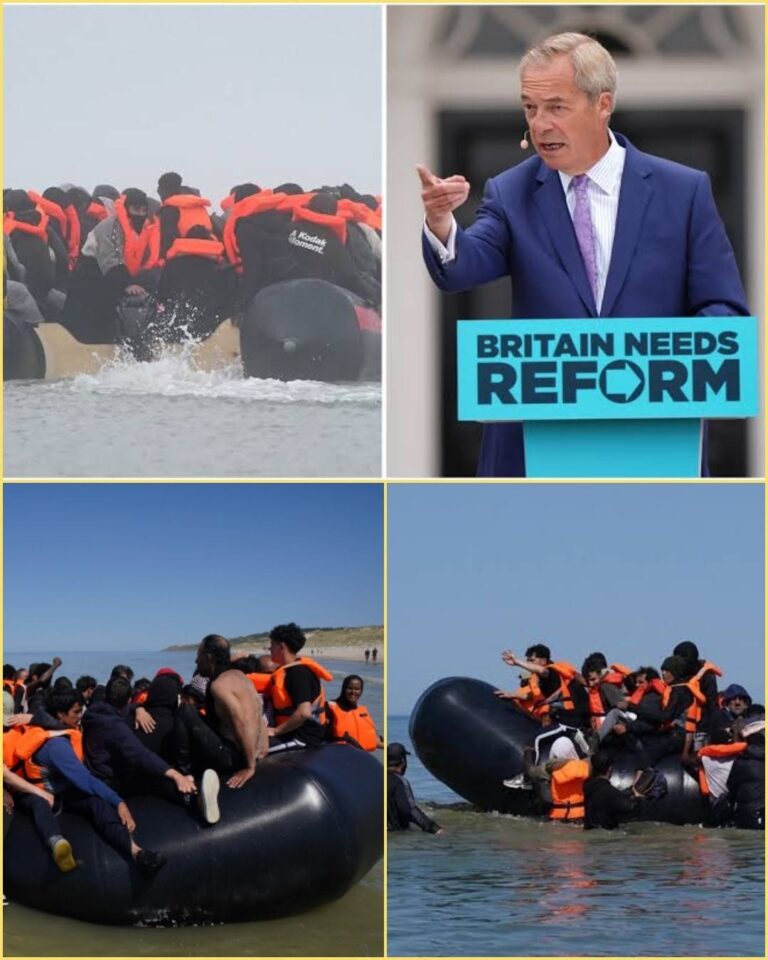
Poland took in no migrants, and the country’s political figures presented different explanations of the EU migration pact outcome.
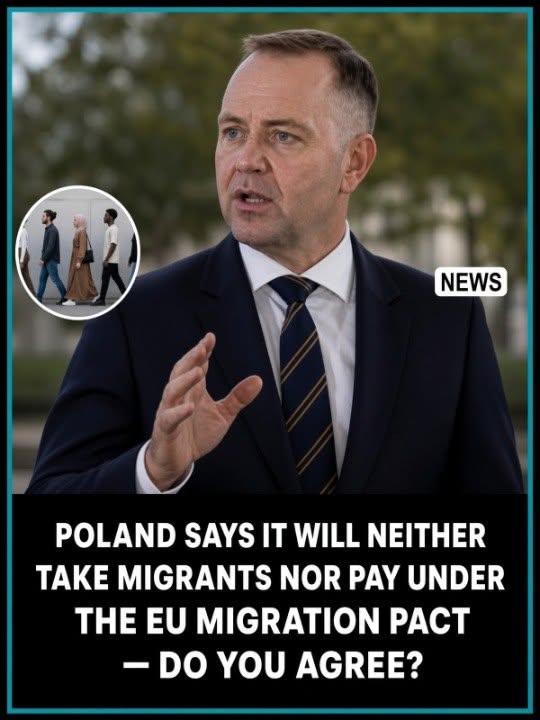
Poland’s Migration Pact Showdown: A Political Victory, a Temporary Exemption, or a Promise Yet to Be Tested?
Poland has emerged from the latest European Union migration debate with a message that sounds simple but is anything but simple: Poland will not be forced to take relocated migrants under the EU’s migration pact, and Warsaw says it will not make payments either.
Prime Minister Donald Tusk presented the outcome as the fulfillment of a political promise. His deputy interior minister described it as a “huge success.” Foreign Minister Radosław Sikorski offered a more cautious interpretation, suggesting that Poland’s special treatment is connected to the extraordinary burden created by the millions of Ukrainians who have sought refuge in the country since Russia’s invasion.
Meanwhile, the opposition has dismissed the announcement as essentially meaningless.
Four political voices.
One decision.
Four very different interpretations.
And that disagreement reveals why Europe’s migration debate is far from over.
For Tusk’s government, the central message is one of sovereignty.
Tusk has repeatedly faced pressure over migration from both political opponents and voters concerned about the EU’s approach to asylum and migrant relocation. His argument is straightforward: Poland has already carried an enormous humanitarian burden by hosting millions of Ukrainians fleeing Russia’s war, and Polish citizens should not be expected to accept additional migrant relocations simply because Brussels has created a new European framework.
Tusk has said he promised that there would be no relocation of migrants to Poland—and insists that the promise remains intact.
That is politically important.
Migration has become one of Europe’s most powerful political issues, capable of reshaping elections, strengthening nationalist parties and dividing governments within the European Union itself.
Poland is particularly sensitive to the issue.
The country has become one of the largest hosts of Ukrainian refugees in Europe. Millions of Ukrainians crossed into Poland after Russia launched its full-scale invasion in 2022, creating enormous demands on housing, schools, healthcare, local governments and social services.
Warsaw has therefore argued that Poland should receive recognition for the burden it has already carried.
That argument appears to have influenced the latest EU arrangements.
Tusk’s deputy interior minister went even further, describing the outcome as a “huge success” and saying Poland had been exempted from the solidarity mechanism for “many, many years.”
That language is designed for domestic politics.
It tells Polish voters that the government went to Brussels, defended national interests and returned home with an exemption.
But the foreign minister’s explanation introduces an important qualification.
Radosław Sikorski has suggested that Poland’s position is not necessarily permanent. Instead, the special treatment is connected to the presence of Ukrainians in Poland and could remain in place for “a good couple of years.”
That distinction matters enormously.
There is a major difference between saying Poland is permanently outside the EU’s migration solidarity system and saying Poland currently receives special treatment because it is already hosting a large refugee population.
The first is a long-term political victory.
The second is a temporary arrangement based on exceptional circumstances.
The difference may seem technical, but it could eventually become politically explosive.
If the number of Ukrainians in Poland decreases significantly, or if the EU changes the way it calculates solidarity contributions, Warsaw could face renewed pressure to participate in the migration mechanism.
That is why the current disagreement is more than a semantic dispute.
It is a debate over what exactly Poland has won.
The opposition’s criticism reflects this uncertainty.
If the opposition leader argues that the announcement “means nothing,” the underlying accusation is that the government is presenting a temporary or conditional arrangement as though it were a permanent defeat of the EU migration policy.
This is a familiar pattern in European politics.
Governments announce favorable outcomes.
Oppositions describe them as cosmetic.
The truth often lies somewhere between the two.
Poland may genuinely have secured meaningful relief from the immediate obligations associated with the EU migration pact. At the same time, that relief may depend on circumstances that can change.
Both things can be true.
The larger issue is the EU’s attempt to create a more coordinated migration system.
For years, European countries have struggled with a fundamental problem: migration pressure is not distributed equally across the bloc.
Countries on the EU’s external borders, such as Italy, Greece and Spain, often experience disproportionate pressure because of their geographical position.
Other countries have been reluctant to accept relocated migrants.
The EU has therefore sought a system of “solidarity” in which member states contribute in different ways—through relocation, financial contributions or other forms of support.
The objective is to prevent frontline countries from being left alone.
But the politics are extraordinarily difficult.
Some governments argue that relocation is necessary for European solidarity.
Others argue that national governments should decide who enters their territory.
Poland belongs firmly in the second camp.
Warsaw’s position has been reinforced by its experience with Ukrainian refugees.
Poland can reasonably argue that it has already contributed significantly to Europe’s humanitarian response.
The question is whether hosting Ukrainian refugees should permanently exempt Poland from participating in other EU migration mechanisms.
That is much harder to answer.
Ukrainians fleeing Russia’s invasion are generally protected under a different legal framework from people seeking international protection through the EU asylum system. Their presence in Poland therefore cannot simply be treated as identical to participation in the EU’s migration relocation system.
Yet from a practical perspective, Polish cities, schools and public services may not care about the legal distinction.
Housing is housing.
Healthcare is healthcare.
School classrooms are school classrooms.
Local authorities facing thousands of additional residents experience the consequences regardless of the category under which those people arrived.
This is the strongest argument behind Warsaw’s position.
Poland is not claiming that it has done nothing.
It is claiming that it has already done a great deal.
The government can therefore tell Polish voters that European solidarity should recognize the country’s existing contribution rather than demand additional commitments.
But Brussels faces a different concern.
If every member state argues that its existing responsibilities justify exemption from future obligations, collective EU migration policy becomes extremely difficult to implement.
That is the central tension.
Europe wants solidarity.
National governments want sovereignty.
Both demands are understandable.
Neither is easy to reconcile.
The Ukrainian dimension makes the Polish case even more politically sensitive.
Poland has been among Ukraine’s strongest supporters since Russia’s invasion. Polish society has provided enormous assistance to Ukrainian refugees, while the government has supported Ukraine politically and militarily.
But public patience is not unlimited.
Economic pressures, housing costs and political fatigue can influence attitudes toward refugees, particularly as the war continues without a clear end.
That creates another challenge for Tusk.
He must balance European expectations with domestic voters who want tighter control over migration.
At the same time, he must avoid creating the impression that Poland is turning away from Ukraine.
The migration pact therefore sits at the intersection of two major European debates: how to manage migration and how to respond to Russia’s war.
The political messaging around Poland’s exemption reflects that complexity.
Tusk wants voters to hear: We kept our promise.
His deputy wants them to hear: This is a major victory.
Sikorski wants them to understand: The arrangement is linked to current circumstances.
The opposition wants them to believe: Nothing meaningful has changed.
The public is left to determine which interpretation is closest to reality.
Perhaps the most sensible conclusion is that Poland has secured a significant political accommodation—but not necessarily a permanent escape from the EU’s migration debate.
That is an important distinction.
The arrangement may provide Poland with valuable breathing room while it continues to host large numbers of Ukrainians.
But when circumstances change, Brussels may revisit the issue.
And when that happens, Poland will once again have to decide how far it is willing to compromise.
The migration debate will not disappear.
Europe’s geographic position guarantees that migration will remain a major political challenge. Wars, economic inequality, political instability and climate pressures will continue to drive people toward Europe.
The question is not whether migration will stop.
It is how Europe will manage it.
For Poland, the answer currently appears to be clear: national sovereignty first, with recognition for the extraordinary refugee burden the country has already carried.
For the EU, the answer is equally clear: solidarity must mean something if the bloc is going to manage migration collectively.
Those two principles are now on a collision course.
The latest agreement may postpone that confrontation.
It does not necessarily resolve it.
And that is why the four competing interpretations of Poland’s “victory” matter.
Tusk sees a promise fulfilled.
His deputy sees a major success.
Sikorski sees a temporary arrangement.
The opposition sees political theater.
The reality will ultimately be determined not by the headlines, but by what happens when the current exemption expires—or when Europe’s migration pressures change again.
For now, Poland can claim a political win.
But whether that win represents a permanent transformation of EU migration policy or simply a temporary pause remains one of the most important questions facing Warsaw and Brussels.
The agreement may have settled today’s argument. It has not settled Europe’s migration debate.