ARLIAMENT ERUPTS IN TOTAL CHAOS!

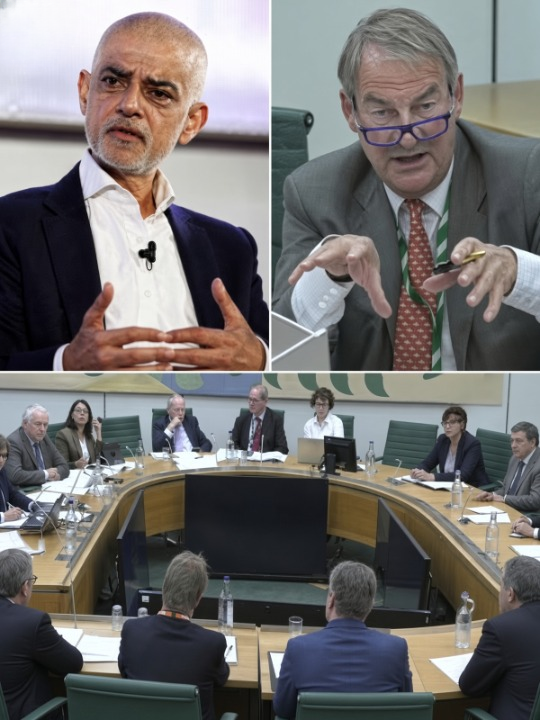
RUPERT LOWE TAKES AIM AT SADIQ KHAN AS TAXPAYER-MONEY ROW ERUPTS IN PARLIAMENT
WESTMINSTER — Rupert Lowe has triggered a fiery parliamentary clash after turning a hearing about English devolution into a confrontation over taxpayer money, political accountability and the record of London Mayor Sadiq Khan.
What began as a technical discussion about handing greater financial powers to England’s regional mayors quickly became considerably more heated.
Lowe questioned whether the public receives enough information about where mayoral money actually comes from and whether politicians are being held properly accountable for spending it.
Then he singled out Sadiq Khan.
The MP argued that signs around London promoting publicly funded projects could leave residents with the impression that Khan himself was handing out large quantities of money.
Lowe’s central argument was blunt:
It isn’t the mayor’s personal money. It is public money.
But almost immediately, other politicians in the room pushed back.
Liverpool City Region Mayor Steve Rotheram defended Khan’s record.
Labour MP Chris Kane accused Lowe of seeking an attack line that could be clipped for social media.
The committee chair repeatedly tried to keep proceedings moving.
And suddenly a hearing about devolution had turned into something much bigger — a battle over who controls billions of pounds of public spending and who should get the political credit for it.
So what exactly did Lowe allege?
What did the witnesses say in response?
And was there really a huge Sadiq Khan “taxpayer scandal” exposed during the hearing?
The official transcript provides a much more interesting — and much more nuanced — story.
THE HEARING WASN’T SUPPOSED TO BE ABOUT SADIQ KHAN
The confrontation took place during a Public Accounts Committee inquiry into devolving power in England.
The witnesses included senior government officials and metro mayors, among them Liverpool City Region Mayor Steve Rotheram.
The fundamental issue was straightforward.
The Government wants more decisions to be made outside Westminster.
That can mean giving mayors and regional authorities greater control over transport, housing, skills, economic development and other areas of public spending.
Supporters of devolution argue that local leaders understand their economies and communities better than officials sitting in Whitehall.
But there is an obvious second question.
If more power — and more money — is transferred away from central government, who makes sure it is being spent properly?
That is where Lowe entered the argument.
And it did not take long before London’s mayor became his example.
“IT’S NOT HIS MONEY”
Lowe told the committee that public understanding of the mayoral system matters because voters need to understand what the politicians they elect are actually responsible for.
Then he turned to London.
He said he looked at boards around the capital and believed they could create the impression that Sadiq Khan personally was distributing large sums.
Lowe argued that Khan appeared to lose sight of an important fact:
The money was not his.
It was public money.
More specifically, Lowe described it as budget funding ultimately originating from government and taxpayers.
That point became the centre of his intervention.
He was not alleging that Khan had stolen public money.
He did not produce evidence that Khan had secretly diverted millions into an improper account.
He did not reveal a previously unknown financial transaction.
Instead, Lowe was challenging the political presentation and accountability surrounding public spending.
That distinction is crucial.
Because the parliamentary exchange was explosive enough without turning an accountability argument into an allegation of financial misconduct that the hearing itself did not establish.
LOWE WIDENS THE ATTACK
Lowe then moved beyond Khan.
He said the Public Accounts Committee existed to protect taxpayers and argued that taxpayers were repeatedly left carrying the burden of government failure.
He complained about what he viewed as waste across public administration.
Among his concerns were local government bodies with delayed or unaudited accounts, weak accountability and significant delays between collecting data and analysing it.
From Lowe’s perspective, these were warnings about what could happen if Westminster simply transferred more power to regional government without simultaneously strengthening scrutiny.
The basic challenge was:
If mayors receive greater control over public money, what protects taxpayers if that money is poorly spent?
That is a substantive public-policy question.
But Lowe’s combative delivery ensured it quickly became personal.
“IS THERE A QUESTION, RUPERT?”
As Lowe continued describing his concerns, Labour MP Chris Kane interrupted.
“Is there a question, Rupert?”
It was a small moment, but it captured the atmosphere.
Lowe was using his allotted time not simply to interrogate witnesses but to make a broader argument about government waste and accountability.
He eventually returned to his central question.
Where, he asked, were the protections ensuring that money devolved to local leaders would be properly spent on behalf of the taxpayers funding it?
Steve Rotheram responded directly.
And he strongly disagreed with Lowe’s understanding of devolution.
ROTHERAM FIRES BACK
Rotheram told Lowe that he believed the MP had fundamentally misunderstood what devolution meant.
Yes, taxpayer funding was involved.
But devolution was also about allowing local communities to decide how money should be spent and then holding elected leaders accountable for those decisions.
Metro mayors, Rotheram pointed out, are directly elected.
If voters believe they have failed, they can remove them at elections.
But Lowe was unconvinced.
He argued that as government removed conditions from funding and gave mayors greater flexibility, scrutiny would need to become stronger.
Then Khan returned to the centre of the argument.
Lowe criticised the existing “Mayor’s Questions” process, describing it as ineffective.
He said he had watched Khan being questioned and did not believe the mayor adequately answered questions.
He broadened the criticism to prime ministers in Parliament, arguing that they too frequently failed to provide direct answers.
For Lowe, formal questioning was not necessarily meaningful accountability.
His challenge to the mayors was therefore simple:
How can the system provide genuine scrutiny?
THEN ROTHERAM DEFENDED KHAN
This was the moment the exchange became openly political.
Rotheram said he could not allow Lowe’s remarks to pass without defending the London mayor.
He praised Khan’s record and pointed to areas including housing, regeneration of derelict land and skills.
Lowe interrupted.
He insisted that he had not actually made a judgment about whether Khan had succeeded or failed as mayor.
His argument, he said, was about accountability.
That distinction is visible in the official transcript.
Rotheram was defending Khan’s performance.
Lowe was attempting to bring the conversation back toward the mechanisms used to scrutinise mayoral spending.
But by then Khan’s record had entered the room.
And the disagreement was escalating.
THE CHAIR STEPS IN
As Rotheram attempted to explain the accountability systems surrounding devolved funding, Lowe continued challenging him.
Committee chair Sir Geoffrey Clifton-Brown eventually intervened:
“Order. Let Steve answer, Rupert.”
Rotheram continued.
He argued that devolution was not simply a mechanism through which central government passed money to mayors so they could forward it to local councils.
If that were all it achieved, he said, the mayoral system would simply create another unnecessary layer of government.
Instead, he argued, combined authorities can use multiple funding sources, generate returns from investments and plan strategically for their regional economies.
His defence of the system was essentially the opposite of Lowe’s concern.
Lowe feared that decentralising money could decentralise weak accountability.
Rotheram argued that local control could produce better decisions precisely because elected regional leaders understand local economic needs.
That is the real policy disagreement underneath the shouting.
LABOUR MP ACCUSES LOWE OF SEEKING SOCIAL-MEDIA CLIPS
Then came perhaps the sharpest personal criticism of Lowe.
Before asking his own question, Labour’s Chris Kane said Lowe had “never missed an opportunity to get an attack line clipped up for social media.”
Kane then offered his own defence of Khan, describing the London mayor as doing a transparent and honest job.
Lowe immediately responded that he had not made a judgment on Khan’s overall performance.
The exchange is revealing.
It shows how parliamentary committees themselves are increasingly affected by the politics of viral video.
A confrontational 30-second clip can reach millions of people.
A detailed two-hour discussion about public-sector accountability rarely does.
That creates an incentive for politicians across parties to deliver sharp lines capable of travelling far beyond the committee room.
Kane’s accusation was effectively that Lowe knew exactly how to create such moments.
Lowe’s response was that his questions concerned genuine accountability.
Both statements form part of the political dispute.
SO WHAT WAS THE “BOMBSHELL”?
This is where the viral framing needs careful examination.
There was no moment in the transcript where Lowe produced documents proving that Khan had secretly misappropriated a huge sum of taxpayer money.
There was no newly uncovered financial scandal.
There was no admission from Labour officials that Khan had improperly spent funds.
The “bombshell” was instead Lowe’s political argument about ownership and presentation of public money.
He objected to the impression that a mayor could appear to be personally providing money that ultimately comes from taxpayers.
That may be a potent political criticism.
It is not the same thing as evidence of corruption or financial misconduct.
And the witnesses did not “scramble” because Lowe had uncovered secret accounts.
They disagreed with his interpretation of devolution and defended the accountability mechanisms already in place.
That distinction matters enormously when a parliamentary confrontation is transformed into a social-media headline.
WHERE DOES LONDON’S MONEY ACTUALLY COME FROM?
The underlying question is nevertheless important.
The Greater London Authority and Transport for London operate through complex funding arrangements.
Money can come from central government grants, locally raised taxation and precepts, fares, charges, borrowing and other revenue streams.
Different programmes can have different funding sources.
That means describing every pound controlled by the Mayor of London as simply “money handed to him by Government” can also oversimplify the picture.
But Lowe’s broader point remains relevant:
Public money remains public money regardless of which level of government spends it.
A project branded by a mayor is not personally financed by that mayor.
The democratic argument is therefore about how political leaders communicate who funded a project, who made the decision and who should be accountable for its results.
THE BIGGER BATTLE: WHO GETS CREDIT?
This issue is hardly unique to Sadiq Khan.
Politicians at every level of government want voters to associate successful projects with their leadership.
A government minister announces a new hospital.
A council leader opens a regenerated town centre.
A mayor unveils a transport project.
But the money behind those projects can come from multiple layers of taxation and government.
That creates an unavoidable political tension.
When a project succeeds, politicians want credit.
When it fails, responsibility can suddenly become harder to locate.
Was the problem caused by Whitehall?
The mayor?
The local council?
A private contractor?
A funding formula?
That is precisely why accountability becomes more complicated as power is devolved.
LOWE’S BIGGER WARNING
Later in the hearing, Lowe returned to this concern with an even more provocative formulation.
He referred to the idea of the “Westminster blob” and asked whether Britain risked simply devolving that bureaucracy into a series of what he called “unaccountable regional blobs.”
Cabinet Office Permanent Secretary Cat Little rejected that characterisation of central government.
She argued that central government possesses significant commercial, financial and transformation expertise and said that capability should increasingly be shared across the United Kingdom.
Officials also described monitoring systems and potential interventions when devolved bodies fail to deliver expected outcomes.
These could range from greater monitoring through to intervention and, ultimately, clawing back money.
That is important because it addresses the central question Lowe kept returning to.
Devolution does not mean money is handed over with absolutely no oversight.
The dispute is about whether the existing oversight is strong enough.
THE ACCOUNTABILITY PROBLEM IS REAL
Away from the personalities, this is a serious debate.
England’s system of government is changing.
Metro mayors are becoming increasingly important political figures.
They can influence transport, housing, skills, economic development and major infrastructure.
As their responsibilities increase, so do their budgets.
That raises several questions.
How should their performance be measured?
Who audits their spending?
How quickly should financial accounts be published?
What happens when projects fail?
How can Parliament scrutinise regional authorities without simply recreating central control?
And how do ordinary voters determine which politician is responsible for which decision?
Those questions are far more consequential than any one exchange involving Lowe and Khan.
WHY KHAN BECOMES SUCH A POWERFUL EXAMPLE
Khan is an obvious target in this debate because the London mayoralty is Britain’s most prominent devolved mayoral office.
London’s population, economy and transport system make its mayor internationally recognisable.
That also makes Khan an attractive political target.
Policies including ULEZ, policing, housing and transport have made him a polarising figure.
Supporters point to investment in public transport, housing and environmental measures.
Critics attack his record on crime, spending, taxation and road policy.
Lowe’s intervention fits into that much broader political battle.
But the September 7 hearing was specifically about devolution and accountability.
That context should not be lost.
DID LABOUR “PANIC”?
The transcript shows sharp disagreement.
It does not show officials confessing to wrongdoing.
Rotheram strongly defended Khan.
Kane strongly criticised Lowe’s political approach.
The chair had to intervene to manage the discussion.
Senior officials explained the safeguards surrounding devolved funding.
That certainly made for a combative hearing.
But describing the response as panic would be an interpretation rather than an established fact.
The witnesses were arguing back.
And that is exactly what parliamentary hearings are supposed to allow.
THE FINAL TWIST
Perhaps the most interesting part of the confrontation was that Lowe repeatedly insisted he was not actually judging Khan’s overall performance.
After Rotheram praised Khan, Lowe said:
“I did not make a judgment on whether he had failed or succeeded.”
After Kane defended Khan, Lowe again insisted:
“I did not make a judgment on his job.”
That makes the confrontation more nuanced than the viral framing suggests.
Lowe clearly chose Khan as a provocative example.
He criticised the way mayoral spending can be presented.
He attacked the effectiveness of mayoral scrutiny.
But his stated argument in the hearing was ultimately institutional:
Who owns the money, who spends it and who holds the spender accountable?
A FIGHT BIGGER THAN SADIQ KHAN
That may be why this confrontation matters.
It was not really just about one mayor.
It was about the direction of English government.
Westminster wants to transfer more power away from Whitehall.
Regional mayors want greater freedom over how they spend money.
But Parliament still has a responsibility to protect taxpayers.
Those objectives can coexist — but only if accountability keeps pace with devolution.
Lowe fears it will not.
Rotheram argues that democratic elections and stronger regional structures provide accountability.
Government officials say new monitoring and scrutiny mechanisms are being developed.
The argument is far from settled.
And Sadiq Khan found himself at the centre of it without even being in the room.
WHAT THE HEARING ACTUALLY ESTABLISHED
Strip away the dramatic headlines and several facts remain.
Lowe did accuse the wider public sector of wasting taxpayer money on a large scale.
He did single out signs around London and argue that they could make it appear Khan was personally distributing public money.
He did attack existing scrutiny arrangements.
Rotheram did strongly defend Khan.
Kane did accuse Lowe of seeking a social-media attack clip.
And the committee chair did intervene during the increasingly heated exchange.
But Lowe did not unveil evidence in that hearing proving a secret Khan financial scandal.
That is the critical line between a powerful political confrontation and a claim the evidence does not support.
And in some ways, the verified story is more important.
Because Britain’s political system is undergoing a quiet transformation.
More power is moving away from Westminster.
More money is moving through regional institutions.
Mayors are becoming more powerful.
And Parliament is now wrestling with the question that inevitably follows:
Who watches the people spending the money?
Lowe’s answer was that existing scrutiny was nowhere near good enough.
Rotheram’s answer was that Lowe fundamentally misunderstood how modern devolution works.
Government officials argued that accountability structures and intervention mechanisms exist and are being strengthened.
No spectacular financial confession followed.
No hidden account was exposed.
But an important political fault line certainly was.
As England hands increasingly powerful mayors control over increasingly large budgets, the battle over whose money it really is — and who answers when it is badly spent — has only just begun.