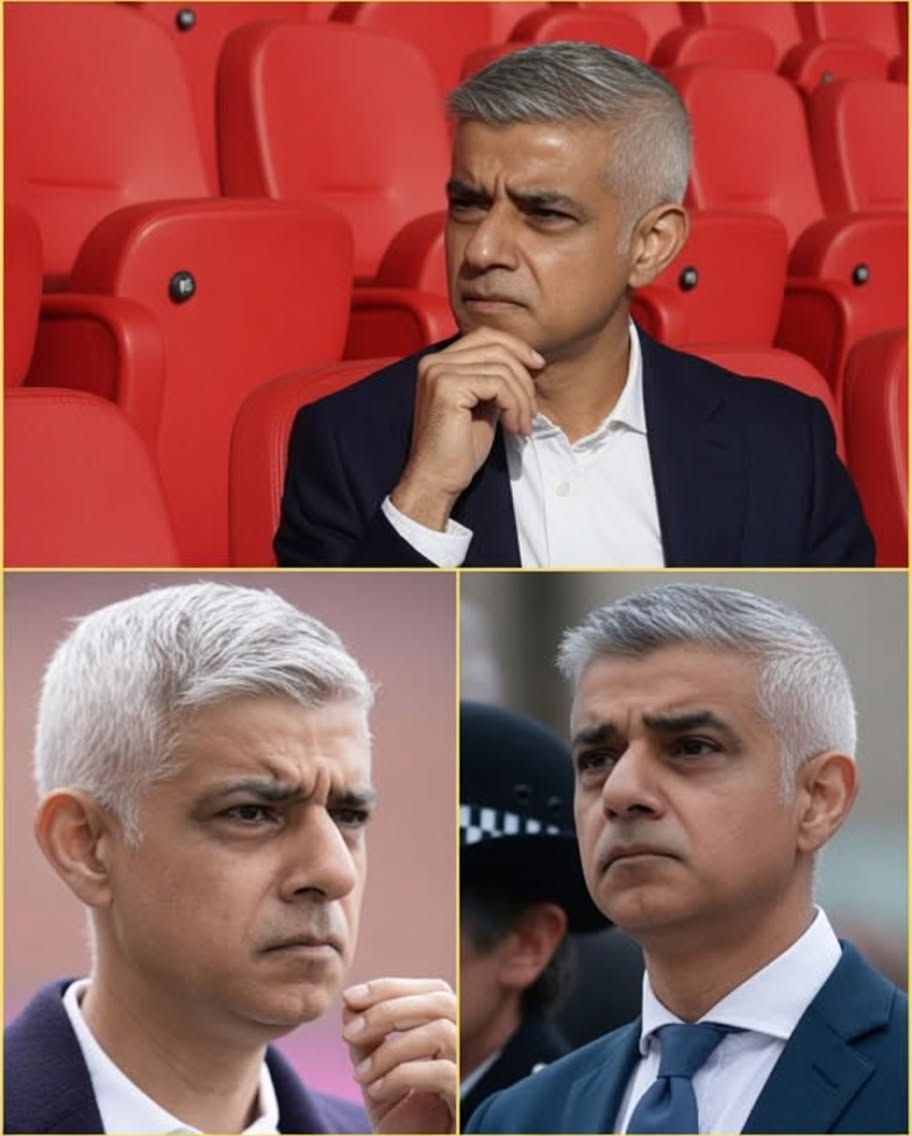
POLL: Should Sadiq Khan Resign Over the Grooming Gang Controversy? Fresh political debate has erupted after renewed scrutiny surrounding the grooming gang issue, with some critics calling for Sadiq Khan to step down while others reject those demands.
Fresh Debate Over Sadiq Khan’s Leadership as Grooming Gang Controversy Returns to Westminster Spotlight
A renewed political debate has erupted around London Mayor Sir Sadiq Khan after critics once again questioned whether he should resign over the handling and public discussion of grooming gang concerns in the capital.
The controversy intensified after reports and political commentary drew attention to earlier remarks in which Khan was accused by opponents of downplaying or denying the existence of grooming gangs in London. Supporters of calls for resignation argue that the issue demands stronger accountability from senior leaders. Others reject those demands, saying the debate has become heavily politicised and that responsibility must be assessed through evidence, investigations and institutional facts rather than public pressure alone.
The discussion comes amid wider national scrutiny of child sexual exploitation cases and the way authorities across Britain have responded to victims and survivors. In London, the Metropolitan Police has been reviewing thousands of historical child exploitation cases as part of a broader effort to determine whether previous investigations should be reopened or reassessed. Reports have stated that the Met’s review involved thousands of cases dating back years, with some cases expected to receive renewed examination.
For critics of Khan, those developments have raised uncomfortable questions about whether public officials were too slow to acknowledge the seriousness of the issue. For his defenders, however, the existence of police reviews does not automatically prove personal wrongdoing by the mayor, nor does it establish that resignation is justified.
Why the Issue Has Returned to the Headlines
The grooming gang scandal remains one of the most sensitive and emotionally charged topics in British public life. It involves crimes of child sexual exploitation, alleged institutional failures, and long-running public anger over whether victims were listened to when they came forward.
In recent months, pressure on Khan has grown in some political circles. A petition calling for his resignation reportedly gained tens of thousands of signatures and was set to be delivered to City Hall, according to GB News. The petition focused on claims that Khan had denied or failed to properly acknowledge grooming gang activity in London.
The debate was further fuelled by exchanges between Khan and political opponents, including Conservative figures at City Hall, who accused him of failing victims and not taking concerns seriously enough. Khan has defended his record, pointing to child protection measures, policing oversight and investment in victim support.
At the same time, national reporting has highlighted that the UK’s response to child sexual exploitation has been complicated by poor data collection, institutional hesitation and failures to properly record suspect ethnicity in many cases. A government-linked review found that ethnicity data was not recorded in a large share of group-based child sexual abuse cases, making it harder to identify patterns accurately.
That wider context matters because the political dispute over Khan is not happening in isolation. It is part of a broader national argument over child protection, policing, public transparency and whether authorities have learned enough from past failures.
The Case Made by Critics
Those calling for Khan to resign argue that leadership carries responsibility, even when failures involve multiple institutions. They say the mayor, as a highly visible public figure with influence over policing priorities in London, should be held accountable for how seriously the issue has been treated.
Their argument is not only about one statement or one interview. It is about trust.
For critics, if victims and campaigners believe authorities dismissed concerns too quickly, then public confidence can be badly damaged. They argue that senior politicians must show urgency, humility and transparency when dealing with allegations involving child exploitation.
Some also claim that political correctness or fear of social tension may have contributed to authorities being cautious about discussing grooming gang cases openly. That concern has appeared repeatedly in national debate, especially after reports found that some institutions historically avoided sensitive discussions around ethnicity in exploitation cases.
From this perspective, calls for resignation are presented as a demand for accountability rather than a purely partisan attack.
The Case Made by Defenders
Those defending Khan argue that resignation demands are premature and politically motivated.
They say the grooming gang scandal involves many layers of responsibility: police forces, social services, councils, prosecutors, safeguarding boards and national government policy. A mayor may have political responsibility for oversight, but that does not mean every failure in investigation or safeguarding can be directly attributed to one person.
Defenders also warn that the issue is being used in a highly politicised way. Because grooming gang cases are emotionally powerful and often linked to broader debates over immigration, ethnicity and multiculturalism, they argue that public figures must be careful not to turn victims’ suffering into a partisan weapon.
They also point out that police reviews can be evidence of renewed seriousness rather than proof of a cover-up. If thousands of cases are being reassessed, they argue, the focus should be on supporting survivors, identifying missed opportunities and improving future safeguarding, not simply demanding resignations before investigations are complete.
A Debate About Accountability, Not Just One Politician
The central question is not only whether Sadiq Khan should resign. It is what accountability should look like when public institutions are accused of failing vulnerable children.
In democratic politics, accountability can take many forms. It can mean resignations. It can mean public apologies. It can mean independent inquiries, new safeguarding rules, better police training, improved data collection, stronger victim support or criminal prosecutions where evidence supports them.
Resignation is the most dramatic form of accountability, but it is not always the most useful if it does not lead to institutional reform.
That is why some observers argue that the debate should focus less on symbolic political punishment and more on concrete questions:
Were warnings missed?
Were victims believed quickly enough?
Were investigations properly resourced?
Were patterns of exploitation identified early?
Did political leaders communicate honestly with the public?
What reforms have been made, and are they working?
These questions are harder than a yes-or-no poll, but they are essential if the goal is justice rather than outrage.
Why Public Anger Remains So Strong
Public anger around grooming gang cases remains intense because the crimes involved are among the most serious imaginable. When children are exploited, abused or ignored by authorities, the damage extends far beyond individual cases. It undermines trust in the entire system.
Survivors and their families often want recognition that what happened was not merely a series of isolated crimes but a wider failure of protection. Many members of the public want assurance that institutions are no longer repeating the same mistakes.
That is why every new report, review or political exchange can reignite the debate.
For some voters, Khan has become a symbol of what they see as official denial. For others, he has become a target in a broader political fight over London, policing, immigration and identity.
Both interpretations reveal how emotionally and politically charged the issue has become.
The Role of Polls and Social Media
The wording of online polls also matters.
A question such as “Should Sadiq Khan resign?” can generate high engagement, but it can also simplify a complex issue into a binary choice. People voting “yes” may be expressing anger about institutional failures generally, not necessarily a fully evidenced judgment about Khan personally. People voting “no” may still believe serious failures occurred, but reject resignation as the right response.
Social media tends to reward sharp questions, emotional reactions and clear villains. But child exploitation scandals require careful handling because they involve real victims, ongoing investigations and potential legal sensitivities.
A responsible public conversation should allow anger, but also insist on evidence.
What Happens Next?
The political pressure on Khan is unlikely to disappear quickly. As more information emerges from police reviews and national inquiries, critics will continue to ask whether leaders in London responded with enough urgency.
If further evidence shows that warnings were ignored or public statements were inaccurate, pressure could grow. If investigations show that the issue was more complex than critics suggest, Khan’s defenders may argue that resignation demands were politically exaggerated.
Either way, the debate is likely to remain part of Britain’s broader argument over child protection, policing and public trust.
Conclusion: A Question Bigger Than One Poll
The question of whether Sadiq Khan should resign over the grooming gang controversy is politically powerful because it touches on deep public concerns: the protection of children, the honesty of public officials and the responsibility of leaders when institutions fail.
Critics say resignation would show accountability. Defenders say it would turn a serious safeguarding issue into a political spectacle before all facts are fully established.
What should not be lost in the argument is the central issue: victims and survivors must be heard, investigations must be thorough, and institutions must prove that lessons have been learned.
A poll can measure public anger. It cannot, by itself, deliver justice.
That will require evidence, transparency and reforms strong enough to restore trust in the systems meant to protect the most vulnerable.