UK-France Border Deal Under Scrutiny as Questions Grow Over Spending and Channel Enforcement
UK-France Border Deal Under Scrutiny as Questions Grow Over Spending and Channel Enforcement
LONDON — Britain’s multimillion-pound cooperation with France to stop small boats crossing the English Channel is facing renewed scrutiny, as government claims of tens of thousands of prevented journeys collide with footage and reports showing the practical limits facing French police along hundreds of kilometres of coastline.
The argument has become one of the most politically sensitive elements of Britain’s immigration debate.
Critics question why substantial amounts of British taxpayers’ money continue to be directed toward enforcement operations in France when thousands of migrants still successfully cross the Channel.
The Government offers a different picture.
It says UK-French cooperation has prevented tens of thousands of attempted crossings, helped arrest smugglers, seized boats and engines and substantially increased the resources available to French police.
Both sides point to real evidence.
The disagreement is largely about what that evidence demonstrates.
What Does the £662 Million Figure Mean?
The frequently cited £662 million is not simply a single payment handed to French police to patrol beaches.
It refers broadly to British financial commitments associated with UK-France migration cooperation over several years, including the substantial funding arrangements agreed under previous governments and subsequent enforcement programmes.
That money supports policing, surveillance, intelligence operations, equipment, infrastructure and other measures intended to disrupt people-smuggling networks and prevent departures from northern France.
The current Government has expanded that cooperation.
In April 2026, Britain and France announced another agreement involving increased policing, technology and intelligence resources.
By June, two new specialist French units were operating in northern France, including a dedicated riot-police capability. The Government said the enhanced arrangements would provide 125 specialist officers and reservists tasked with dispersing groups, pursuing smugglers and preventing launches.
The Government therefore argues that British funding is purchasing significantly more than officers standing on beaches waiting for boats to appear.
But that still leaves the central question: how successful has it been?
Government Says More Than 46,000 Attempts Were Prevented
In August, the Home Office said joint work with France had prevented more than 46,000 attempted Channel crossings since Labour came to power.
Shortly afterwards, the Government said that figure had exceeded 48,000.
Those numbers are important, but they require context.
They do not mean 46,000 or 48,000 people were intercepted after reaching Britain and returned to France.
They represent crossing attempts prevented on the French side.
Home Office methodology says French prevention activity can include people prevented from departing France, people who return to France and discoveries of maritime equipment. The statistics are provisional and can subsequently be revised.
More detailed government data provide another way of measuring performance.
The Border Security Commander’s annual report said French authorities prevented more than 20,000 migrant crossing attempts during the 2025/26 financial year.
But it also reported that France prevented approximately 34% of attempted crossings during that period.
In other words, French enforcement stopped a significant number of attempted journeys, but substantial numbers still succeeded.
A New Deal Produces Higher Interception Rates
More recent figures indicate some improvement.
Between April 27 and August 2, French police operating under the latest UK-France arrangements prevented 185 small-boat crossing events involving approximately 4,300 people, according to information provided by French authorities and published by the Home Office.
The Government said this represented a 61% event-prevention rate during that period — nearly five percentage points higher than during the comparable period in 2025.
There were also four weeks in which French authorities reported intercepting every potential crossing event they identified.
For ministers, those figures demonstrate that increasing enforcement resources can produce results.
For critics, they demonstrate something else: even after years of funding, substantial numbers of boats are still reaching British waters.
Why Do Police Sometimes Appear Not to Intervene?
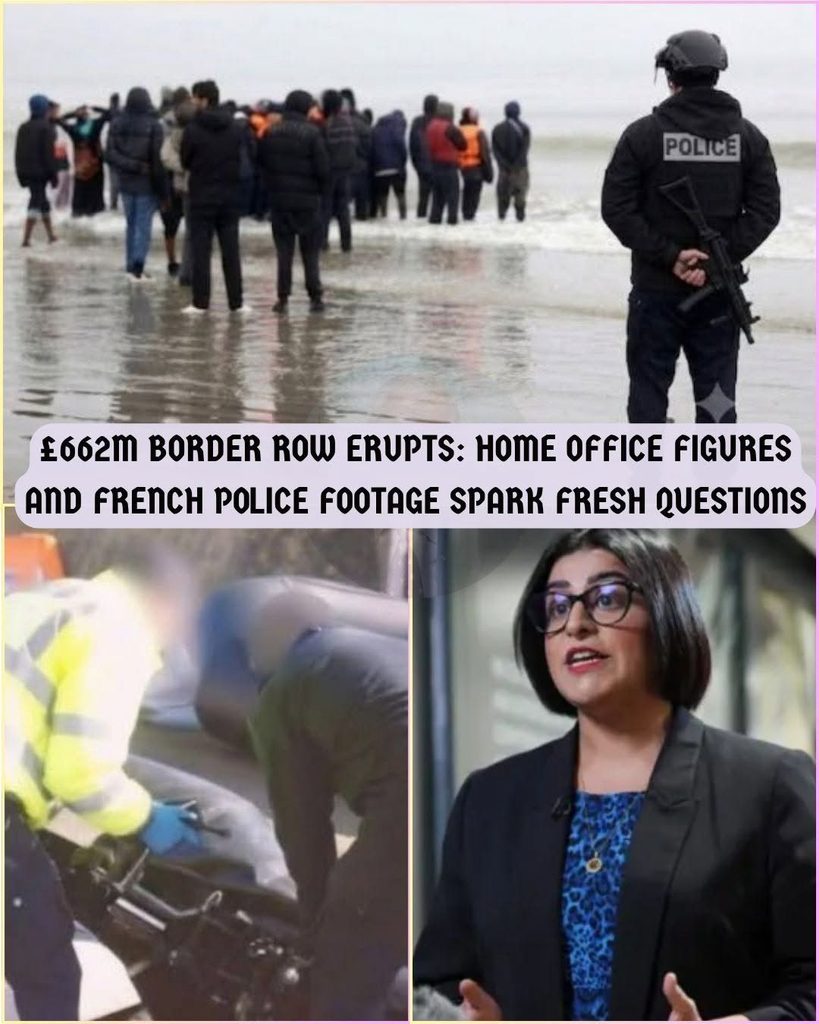
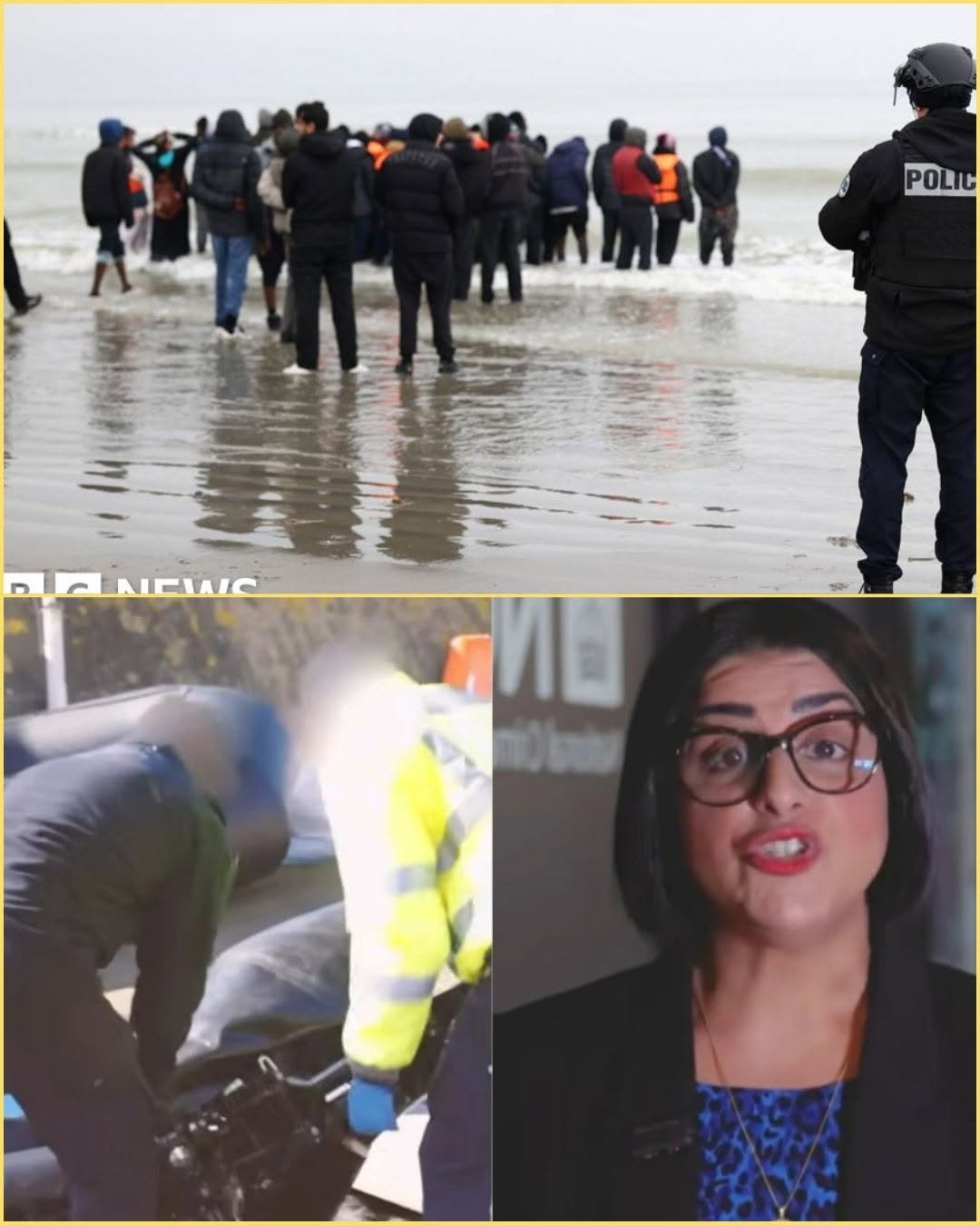
Images of French police apparently watching migrants enter boats have repeatedly generated anger in Britain.
But what can appear straightforward on video may involve complicated operational and legal considerations.
French authorities have historically faced restrictions and safety concerns about intervening once boats are already at sea.
Physical intervention involving heavily overloaded inflatable boats can create an immediate danger of capsizing, potentially placing passengers and officers at risk.
Smuggling organisations have also adapted.
One increasingly important tactic involves so-called “taxi boats.”
Rather than assembling a large group openly on a beach and launching directly from the shore, smugglers can launch a boat elsewhere — sometimes from inland waterways — before travelling along the coast and collecting passengers waiting in shallow water.
The tactic makes conventional beach interception considerably more difficult.
Britain’s Border Security Commander reported that organised crime groups have adopted taxi boats, simultaneous launches and, in some cases, violence at departure sites as authorities increase enforcement pressure.
This does not mean French officers have been instructed simply to allow migrants through.
Indeed, the latest agreement specifically expands maritime tactics intended to intercept taxi boats.
By June, the Government said French authorities had stopped six such vessels in two months, returned their passengers to France and secured prison sentences against five smugglers.
Without authenticated evidence establishing the context of a particular viral video, claims that it proves French police were “secretly ordered” to facilitate crossings should therefore be treated cautiously.
The Numbers Also Reveal the Scale of the Problem
Despite prevention efforts, small-boat crossings remain substantial.
The National Crime Agency recorded 41,472 small-boat arrivals in 2025, a 13% increase from 36,816 in 2024.
The agency said organised crime groups had adapted their methods, including carrying more passengers per boat and increasingly relying on taxi-boat operations.
This is an important counterpoint to government statements about prevented journeys.
Both statistics can be true simultaneously.
French authorities can prevent tens of thousands of crossing attempts while tens of thousands of people still successfully reach Britain.
That reflects the enormous scale and repeated nature of activity along the Channel.
It also means that counting “preventions” is not the same as measuring how many people were permanently deterred from trying again.
Someone stopped from launching on one day may potentially attempt another crossing later.
The Government’s own Border Security Commander acknowledges this analytical problem.
Its annual report says there is emerging evidence of deterrence but that further evidence is needed to demonstrate sustained behavioural change among migrants and organised crime groups.
The ‘One In, One Out’ Experiment
Britain and France are also testing a different approach.
Under the UK-France Agreement on the Prevention of Dangerous Journeys, which became operational in August 2025, Britain can return certain small-boat arrivals to France.
In exchange, an equivalent number of eligible people can enter Britain legally from France after identity and security checks.
By June 30, 2026, official figures showed 1,087 people had been returned from Britain to France, while 1,117 had been transferred legally from France into the UK.
Supporters argue that the scheme creates a deterrent because crossing illegally no longer guarantees remaining in Britain.
Critics question whether the numbers involved are large enough to change behaviour significantly.
Again, the scale matters.
Thousands of people being moved through a reciprocal pilot must be viewed alongside tens of thousands of annual Channel arrivals.
Is Britain Being ‘Played’?
The available evidence does not establish that the Home Office is secretly concealing a £662 million scandal or that French police have generally been ordered to allow migrants to cross.
But neither do official figures show that the problem has been solved.
They reveal a much more complicated picture.
British-funded French operations are preventing significant numbers of attempted crossings. Enforcement resources have increased. Smugglers have been arrested, equipment seized and thousands of launches disrupted.
At the same time, organised criminal networks continue adapting their tactics, and tens of thousands of people have still reached Britain by small boat.
The National Crime Agency’s latest assessment, published in September, concluded that law-enforcement activity — including disruption of boat and engine supply chains, action against smugglers and French beach interventions — had been an important factor in reducing small-boat activity during the first half of 2026.
That finding provides support for the Government’s argument that enforcement cooperation is having an effect.
It does not answer the political question of whether taxpayers are receiving sufficient results for the money being spent.
That is ultimately where the controversy lies.
The headline figure of more than 46,000 prevented attempts is supported by government data. But it does not mean Britain’s Channel problem has disappeared, nor does it demonstrate that every prevented crossing represents a person permanently deterred from reaching Britain.
The evidence instead points to an escalating contest.
Britain and France are putting more police, surveillance technology and intelligence resources into stopping crossings.
Smuggling networks are responding with larger boats, changing launch sites, simultaneous departures and increasingly sophisticated taxi-boat tactics.
Whether the latest enforcement measures can turn thousands of individual interceptions into a sustained reduction in Channel crossings remains the real test of Britain’s costly partnership with France.