Sarah Pochin Challenges Andy Burnham Over Britain’s Future Relationship With the EU
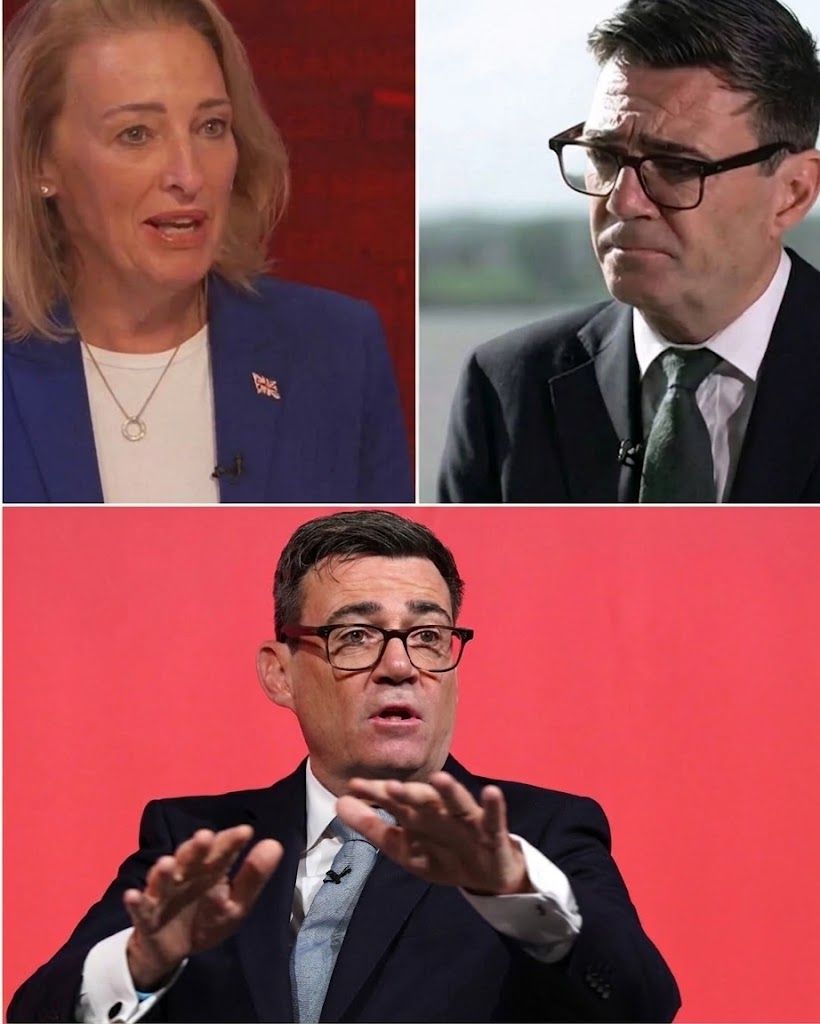
A fresh political dispute over Britain’s relationship with the European Union has put Reform UK MP Sarah Pochin and Greater Manchester Mayor Andy Burnham in the spotlight.
During a reported GB News interview, Pochin challenged Burnham over his position on the UK’s future relationship with the European Union. The exchange focused on whether Britain could eventually seek to rejoin the EU and whether such a move would represent a departure from the decision made by voters in the 2016 Brexit referendum.
Pochin argued that Burnham could potentially move Britain towards closer European integration without having received a direct mandate from voters to reverse Brexit. She also referred to comments attributed to Burnham concerning EU membership and questioned whether his position was consistent with statements he had previously made to voters.
The confrontation reflects a broader disagreement within British politics over one of the country’s most consequential political decisions of recent decades.
A debate that remains unresolved
The 2016 referendum resulted in 17.4 million votes for Leave, compared with approximately 16.1 million for Remain. Britain subsequently left the European Union in January 2020, while the transition period ended at the close of that year.
Since then, the question of Britain’s relationship with Europe has remained politically sensitive.
Some politicians and campaigners argue that Brexit should remain the basis of Britain’s future relationship with the EU. Others advocate closer cooperation with European countries and, in some cases, have discussed the possibility of eventually reversing Brexit.
The distinction between closer cooperation and rejoining the EU is important. Britain can negotiate closer economic, security or diplomatic relationships with European countries without becoming an EU member again. Rejoining the EU would involve a substantially different political and legal process.
That distinction is central to the debate surrounding Burnham’s reported comments.
What Sarah Pochin argued
Pochin’s intervention was framed around political accountability.
According to the account supplied for the GB News exchange, she questioned whether Burnham could support a future return to the EU without receiving a specific mandate from voters.
She also reportedly challenged the economic argument for closer European integration by asking why Britain would want to return to the EU when countries such as Germany and France have experienced periods of relatively weak economic growth.
Her comments reflect an argument frequently made by Brexit supporters: that Britain’s economic performance should be assessed independently rather than compared only through its relationship with the EU.
However, economic comparisons between countries are complicated. Growth rates can be influenced by many factors, including population changes, productivity, investment, energy costs, government spending, interest rates and the structure of individual economies.
For that reason, a comparison between Britain, France and Germany does not by itself establish whether EU membership or non-membership is responsible for a country’s economic performance.
The question of political promises
Another important element of the controversy concerns political promises.
The supplied account states that Pochin referred to comments made by Burnham around eight weeks earlier in which he reportedly told voters in Makerfield that he would not seek to rejoin the EU.
If accurately quoted and placed in its original context, such a statement would be relevant to the political argument because it would provide voters with a direct indication of Burnham’s position.
However, the precise wording and context matter.
Political figures may distinguish between formally rejoining the EU and supporting closer relations with European institutions. They may also change their positions in response to changing circumstances or public opinion.
Consequently, determining whether two statements are contradictory requires looking at the exact wording, the dates on which they were made and what policy each statement referred to.
Without independently checking the original interview and Burnham’s earlier remarks, it would be inappropriate to conclude that he has changed his position.
Why the EU question remains politically significant
Brexit continues to influence British politics because it affects several major areas of government policy.
Trade is one of the most visible. The EU remains an important trading partner for the United Kingdom, while British businesses continue to operate under arrangements created by the post-Brexit relationship.
Immigration is another major area. Ending free movement was one of the central objectives of Brexit supporters. The UK’s immigration system now operates under rules established independently of EU free-movement arrangements.
Security and defence have also become increasingly important. Britain remains outside the EU but continues to cooperate with European countries through NATO, bilateral agreements and other international arrangements.
Northern Ireland adds another layer of complexity because of its unique position following Brexit and the importance of maintaining an open border with the Republic of Ireland.
These issues mean that discussions about Britain’s relationship with Europe are no longer limited to the question of EU membership itself.
Burnham’s position under scrutiny
Andy Burnham has long been a prominent figure within British politics and has previously held senior government positions before becoming Mayor of Greater Manchester.
His views on Britain’s relationship with Europe have therefore attracted attention whenever the issue returns to the political agenda.
The current dispute is particularly significant because it illustrates a wider question: how should politicians balance their personal or political views with the result of the 2016 referendum?
For Brexit supporters, the referendum represents a democratic mandate that should not be reversed without another explicit vote.
Those favouring closer European integration can make a different argument: that democratic mandates apply to particular political circumstances and that voters should remain free to reconsider major national decisions as circumstances change.
Neither argument eliminates the constitutional question of how such a major change should be authorised.
If a future government proposed EU membership, it would face extensive political, legal and diplomatic negotiations. The UK’s eventual relationship with the EU would also depend on the terms available at the time.
A debate bigger than one interview
The exchange between Pochin and Burnham therefore represents more than a disagreement between two politicians.
It reflects an unresolved national debate over what Brexit should mean in the long term.
For some voters, leaving the EU was a permanent assertion of national sovereignty. For others, Brexit was a decision that could eventually be reconsidered if circumstances changed.
Between those positions lies a wide range of possibilities, including closer trading arrangements, increased security cooperation, participation in selected European programmes and other forms of structured partnership.
That makes the language used by politicians particularly important.
A statement supporting closer cooperation with European countries is not necessarily a statement supporting EU membership. Likewise, criticism of Brexit does not automatically mean that a politician is advocating immediate re-entry into the European Union.
What happens next?
The latest confrontation is likely to keep attention focused on Burnham’s precise position and on whether he has made any commitment concerning future EU membership.
For Pochin and Reform UK, the issue provides an opportunity to emphasise their opposition to reversing Brexit and their focus on national sovereignty.
For Burnham, the key question is how his current position compares with statements he has previously made to voters.
Ultimately, the debate is likely to depend less on dramatic political exchanges and more on the exact policies being proposed.
Did Burnham advocate EU membership, closer cooperation, or something else entirely? What exactly did he promise voters in Makerfield? And what would a future change in Britain’s relationship with Europe actually require?
Those are the questions that need to be answered before the latest political confrontation can be fully understood.
Note: I don’t have live web search available in this chat, so I have not independently verified the GB News interview, the “eight weeks” timing, or the precise quotations attributed to Sarah Pochin and Andy Burnham. The article above treats those details as reported claims rather than independently established facts.