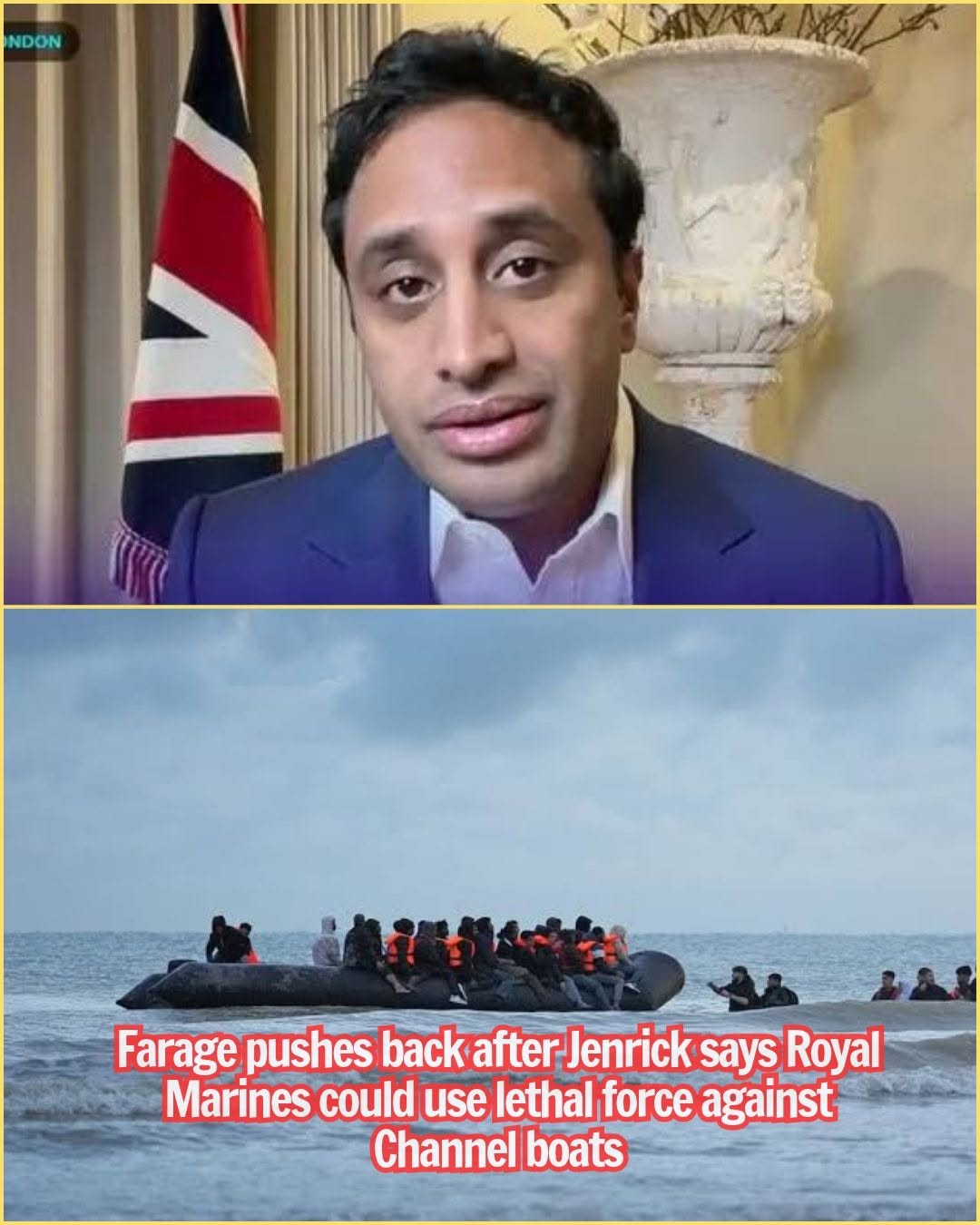
Farage pushes back after Jenrick says Royal Marines could use lethal force against Channel boats
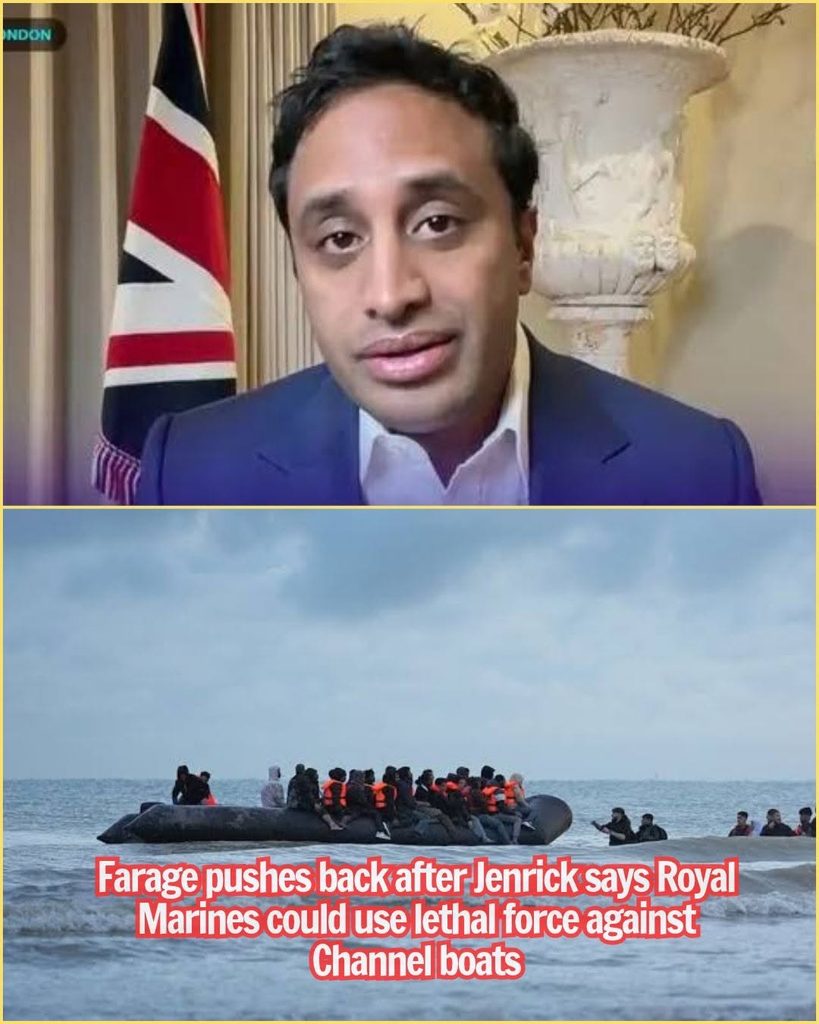
Nigel Farage has moved to deny that a Reform UK government would authorise the use of lethal force against small boat crossings in the Channel, intervening just hours after one of his MPs argued that troops should be allowed to open fire.
The Reform UK leader overruled Robert Jenrick, a prominent MP who defected from the Conservatives, after Jenrick suggested during a broadcast interview that the party would deploy the military to turn vessels back towards France. The public disagreement comes amid visible strain inside the party, on the same day an opinion poll suggested Reform had slipped into third place behind the Conservatives.

Speaking on LBC, Farage insisted that a Reform administration would not authorise any routine use of force against crossing boats, asserting that Jenrick was being “utterly misconstrued”.
Farage maintained that British forces would be permitted to use force only if they were fired at first, describing such action as a defensive response rather than a general policy of shooting at dinghies.
“Anybody wearing British military uniform who gets fired at has the right to respond. That’s what he was saying,” Farage told the station. Farage linked the situation to criminal operations operating around northern French camps, saying: “Remember, in these camps, every week there are shootings, there are stabbings. We are dealing here with very, very serious international criminal organisations, and what we’re saying is, we will, if we win the next election, pick these people up and take them back to France.”
Farage conceded that such interceptions could provoke confrontation, but predicted that robust action would quickly halt crossings altogether. “There is a possibility that initially that might be met with some force.
If it is, force will be met with force. But I tell you something: within two weeks of boats being taken back to France, the boats will stop coming,” he said.

The controversy was ignited when Jenrick claimed during an appearance on TalkTV that Reform was the only political party willing to use force against people making the crossing. “What we are going to do, and we’re the only political party that has the courage to say this, is deploy the Royal Marines into the Channel. If they need to use lethal force, then they’ll be able to do so,” Jenrick said.
Jenrick suggested that authorising the use of force would bring the crossings to an end “in just a few days”.
While he stated that using force was “obviously not what we want to see happen”, he added: “We want to see these individuals picked up off the boats in a sensible and reasonable way, and taken straight back to France.”
The remarks prompted sharp condemnation from the government. Defence minister Luke Pollard described the comments as “disgusting and illegal”, warning that members of the British armed forces are barred under military rules from following an unlawful command.

“We do not shoot unarmed civilians. We do not take military action against civilians,” Pollard told Times Radio. “The idea of this is a soundbite designed by Reform to distract from their sleaze and their scandal … it’s abhorrent to military values, it’s abhorrent to British values. I don’t think anyone should give this any truck.
We can all see what this is: an attempt to distract from Reform’s internal woes.”
The party’s position was further complicated when Reform UK chair Zia Yusuf also walked back earlier hardline rhetoric. Yusuf, who had previously promised that lethal force would be deployed to stop migrant boats reaching Britain, told BBC Breakfast that such measures would apply only “in extremely limited circumstances where it is necessary to protect innocent life.” Yusuf argued that personnel had to be prepared to act if they encountered individuals carrying weapons or threatening the lives of passengers on board.
Yusuf also highlighted internal divisions with former Conservative figures who joined Reform, including Jenrick and former home secretary Suella Braverman.
Asked on Sky News about a past social media post where he had referred to them as “quislings” for their roles in the previous government, Yusuf insisted that ministers in that administration bore collective responsibility for failing to deliver promised reductions in immigration numbers.
Yusuf additionally diverged from Braverman over controversial comments she had made suggesting her South Asian heritage prevented her from being considered English. Yusuf rejected that stance, referencing celebrated sporting figures such as Ashley Cole, Bukayo Saka, Rio Ferdinand and Nasser Hussain to illustrate that such an argument did not hold water with him. The widening public debate arrives alongside a Times poll indicating Reform had dropped to third place behind Labour and the Conservatives, giving Kemi Badenoch’s party its strongest showing since she became Tory leader.