Tommy Robinson’s London Rally Reignites Britain’s Debate Over Immigration, Free Speech, and Public Order
A major London demonstration led by Tommy Robinson has reignited one of Britain’s most heated national debates, drawing large crowds, counter-protesters, heavy policing, and fierce disagreement over what the rally represents.
For supporters, the event was a patriotic show of frustration from people who believe Westminster has ignored concerns about immigration, free speech, national identity, public safety, and political
trust.
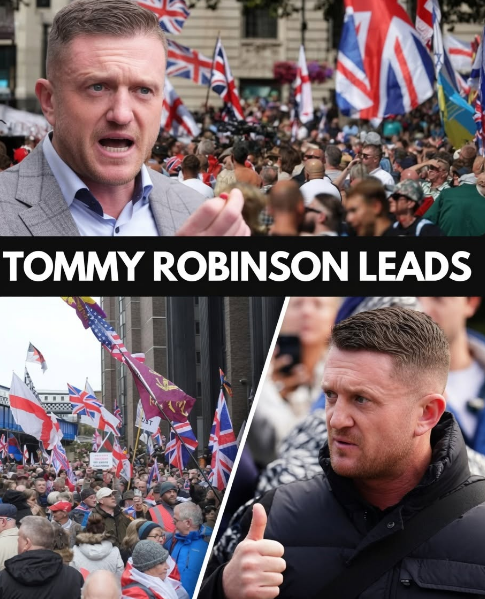
For critics, it was a dangerous far-right mobilization that risked inflaming hostility toward migrants, Muslims, and minority communities.
That clash of interpretations is why the rally has become more than a street protest. It has become a symbol of Britain’s widening political divide.
What Happened in London
The “Unite the Kingdom” rally, associated with Tommy Robinson, whose real name is Stephen Yaxley-Lennon, drew a large crowd into central London. Police estimates for a major earlier rally put attendance at more than 100,000, while counter-protesters also gathered nearby. Reports said the event led to disorder in parts of central London, with officers injured and arrests made after clashes involving some participants.
More recent “Unite the Kingdom” and rival demonstrations also brought tens of thousands onto London’s streets, with the Metropolitan Police deploying thousands of officers. Reports said 43 arrests were made across the day, though police described much of the protest activity as largely peaceful compared with earlier disorder.
The scenes quickly spread online: flags, chants, speeches, police lines, counter-demonstrations, and arguments over whether the rally showed a country demanding change or a movement pushing Britain toward deeper division.
Why Supporters Turned Out
Many supporters say they attended because they feel ignored by mainstream politics.
Their concerns often include illegal migration, asylum accommodation, public safety, free speech, grooming gang scandals, trust in policing, and a belief that national identity is being dismissed or weakened.
For these voters and activists, the rally was not simply about Tommy Robinson. It was about frustration with institutions they believe no longer listen.
They argue that people are too often branded extreme for raising concerns about immigration or integration. They believe the rally gave voice to ordinary citizens who feel silenced by politicians, media organizations, and public bodies.
That sense of exclusion is politically powerful. When people believe democratic institutions are not responding, street protests become a way to show strength and visibility.
Why Critics Are Alarmed
Opponents of the rally see it very differently.
They argue that Robinson’s political history and anti-Islam rhetoric make the event deeply concerning. Critics say the rally risks normalizing hostility toward migrants, refugees, Muslims, and minority communities under the language of patriotism and free speech.
Anti-racism groups and counter-protesters framed their presence as a stand against far-right politics. For them, the issue is not whether people have the right to protest. It is whether the rally’s message contributes to fear, intimidation, or social division.
This is the core disagreement: one side sees the rally as democratic expression; the other sees it as a warning sign.
Immigration at the Center of the Debate
Immigration remains the issue that most clearly connects the rally to wider national politics.
Britain has spent years debating small boat crossings, asylum backlogs, deportations, visa rules, hotel accommodation, border enforcement, and pressure on local services.
Supporters of tougher controls argue that the public has repeatedly been promised action but has seen too little change. They say anger is growing because people believe the system is unfair, expensive, and poorly managed.
Critics warn that immigration debates can become dangerous when frustration is directed at entire communities rather than government policy. They argue that migrants and minorities should not be treated as responsible for every failure in housing, healthcare, policing, or wages.
A serious national debate must separate policy criticism from collective blame.
Free Speech and Public Order
The rally also highlighted the tension between free speech and public order.
A democracy must allow controversial demonstrations. People have the right to gather, protest, criticize government, and express unpopular views.
But that right does not include violence, intimidation, hate crime, or attacks on police and counter- protesters.
This is why policing such events is difficult. Officers must protect the right to protest while preventing clashes between rival groups. They must avoid appearing politically biased while responding to real risks on the ground.
When officers are injured or arrests are made, critics ask whether the protest became too aggressive. When police impose restrictions, supporters ask whether their speech is being suppressed.
Both questions are now part of Britain’s wider argument about protest rights.
What the Rally Means Politically
The rally matters because it shows that a large number of people are willing to mobilize around immigration, identity, and distrust of the establishment.
That does not mean everyone who attended shares the same views. Large protests often attract a range of motivations, from ordinary frustration to more ideological activism.
But it does mean mainstream parties cannot simply ignore the mood behind the event.
If voters feel unheard, they will look elsewhere. That can strengthen Reform UK, pressure the Conservatives, and create difficulties for Labour, especially if the government appears unable to restore public confidence on borders, crime, and social cohesion.
At the same time, politicians face a responsibility not to exploit anger in ways that deepen division or endanger communities.
The Social Media Effect
Online platforms have amplified the rally’s impact.
Supporters shared images of large crowds as proof of a national awakening. Critics shared clips of disorder and confrontations as proof of extremism. Each side used different moments to tell a different story.
That is how modern political events work.
A protest is no longer judged only by what happens on the street. It is judged through viral clips, captions, livestreams, edited videos, and partisan commentary.
This makes verification essential. Crowd size, arrests, injuries, speeches, and incidents should be reported carefully, because inaccurate claims can inflame an already tense situation.
What Comes Next
The rally leaves Britain with difficult questions.
How should the country debate immigration without demonizing migrants?
How should police protect protest rights while preventing violence?
How should politicians respond to public anger without feeding extremism?
How can free speech be defended while hate and intimidation are confronted?
How can national identity be discussed in a way that includes rather than excludes law-abiding citizens of different backgrounds?
These questions will not disappear after one demonstration.
Conclusion: A Rally That Revealed Britain’s Divide
Tommy Robinson’s London rally has become a national flashpoint because it reflects a deeper struggle over Britain’s future direction.
Supporters see it as a wake-up call from citizens who feel ignored.
Critics see it as a dangerous sign of rising far-right influence.
Both reactions show how divided the country has become.
The challenge for Britain is to respond without denial and without hysteria.
Immigration, public safety, free speech, and national identity are legitimate issues for democratic debate.
But that debate must be grounded in facts, lawful protest, and a refusal to treat entire communities
as enemies.
The rally may be over, but the questions it raised are now firmly at the center of British politics.