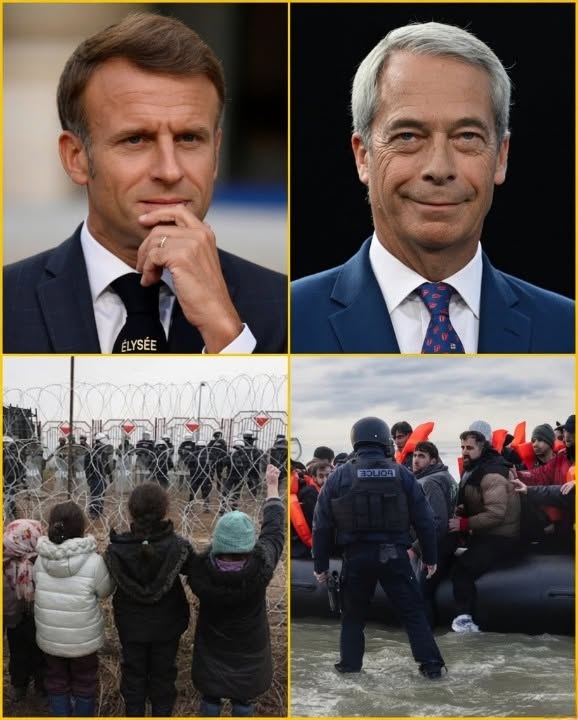
Poland Strengthens Its Border as Large Group of Migrants Reportedly Turned Back, Renewing Europe’s Immigration Debate

The issue of irregular migration remains one of the defining political challenges facing Europe, with governments across the continent continuing to balance humanitarian responsibilities, border security, and public confidence. Poland has become one of the countries most closely associated with this debate because of its strategic location on the European Union’s eastern frontier. Reports claiming that a large group of migrants attempting to enter Poland was prevented from crossing the border have once again sparked widespread discussion online, fueling both praise from supporters of tougher border controls and criticism from those who believe asylum protections must remain paramount. While dramatic headlines have circulated on social media suggesting that “Muslims tried to mass migrate into Poland and were rejected at the border,” the available information requires careful examination, separating confirmed facts from political rhetoric.
Vox Populi
Poland occupies a unique position within Europe. Sharing borders with Belarus, Ukraine, Lithuania, Germany, Slovakia, and the Czech Republic, it has increasingly found itself at the center of migration debates, particularly since the migration pressures that intensified in recent years along the Belarusian frontier. Polish authorities have repeatedly argued that organized efforts by Belarus have encouraged or facilitated attempts by migrants from the Middle East, Africa, and parts of Asia to reach the European Union through Polish territory. Warsaw has described these movements as part of a broader strategy of hybrid pressure rather than purely spontaneous migration, while Belarus has rejected such accusations. Regardless of the political disagreement between the two countries, the border has become one of Europe’s most heavily monitored frontiers.
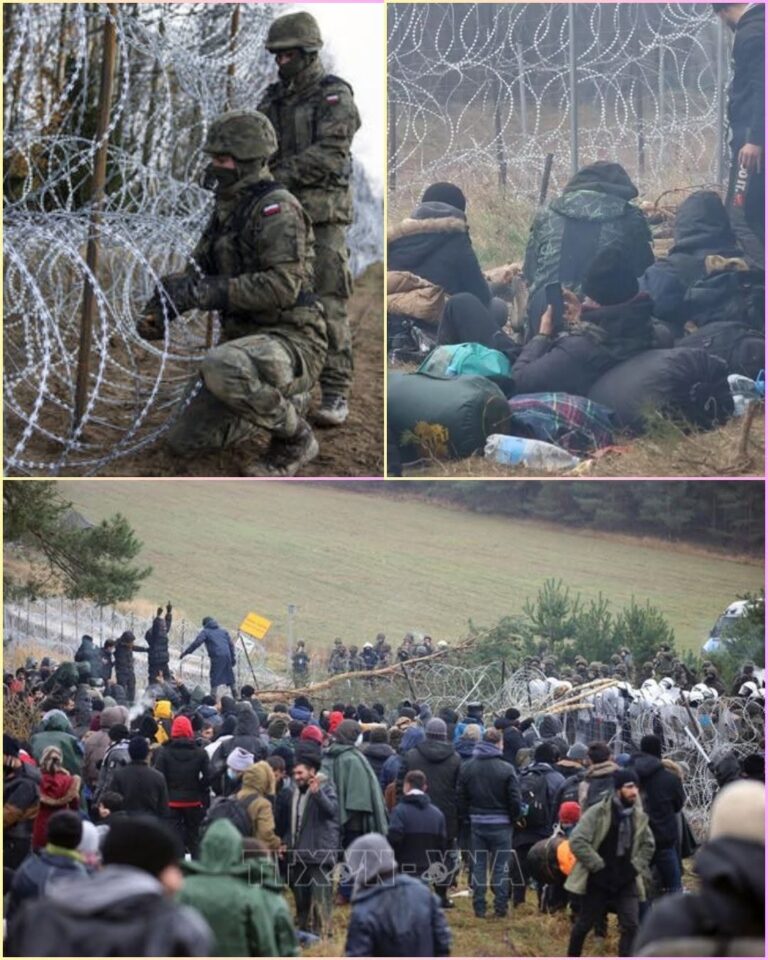
According to reports circulating on social media, the latest incident involved a sizable group of migrants attempting to approach or cross Poland’s eastern border before ultimately being prevented from entering the country. Polish border authorities reportedly intercepted the group and denied entry under existing border enforcement procedures. Although some online posts have described the event as a “mass migration attempt,” officials generally assess such incidents according to operational facts, including the number of people involved, the methods used to approach the border, and whether individuals sought asylum through legal procedures or attempted unauthorized crossings. Without independently verified evidence supporting every claim circulating online, it remains important to distinguish confirmed official statements from commentary shared across social media platforms.
The characterization of the migrants themselves has also become part of the broader political conversation. Some online commentators have specifically identified the group as Muslims, reflecting assumptions based on the national origins of many migrants who have traveled through Belarus toward the European Union in recent years. However, religious identity is not always officially documented during initial border encounters, and public authorities typically identify individuals by nationality rather than religion. Consequently, while many migrants traveling these routes may originate from predominantly Muslim countries, broad claims regarding the religious identity of every individual involved cannot automatically be verified unless confirmed by official documentation.
For the Polish government, preventing unauthorized border crossings has become a central element of national security policy. Successive administrations have argued that maintaining effective border control is essential not only for Poland but for the security of the European Union’s external frontier. Officials frequently emphasize that allowing uncontrolled crossings could encourage additional migration attempts while undermining confidence in the EU’s immigration system. These concerns have gained additional political significance as migration continues to influence elections throughout Europe, with many voters identifying border management as one of their highest priorities.
Supporters of Poland’s current border policy argue that every sovereign nation possesses the legal authority to determine who may enter its territory. They contend that rejecting unauthorized crossings does not necessarily prevent individuals from applying for international protection through established legal channels but instead reinforces the distinction between regulated immigration and illegal entry. In their view, consistent enforcement discourages organized smuggling operations, protects national security, and demonstrates that immigration laws are meaningful rather than symbolic. Many also point to the broader responsibilities associated with protecting the Schengen Area, where internal border controls are generally limited once individuals have entered participating countries.
Critics, however, express concern that increasingly restrictive border measures could affect legitimate asylum seekers who may be fleeing conflict, persecution, or humanitarian crises. Human rights organizations have frequently argued that states should ensure every person seeking international protection has access to fair asylum procedures consistent with international law. Some advocacy groups have questioned whether rapid border returns or physical barriers may complicate access to asylum for vulnerable individuals. They also emphasize the importance of evaluating each case individually rather than treating all irregular arrivals as identical security concerns.
The humanitarian dimension of migration remains one of the most emotionally complex aspects of the debate. Many migrants attempting to reach Europe undertake dangerous journeys across multiple countries, often relying on smugglers who promise access to the European Union. Some originate from regions affected by war or political instability, while others are motivated by economic hardship or limited opportunities at home. International organizations have repeatedly warned that these journeys expose migrants to exploitation, violence, and significant personal risk. Consequently, governments face the difficult challenge of protecting borders while also respecting international humanitarian obligations. Migration through Belarus has evolved into a particularly sensitive geopolitical issue. Polish authorities have previously accused Belarusian officials of facilitating the transport of migrants to border areas, providing logistical support, or encouraging attempts to cross into EU territory. European Union institutions have similarly criticized Belarus over its handling of migration during periods of heightened border tension. Belarus, meanwhile, has denied orchestrating such activities and has argued that European governments are politicizing the issue. The resulting diplomatic dispute has added another layer of complexity beyond the immediate questions surrounding immigration policy.
Poland has responded by investing heavily in border infrastructure. Physical barriers, surveillance systems, thermal cameras, drones, and expanded border patrol operations have become increasingly visible along sections of the eastern frontier. Officials argue that these investments have substantially reduced successful unauthorized crossings while improving the ability of border personnel to respond rapidly to incidents. Enhanced cooperation with European agencies, including Frontex, has further strengthened operational capabilities, although Poland has maintained primary responsibility for managing its external border.
Public opinion within Poland reflects a mixture of security concerns and humanitarian considerations. Surveys conducted over recent years have often shown significant support for stronger border protection, particularly following periods of heightened migration activity. Many citizens express concerns regarding national security, cultural integration, and the capacity of public services should irregular migration increase substantially. Others emphasize Poland’s previous generosity toward refugees fleeing neighboring Ukraine, arguing that the country has already demonstrated a willingness to provide humanitarian assistance under exceptional circumstances while maintaining strict controls against unauthorized migration through other routes.
The broader European context also shapes the discussion. Across the continent, governments have introduced or proposed stricter immigration measures, expanded deportation policies, increased border enforcement, and revised asylum procedures. Countries including Italy, Greece, Hungary, Denmark, Sweden, and others have adopted varying approaches reflecting domestic political priorities and legal frameworks. At the same time, European institutions continue attempting to establish a more unified migration system capable of balancing responsibility among member states while maintaining effective external borders.
Political parties across Europe frequently use migration as a defining electoral issue. Parties advocating stronger border controls often argue that governments must restore confidence by demonstrating effective enforcement of immigration laws. Opponents counter that migration debates sometimes oversimplify highly complex humanitarian realities and risk encouraging generalizations about entire communities or religious groups. Consequently, incidents involving border crossings often receive extensive media coverage because they resonate far beyond the immediate operational details, influencing national political conversations and public perceptions.
The role of social media has significantly accelerated the spread of migration-related narratives. Short video clips, dramatic headlines, and emotionally charged captions often circulate before complete factual information becomes available. Some posts emphasize border security successes, while others highlight humanitarian concerns. Because such content frequently lacks broader context, audiences may encounter incomplete or conflicting accounts of the same incident. This underscores the importance of relying on official statements, verified reporting, and multiple independent sources before reaching definitive conclusions regarding events unfolding at international borders.
International law provides a framework that both governments and humanitarian organizations reference during these debates. States generally retain sovereign authority over immigration enforcement while simultaneously remaining bound by obligations under refugee law and human rights conventions. Determining how these legal principles apply in specific operational circumstances often becomes the subject of judicial review, political disagreement, and international discussion. Consequently, border incidents can evolve into broader legal and diplomatic debates extending well beyond the immediate event itself.
Security experts note that border management involves more than simply preventing physical crossings. Intelligence gathering, cooperation among neighboring countries, disruption of organized smuggling networks, document verification, and coordination with international agencies all contribute to comprehensive border security strategies. Governments increasingly emphasize technological solutions alongside traditional patrol operations, seeking to detect and respond to migration movements efficiently while documenting encounters according to legal requirements.
For migrants themselves, unsuccessful border crossings frequently result in prolonged uncertainty. Individuals denied entry may remain stranded in border regions, attempt alternative routes, seek asylum elsewhere, or return to countries through which they previously traveled. Humanitarian organizations working near migration corridors often provide emergency assistance, including food, shelter, and medical care, while advocating for legal protections. At the same time, governments remain concerned that humanitarian access should not inadvertently facilitate organized irregular migration, creating another difficult policy balance.
The language used to describe migration also shapes public perception. Terms such as “mass migration,” “invasion,” or “border crisis” may convey urgency but can also influence emotional responses depending on context. Similarly, describing entire groups primarily through religious identity may oversimplify diverse populations whose members possess different nationalities, motivations, and legal circumstances. Responsible reporting therefore seeks to distinguish verified operational facts from broader political interpretations, enabling readers to understand both the event itself and the surrounding policy debate.
As Europe continues confronting migration pressures, incidents like the reported rejection of a migrant group at Poland’s border are likely to remain politically significant. For supporters of stronger border enforcement, such actions demonstrate the effectiveness of national sovereignty and immigration control. For critics, they highlight continuing concerns about asylum access and humanitarian protections. Both perspectives continue influencing public debate throughout Europe, where migration remains intertwined with questions of security, international law, demographic change, economic policy, and national identity.
Ultimately, the reported incident illustrates why migration remains one of the continent’s most divisive political issues. If official reports are accurate that Polish border authorities prevented an unauthorized crossing, the event reflects Poland’s longstanding commitment to enforcing its external border policy. At the same time, broader claims circulating online- including assertions regarding the religion, motives, or intentions of every individual involved should be approached cautiously unless independently verified by reliable evidence. As governments, international organizations, and citizens continue debating the future of European migration policy, careful attention to verified facts will remain essential in separating legitimate public discussion from speculation, ensuring that complex issues are examined with accuracy, context, and balance rather than assumption alone.