Did 200,000 People March on Ireland’s Parliament? Separating Verified Facts from Viral Claims Amid a Heated National Debate
Did 200,000 People March on Ireland’s Parliament? Separating Verified Facts from Viral Claims Amid a Heated National Debate
Introduction
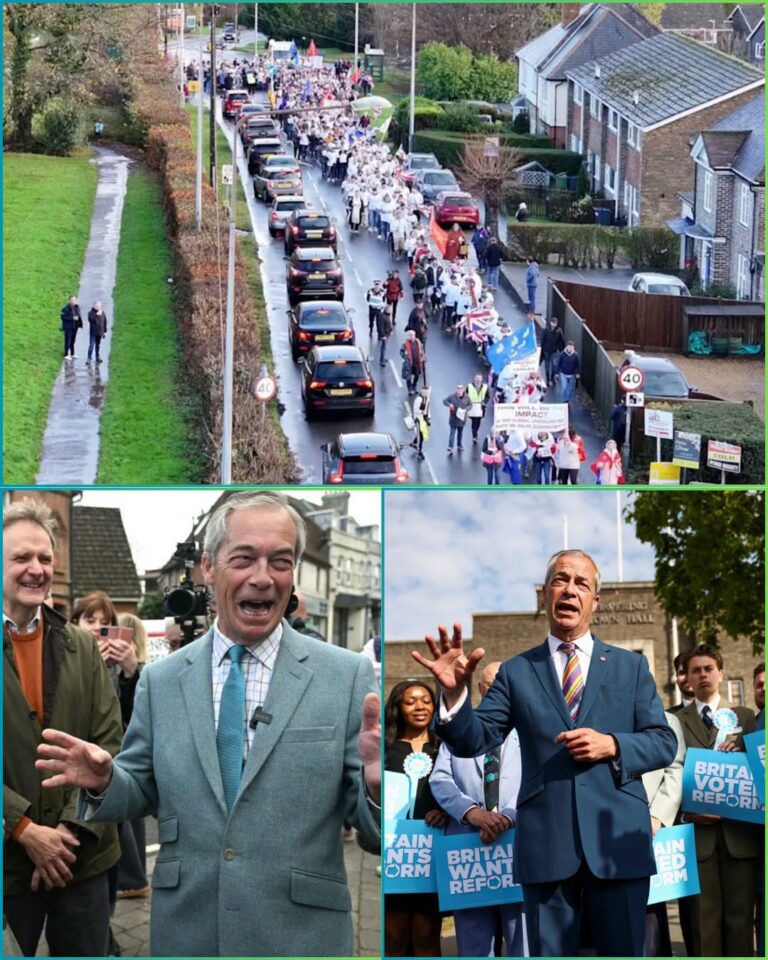
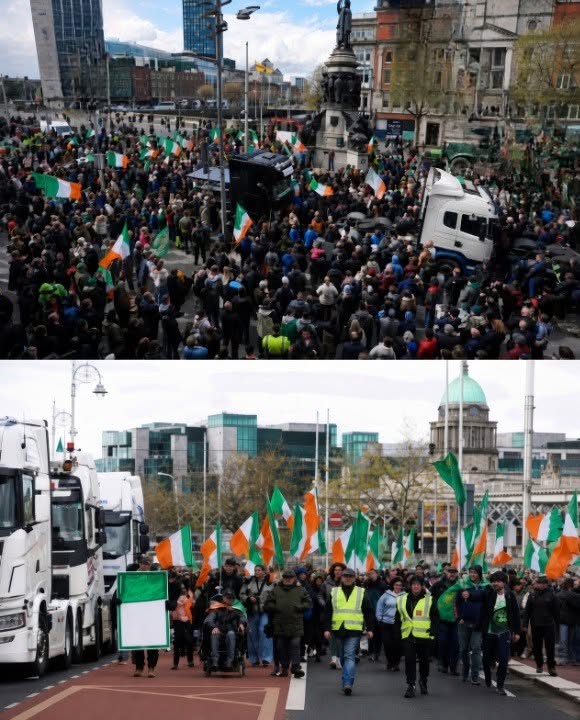
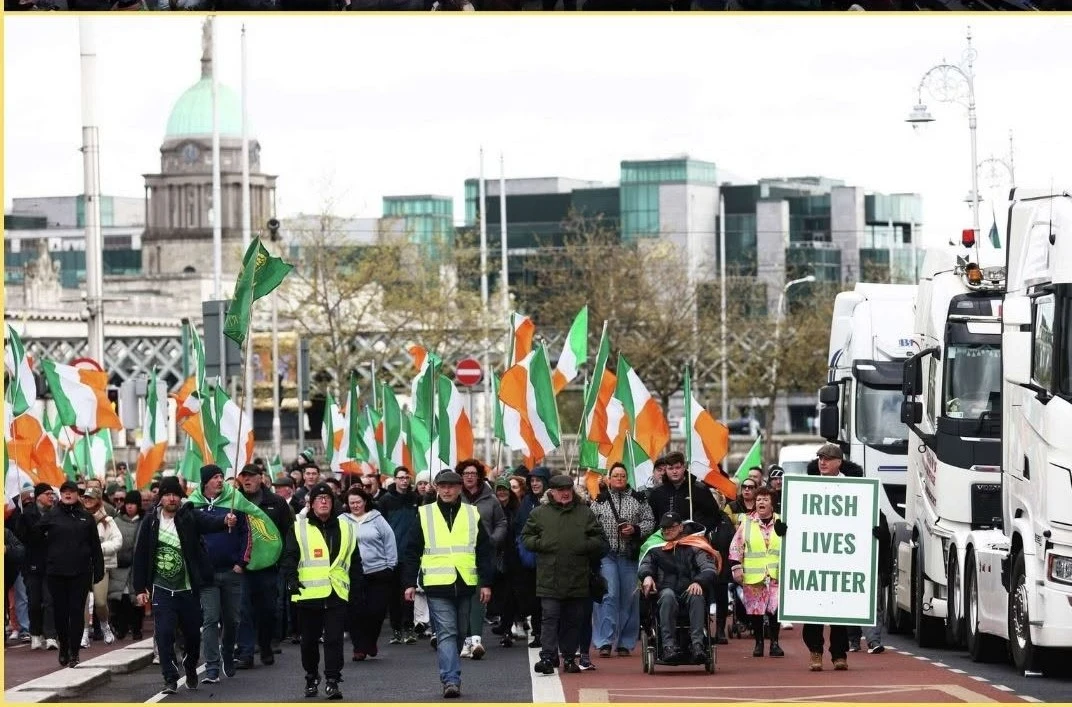
Social media has once again become flooded with dramatic headlines claiming that “Ireland is in total shutdown” and that 200,000 people have marched on Parliament as fears of government collapse grow. Accompanied by striking images of large crowds carrying Irish flags, the posts have generated millions of views and reignited debate over immigration, public services, and political leadership.
While Ireland has experienced significant demonstrations in recent years—including large protests over immigration, housing, and government policy—the viral claim that 200,000 people marched on Parliament and that the country has entered a “total shutdown” requires important context. Available evidence does not support those claims as established facts.
The protests reflect genuine public concerns and political tensions, but many of the more dramatic descriptions circulating online go beyond what has been confirmed by official sources.
This article examines what is known, what remains unverified, and why the demonstrations have become one of the country’s most closely watched political developments.
A Country Facing Multiple Pressures
Ireland has experienced rapid social and economic change over the past decade.
Among the issues dominating political discussion are:
- immigration and asylum policy;
- housing shortages;
- rising rental prices;
- pressure on healthcare services;
- cost-of-living challenges;
- infrastructure capacity;
- public spending.
These issues have become increasingly interconnected in political debate, with some campaigners arguing that population growth has intensified pressure on already stretched public services.
Others maintain that many of Ireland’s current difficulties stem from long-standing shortages in housing supply, infrastructure investment, and public planning rather than immigration alone.
The Growth of Anti-Immigration Demonstrations
Public demonstrations concerning immigration have become increasingly visible across Ireland.
Some protests have focused on:
- asylum accommodation;
- government migration policy;
- border management;
- community consultation;
- public spending.
Organizers often argue that communities have not been adequately consulted before accommodation centers were opened and that infrastructure has struggled to keep pace with demand.
Many participants describe themselves as concerned citizens rather than members of political organizations.
However, some demonstrations have also attracted activists associated with nationalist or far-right movements, leading to criticism from political opponents and civil society groups.
The Viral “200,000 Protesters” Claim
One of the most widely shared claims states that approximately 200,000 people marched on Ireland’s Parliament.
As of the time of writing:
- no official attendance figure confirms a crowd of 200,000;
- estimates reported by organizers and independent observers have varied;
- crowd-size estimates at large demonstrations are often disputed.
Attendance at mass protests is frequently calculated using different methodologies, including:
- organizer estimates;
- police estimates;
- media analysis;
- aerial photography;
- crowd-density calculations.
Without an independently verified count, it is not possible to state conclusively that 200,000 people attended.
Is Ireland in “Total Shutdown”?
The phrase “Ireland in total shutdown” has also spread widely online.
However, there is no verified evidence that Ireland has experienced a nationwide shutdown comparable to a national emergency, general strike, or suspension of government functions.
Although some demonstrations have caused:
- temporary road closures;
- traffic disruption;
- increased police presence;
- delays in city centers,
government institutions have continued to operate.
Public transport, businesses, schools, and essential services have generally continued functioning, although localized disruption has occurred during major events.
The phrase therefore appears to be rhetorical rather than a factual description of nationwide conditions.
Is the Government Facing Collapse?
Some posts also claim that the Irish government is close to collapsing.
Ireland’s political system has experienced periods of instability before, particularly when coalition governments have faced internal disagreements.
However, claims that government collapse is imminent remain speculative unless supported by concrete political developments, such as:
- a successful vote of no confidence;
- coalition partners withdrawing support;
- resignation of the Prime Minister (Taoiseach);
- dissolution of Parliament;
- announcement of an early general election.
Political criticism alone does not necessarily indicate that a government is about to fall.
Why Are So Many People Protesting?
Although participants represent a range of political views, several recurring concerns are commonly raised.
These include:
Immigration Policy
Many protesters argue that immigration levels should be reduced until infrastructure can better accommodate population growth.
They call for:
- stronger border controls;
- faster asylum decisions;
- stricter enforcement of immigration laws.
Housing
Ireland continues to experience one of Europe’s most severe housing shortages.
Rising prices, limited supply, and high rents have become central political issues.
Some demonstrators argue that population growth has increased pressure on housing availability.
Others point to years of insufficient construction and planning as the primary causes.
Cost of Living
Higher prices for housing, food, and energy have affected households across Ireland.
Many protesters believe government policies have not adequately addressed these pressures.
Community Consultation
Some local communities have expressed frustration over decisions involving asylum accommodation, arguing they were not sufficiently consulted before facilities were established.
Government officials have stated that emergency accommodation decisions often needed to be made quickly because of capacity constraints.
Government Response
Irish government ministers have defended their approach, arguing that the country has legal and humanitarian obligations toward people seeking international protection while also acknowledging pressure on public services.
Officials have announced various measures aimed at:
- increasing housing supply;
- improving asylum processing;
- strengthening border management;
- expanding infrastructure investment.
Government representatives have also emphasized the importance of peaceful protest while condemning violence, intimidation, or attacks on public facilities.
Supporters and Critics Offer Different Perspectives
The demonstrations have produced sharply contrasting interpretations.
Supporters of the Protests Say:
- Ireland’s infrastructure is overstretched.
- Housing shortages have reached crisis levels.
- Immigration policy requires reform.
- Citizens have the right to demand policy changes through peaceful protest.
Many participants describe the rallies as expressions of democratic engagement rather than hostility toward migrants.
Critics Respond:
Critics argue that some claims circulating online exaggerate the scale of the situation or risk inflaming public tensions.
They also caution against attributing complex challenges—such as housing shortages and healthcare pressures—to immigration alone, noting that these issues have developed over many years and involve multiple policy factors.
Some also express concern that inflammatory rhetoric could contribute to social division or target vulnerable communities.
The Role of Social Media
Social media has significantly amplified coverage of Irish protests.
Images of large crowds often spread rapidly alongside dramatic headlines.
However, online posts frequently:
- lack context;
- omit official attendance estimates;
- use emotionally charged language;
- present opinion as established fact.
As a result, readers are encouraged to distinguish between verified reporting and claims that have not been independently confirmed.
Democracy and Peaceful Protest
Peaceful demonstrations remain a protected form of political expression in Ireland.
Large public gatherings have historically influenced debate on issues ranging from taxation and public services to constitutional reform.
Regardless of political opinion, democratic participation typically depends on:
- peaceful assembly;
- respect for the rule of law;
- open public debate;
- accurate information.
Authorities have consistently urged protesters to remain peaceful while ensuring that policing balances public safety with the right to protest.
Conclusion
Ireland is undoubtedly experiencing an intense political debate over immigration, housing, public services, and the direction of government policy. Large demonstrations have highlighted genuine concerns among many citizens and have become a prominent feature of the national conversation.
However, the viral claims that Ireland is in “total shutdown,” that exactly 200,000 people marched on Parliament, or that government collapse is imminent are not established facts based on currently verified public evidence. Attendance estimates for large protests often vary, and dramatic descriptions shared online should be treated with caution unless supported by independent verification.
The broader issues raised by the demonstrations remain significant and continue to divide public opinion. Supporters argue that policy changes are needed to address pressures on infrastructure and immigration, while critics emphasize the importance of evidence-based debate, social cohesion, and protecting democratic values.
As events continue to unfold, careful reporting and reliance on verified information will remain essential to understanding one of the most closely watched political debates in contemporary Ireland.