‘Enough Is Enough’: Calls for Ten-Year Immigration Pause Ignite New Battle Over Britain’s Borders
‘Enough Is Enough’: Calls for Ten-Year Immigration Pause Ignite New Battle Over Britain’s Borders
A blistering attack on Britain’s immigration system is fuelling a fresh political argument over border control, asylum accommodation and whether the country should consider the radical step of dramatically restricting immigration for as long as a decade.
The message, circulating in uncompromising language online, portrays Britain’s immigration system not merely as being “under pressure” but as fundamentally broken. It accuses the Labour government of losing control of both the border and the financial cost of accommodating asylum seekers, while dismissing legitimate public concerns as extremist.
At the centre of the argument is a striking demand: a ten-year immigration pause.
Such a proposal would represent an extraordinary change in British policy. But exactly what a “pause” would mean is unclear. Would it apply to workers, international students, family visas and refugees? Would doctors and nurses be excluded? What about highly skilled employees recruited by British companies?
Those unanswered questions demonstrate the difference between a powerful political slogan and a workable immigration system.
Yet the anger behind the proposal reflects concerns that governments cannot simply ignore.
The Asylum Accommodation Problem
One of the strongest sources of public frustration has been the use of hotels to accommodate asylum seekers.
When the asylum system cannot process claims quickly enough and dedicated accommodation is insufficient, governments have relied on hotels and other temporary facilities.
For critics, the arrangement represents almost everything they believe is wrong with immigration policy.
It is expensive.
It can place large numbers of asylum seekers in communities with little warning.
Local councils and residents may feel they have limited influence over decisions.
Hotels that would otherwise accommodate tourists or business visitors can be removed from normal commercial use.
The political impact can therefore be significant even in communities where there is little evidence of serious disorder involving residents of the accommodation.
That distinction matters.
People can legitimately object to the cost, scale or location of asylum accommodation without assuming that every person living there represents a threat.
Are Migrants Receiving ‘Private Lets and the Full Works’?
Claims about generous taxpayer-funded support require similar context.
People receiving asylum support can be housed in different forms of accommodation while their claims are considered.
But asylum accommodation should not be confused with an unrestricted package of benefits unavailable to British citizens.
Different immigration categories also have different rights.
An asylum seeker awaiting a decision is legally different from a recognized refugee.
A person who entered the country without authorization is different again from someone whose visa has expired, while a foreign national legally working in Britain falls into another category entirely.
Using “migrants” to describe all of them can obscure rather than clarify the debate.
The underlying financial question remains legitimate: how much should taxpayers be expected to spend because immigration and asylum cases have not been resolved quickly enough?
That is a question ministers need to answer with transparent figures.
‘If You Break In, You Don’t Jump the Queue’
The idea that irregular arrival allows someone to “jump the queue” has become one of the most powerful arguments in the border debate.
It appeals to a straightforward sense of fairness.
People applying for visas from overseas can spend substantial amounts of money, provide documentation and wait for permission before entering Britain.
Seeing someone arrive by small boat can therefore appear fundamentally unfair.
But asylum law complicates the comparison.
An asylum claim is not simply another application for an ordinary immigration visa.
People seeking protection may have their claims examined after reaching the UK. Some ultimately receive protection; others are rejected and may become liable for removal.
That does not settle the political argument over whether Britain should accept asylum applications from people arriving irregularly.
It simply means that “illegal arrival” and “no legitimate asylum claim” are not automatically the same thing.
A functioning system has to determine which cases are genuine—and do so quickly.
Labour Faces the ‘Loss of Control’ Charge
The political danger for Prime Minister Andy Burnham and Home Secretary Shabana Mahmood is that immigration is judged primarily through visible outcomes.
Ministers can announce enforcement operations, agreements with France, action against smugglers and increased returns.
But voters are more likely to ask simpler questions.
Are small boats still arriving?
Are asylum hotels still operating?
How long do cases take?
Are people with rejected claims actually leaving?
How much is the system costing?
If the public does not see improvement in those areas, government claims of progress can struggle to gain traction.
That does not necessarily prove that ministers have “lost control.”
It does mean they face a credibility problem if official improvements fail to translate into changes voters can see.
What About the ‘Far Right’ Label?
Another element of the criticism concerns political language.
Some people who object to immigration policy believe their concerns are too quickly characterized as extremist or “far right.”
There is an important distinction here.
Opposition to high immigration is not, by itself, evidence of extremism.
Neither is demanding tighter borders, faster deportation of people without permission to remain or lower legal migration.
Those are legitimate positions in democratic politics.
At the same time, genuine far-right organizations and individuals do participate in immigration protests, and authorities have a responsibility to distinguish peaceful political activism from intimidation, racism and violence.
The danger comes when either side collapses those categories.
Calling every immigration critic an extremist can silence legitimate debate.
Pretending extremism never exists within anti-immigration movements can be equally misleading.
Are People Being Policed for Their Opinions?
The claim that police have time to pursue “mums on Facebook” while failing to control Britain’s borders combines two separate issues: immigration enforcement and freedom of expression.
British law protects robust political speech.
People can criticize immigration, the government, religion, asylum policy and individual politicians.
But freedom of expression is not unlimited. Threats, harassment and certain other unlawful communications can potentially lead to police action depending on their content and circumstances.
Whether police strike the correct balance is a legitimate subject for public scrutiny.
But an arrest or investigation relating to online communications should not automatically be characterized as punishment merely for holding an unpopular opinion.
Individual cases need to be examined on their facts.
Could Britain Actually Stop Immigration for Ten Years?
This is where the proposal becomes much more complicated.
A literal ten-year halt to immigration would affect far more than small boats.
British employers recruit workers internationally.
The NHS and social-care sector employ substantial numbers of overseas-born staff.
Universities depend heavily on international students.
British citizens marry foreign nationals.
Companies transfer specialists between countries.
Refugee protection creates separate legal obligations.
A genuine blanket moratorium would therefore have enormous consequences.
Supporters might respond that this is precisely the point: Britain needs a dramatic intervention to reduce population pressures on housing, infrastructure and public services.
Opponents would warn of labour shortages, university funding problems, slower economic growth and difficulties recruiting essential workers.
A more targeted version could instead sharply reduce selected visa categories while retaining exceptions for strategically important skills and humanitarian obligations.
But that would no longer be a complete immigration pause.
Legal and Irregular Migration Must Be Separated
Perhaps the greatest weakness in Britain’s immigration debate is the tendency to treat every form of migration as the same problem.
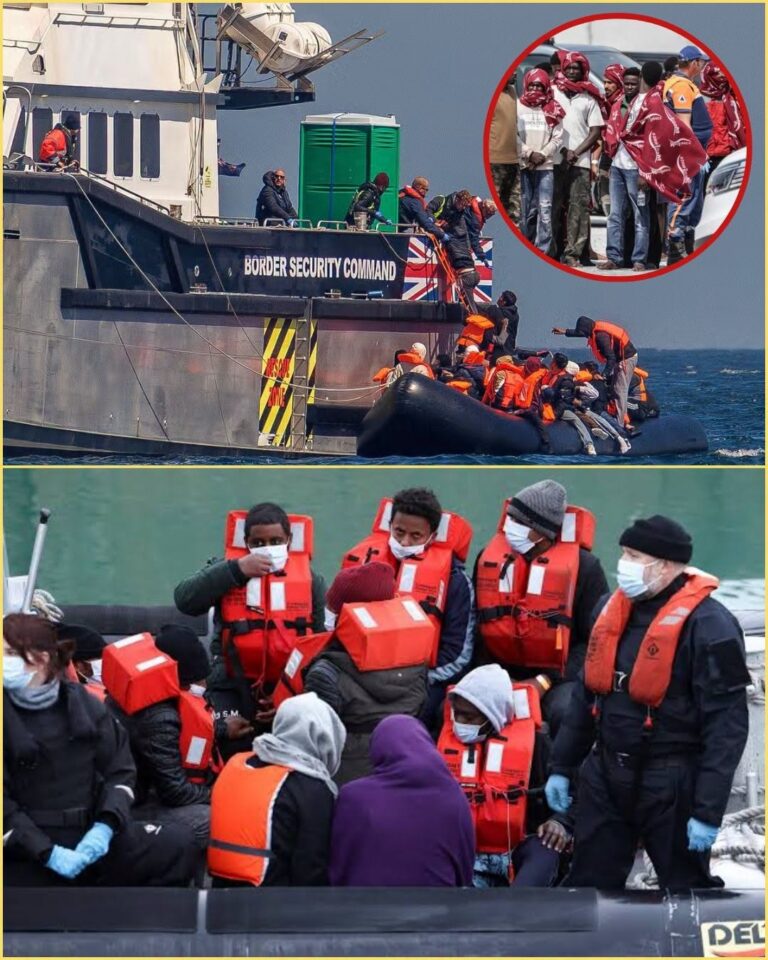
Reducing Channel crossings requires border enforcement, cooperation with European countries, action against smugglers and credible return arrangements.
Reducing work migration requires changing visa rules.
Reducing international student numbers requires education policy.
Reducing asylum costs requires faster decisions and less expensive accommodation.
These policies overlap, but they are not interchangeable.
Closing a worker visa route will not automatically stop a dinghy leaving France.
Stopping a dinghy will not reduce the number of international students.
Closing an asylum hotel does not necessarily mean its former residents have been removed from Britain.
Anger Is Real, but Policy Requires More Than Anger
The language surrounding the latest intervention is deliberately confrontational.
That may resonate with voters who believe Westminster has ignored them for too long.
But governing requires turning frustration into specific choices.
How low should migration fall?
Which categories should remain open?
How quickly should asylum claims be decided?
Where should asylum seekers live while decisions are made?
What should happen after a rejected claim?
How should Britain meet labour shortages if overseas recruitment is sharply reduced?
And how much economic disruption would voters accept in exchange for lower immigration?
Those are harder questions than declaring the system “finished.”
But they are the questions any government—or opposition party proposing a radical alternative—eventually has to answer.
Britain’s immigration debate has reached a point where dismissing public concern is unlikely to work. Neither will pretending every migrant, asylum seeker and irregular arrival represents the same problem.
The demand for a ten-year pause captures the intensity of public frustration.
Whether it could become serious policy is another matter entirely.
The ultimate test for Burnham’s government will not be whether it can win the argument on social media. It will be whether voters eventually see a system in which legal migration is controlled, asylum decisions are made quickly, people without a right to remain are returned where legally possible, and communities believe their concerns are being heard.
Until then, the accusation that Britain has lost control of immigration will remain one of the most potent—and contested—arguments in British politics.