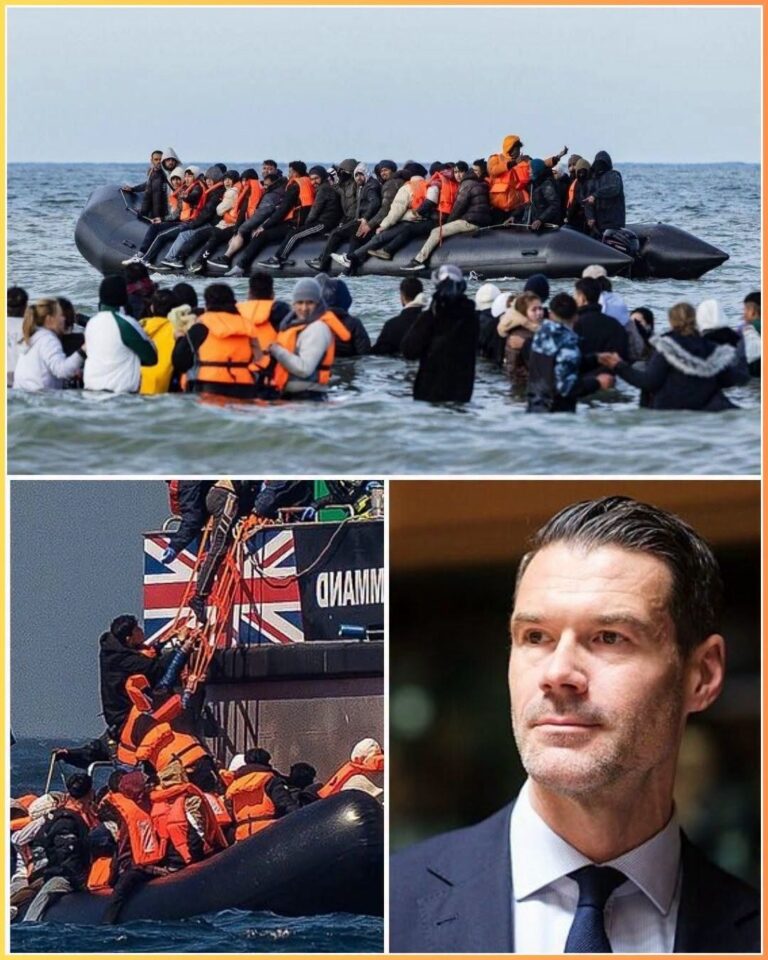
Two more RNLI lifeboats stuffed with 140 illegal migrants rock up and Southampton slams its doors shut, Portsmouth does the same and blasts out a warning over the radio, you come in you get prosecuted. Good. About bloody time.

Portsmouth Migrant Landing Ignites New Battle Over Ports, Protests and Britain’s Channel Strategy
PORTSMOUTH — The arrival of around 140 people from a small boat on England’s south coast has triggered an extraordinary chain of events involving RNLI lifeboats, two major ports, hundreds of protesters, riot police and a renewed political question that has haunted successive governments: what exactly should Britain do when a migrant boat reaches its waters?
The incident began far from the familiar arrival point at Dover.
A small boat carrying approximately 140 people was reported to French maritime authorities west of the Bay of Seine on Sunday, September 6.
Instead of travelling through the narrowest section of the Channel toward Kent, the vessel had taken an unusually long route toward the central south coast.
By the time the episode ended, those aboard had been assisted by lifeboat crews and brought ashore in Portsmouth.
But the journey to land was anything but straightforward.
ITV Meridian subsequently reported that requests to bring an RNLI lifeboat carrying more than 100 of the migrants into both the Port of Southampton and the Port of Portsmouth were declined.
The passengers were ultimately landed at Eastney Marina in Portsmouth.
That decision became the spark for a much bigger confrontation.
Hundreds of anti-migration protesters descended on the area.
Roads were blocked.
Police carrying riot shields formed lines around coaches.
Officers faced disorder that continued into the early hours.
And suddenly a migration system largely associated with Dover had arrived somewhere that local officials said was simply not prepared to handle it.
One Boat, an Extraordinary Journey
The first important distinction is what actually happened at sea.
Social-media accounts have sometimes described “two RNLI boats full of 140 illegal migrants” arriving on the south coast.
That is misleading.
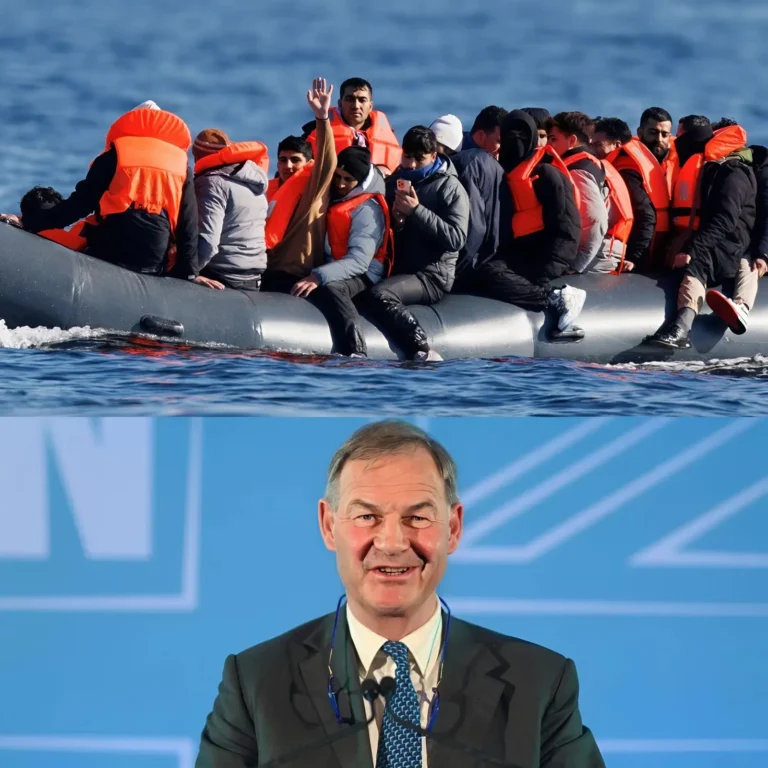
The roughly 140 people were originally aboard one migrant small boat reported to French rescue authorities. RNLI vessels subsequently became involved in the rescue operation.
The lifeboats were not the vessels used to cross from France.
Nor did the RNLI decide who should be allowed into Britain.
The charity was performing its maritime search-and-rescue role.
The route itself, however, was highly unusual.
Most small-boat crossings have historically targeted the shortest section of the English Channel, placing Kent—and particularly Dover—at the centre of Britain’s migration crisis.
This vessel travelled much farther west.
Its occupants eventually reached the Portsmouth area, making it one of the most striking examples of what could happen if crossing routes begin shifting along England’s southern coastline.
That possibility immediately alarmed local officials.
Southampton Says No. Portsmouth Says No.
What happened next has become one of the most politically sensitive parts of the story.
ITV Meridian reported that a request to land an RNLI boat carrying more than 100 people at the Port of Southampton was refused.
A request involving the Port of Portsmouth was also declined.
The migrants were instead brought to shore at Eastney Marina.
But there is an important distinction between the confirmed event and the political interpretation surrounding it.
The available reporting confirms that the requests were declined.
It does not establish that the ports changed their policies because protesters had forced them to do so.
Nor does it demonstrate that public pressure had suddenly created a new national policy of preventing migrant rescues from entering ports.
Port operations involve safety, security, commercial shipping and legal responsibilities.
The episode therefore cannot responsibly be reduced to the claim that protesters “made the ports shut their doors.”
What it unquestionably demonstrated, however, was that the south coast was not prepared for a large-scale arrival of this kind.
“Portsmouth Is Not Equipped”
Hampshire and Isle of Wight Police and Crime Commissioner Donna Jones made that point explicitly.
Following the overnight disorder, Jones said Portsmouth was “not equipped to receive and process people entering the country this way.”
She warned that the episode had placed substantial pressure on local policing and said hundreds of officers had spent hours controlling crowds rather than responding to their normal emergency duties.
Her broader warning went beyond one night of protest.
Portsmouth, she argued, could not become a destination for people smugglers.
The Government needed to secure Britain’s southern coastline and prepare for the possibility that criminal networks might attempt to alter their routes.
That may prove to be the most important strategic lesson from the entire episode.
For years, Britain has built much of its Channel-response infrastructure around Kent.
If smugglers begin launching vessels capable of travelling much farther west, the logistical challenge changes dramatically.
Dover has processing experience.
Other coastal communities may not.
Police forces elsewhere may suddenly face protests and security demands for which they had little reason to prepare.
And rescue services may find themselves delivering large numbers of people into locations never designed to function as migration arrival points.
Then the Crowd Arrived
News of the landing spread quickly.
Hundreds of demonstrators descended on Portsmouth.
Many wore black clothing and face coverings, similar to protesters who had gathered in Dover the previous day.
The protesters attempted to stop authorities from transporting the migrants away from Eastney.
The narrow geography of the landing site made the situation especially difficult.
Eastney Marina sits on a narrow shingle bank with limited road access.
Demonstrators blocked the route leading away from Portsmouth RNLI Lifeboat Station.
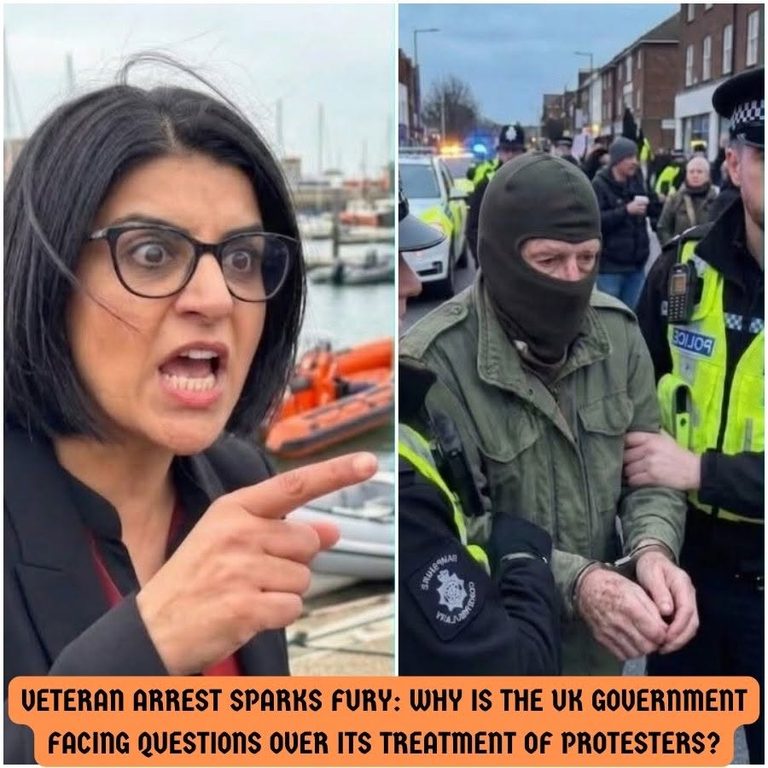
Police carrying riot shields formed a line.
Behind them were coaches waiting to transport those who had been brought ashore.
The standoff continued late into the night.
Some protesters said their objective was straightforward: they did not want the arrivals quietly transported elsewhere in Britain after the immediate attention disappeared.
That fear has become a central theme of anti-migration campaigning.
Demonstrators argue that once people arriving by small boat are removed from the coastline, they enter an asylum and accommodation system financed by taxpayers and become far less visible to the public.
But that political objection did not give protesters legal authority to block the coaches.
Eventually, the vehicles left.
Those brought ashore were taken away for processing, reportedly most likely toward the Manston arrivals facility in Kent.
Protest Crosses Into Disorder
The right to protest does not include a right to attack police officers or damage emergency vehicles.
That distinction became important as the night deteriorated.
According to reports from the scene, police officers were pushed from motorcycles and objects including stones and bricks were thrown as officers became targets of some protesters.
Several police, Coastguard and Border Force vehicles were damaged.
Subsequent criminal investigations followed.
A 42-year-old man later appeared in court charged with violent disorder and assaulting a police constable in connection with events surrounding the protests. The charges are allegations and must be determined through the judicial process.
That matters because two arguments can coexist.
People can legitimately oppose government immigration policy and demonstrate against it.
Police can also intervene when a protest crosses from political expression into alleged violence, intimidation or criminal damage.
The controversy over Britain’s borders does not suspend ordinary criminal law.
Did the Protest “Work”?
This has become a major question among supporters of the demonstrations.
The sequence can certainly appear compelling.
Large protests take place.
Ports refuse landing requests.
Political attention explodes.
Police and government officials respond.
But sequence is not proof of causation.
The evidence currently available does not establish that Southampton and Portsmouth refused the RNLI requests because of the anti-migration protests.
Indeed, the large Portsmouth confrontation developed around the eventual landing at Eastney.
Claiming that public pressure forced the two ports into their decisions therefore goes beyond what has been established.
The protests unquestionably succeeded in generating political attention.
They forced the arrival onto front pages.
They exposed the logistical problems facing Portsmouth.
They placed pressure on police.
And they turned what could otherwise have been a maritime operation followed by routine immigration processing into a national political controversy.
Whether they changed port policy is a separate question.
What Happened to the 140 People?
Despite the confrontation, they did not disappear from the immigration system.
After reaching Eastney, those brought ashore were transported away for processing.
That is where another important distinction becomes necessary.
People arriving irregularly by small boat do not automatically receive permanent permission to remain in Britain.
Their identities and circumstances must be processed, and asylum claims—where made—are considered under immigration law.
Some people may eventually receive protection.
Others may have no legal basis to remain and can become liable for removal.
The political dispute concerns how quickly those decisions happen, how effectively removal orders are enforced and whether the system itself encourages further crossings.
For anti-migration protesters, processing is not enough.
They want removals.
And increasingly, they want the boats themselves prevented from completing the journey.
Why Not Just Send the Navy?
That produces the most emotionally powerful question in the debate:
Why doesn’t Britain simply use the Royal Navy to escort small boats back to France?
It sounds straightforward.
The reality at sea is considerably more complicated.
A crowded inflatable boat in one of the world’s busiest shipping areas is not merely an immigration object.
It can become a search-and-rescue situation.
The first responsibility of vessels and rescue authorities is protecting life.
Simply turning a fragile boat around at sea could create a risk of capsize, particularly if passengers resisted or the vessel was unseaworthy.
There is also the question of where people would be returned.
Britain cannot simply deliver individuals onto French territory without an operational and legal arrangement under which France accepts them.
That is why Channel policy has historically depended heavily on cooperation between London and Paris.
The argument over “pushbacks” has therefore never been only about whether Britain owns enough naval vessels.
It involves maritime safety, international cooperation, asylum law and the practical willingness of another country to receive the people concerned.
Could Britain Still Adopt a Much Tougher Maritime Policy?
Yes—but it would require considerably more than ordering a destroyer into the Channel.
A government seeking systematic returns would need a workable arrangement with France or another receiving state.
It would need procedures capable of determining which individuals could lawfully be returned.
It would need operational rules ensuring that interceptions did not create unacceptable risks to life.
And it would need enough personnel, vessels and processing capacity to operate the policy consistently.
That does not make tougher maritime enforcement impossible.
It means the slogan and the operational reality are different things.
This distinction is crucial because repeated promises to “stop the boats” have created an extraordinarily high political standard.
Voters do not measure success by how many agreements ministers sign.
They measure it by whether boats continue arriving.
The RNLI Is Caught in the Middle
The Portsmouth episode also demonstrated how easily anger at government immigration policy can be redirected toward rescue volunteers.
RNLI crews became central to the incident because they were involved in helping people at sea.
That subsequently exposed volunteers to significant abuse.
The charity has said misinformation circulated about its role, while some volunteers were labelled “traitors” online.
Digital Secretary Lisa Nandy subsequently said she would raise online abuse and alleged doxxing of RNLI volunteers with social-media companies.
The distinction between rescue and immigration policy is important.
The RNLI does not determine who qualifies for asylum.
It does not decide where migrants are housed.
It does not negotiate with France.
It does not set deportation policy.
Its crews respond to maritime emergencies.
Critics are entirely entitled to argue that government policy has created circumstances in which a charitable rescue organisation is being repeatedly pulled into migration operations.
But responsibility for immigration policy ultimately lies with government.
Attacking lifeboat volunteers does not alter that policy.
Could This Happen Somewhere Else Next?
This may be the most worrying question for officials.
The Portsmouth incident demonstrated that the geography of Channel migration cannot necessarily be assumed to remain fixed.
Donna Jones warned that ministers could face a “significant issue” if smugglers began shifting routes farther west.
Imagine similar arrivals near Bournemouth.
Or Southampton.
Or farther along the coast.
Each shift would require coordination between Coastguard, police, Border Force, councils, ports and potentially rescue organisations.
Each could create new protest flashpoints.
Each could require temporary processing and transport arrangements.
And every successful route discovered by smugglers could potentially be copied.
That is why the Portsmouth arrival matters beyond the approximately 140 people involved.
It exposed a vulnerability in the assumption that the Channel crisis is fundamentally a Dover problem.
It is not.
It is a national border problem.
The Question of Deportations
For those demanding tougher enforcement, the argument ultimately comes back to removals.
Preventing arrivals is one part of border policy.
Removing people who have no lawful basis to remain is another.
Supporters of a tougher system argue that the deterrent effect of immigration enforcement depends on the credibility of the second part.
If somebody pays a smuggler, reaches Britain, enters the asylum system and then remains for years regardless of the eventual outcome, critics argue that the system creates little reason not to attempt the crossing.
Supporters of asylum protections respond that people fleeing persecution must have a meaningful opportunity to present their claims and challenge incorrect decisions.
Those principles do not necessarily conflict.
A functioning asylum system is supposed to do both: protect people genuinely entitled to refuge and remove those who are not entitled to remain once due process is complete.
The political argument is over whether Britain is currently achieving either task quickly enough.
Portsmouth Changed the Optics—Not Yet the System
The dramatic images from Eastney created the impression that something fundamental had changed.
Two ports declined landing requests.
A large migrant boat had travelled far beyond Dover.
Hundreds of protesters appeared.
Riot police deployed.
Coaches were surrounded.
Government and police officials faced immediate pressure.
Yet by the end of the operation, the basic immigration process remained intact.
The migrants were brought ashore.
They were transported for processing.
The protesters did not determine their immigration status.
The Navy was not ordered to return them to France.
And no new national policy emerged under which British ports would automatically refuse future rescue vessels carrying migrants.
That is the crucial difference between a dramatic political moment and a change in state policy.
The Bigger Question Westminster Cannot Avoid
Portsmouth nevertheless delivered a warning.
Public anger over irregular migration is no longer confined to debates inside Parliament or communities around asylum hotels.
It can now erupt rapidly around individual maritime arrivals.
That creates pressure on everyone involved: police officers, councils, port authorities, Coastguard personnel, Border Force and RNLI volunteers.
None of those groups can solve the underlying problem.
Only government policy can attempt to do that.
The central questions therefore remain exactly where they were before the Portsmouth confrontation.
Can Britain prevent small boats leaving France?
Can authorities intercept them without endangering lives?
Can London secure agreements allowing people with no right to remain to be returned quickly?
Can asylum claims be decided rapidly enough to distinguish refugees from unsuccessful applicants?
Can removals actually be carried out?
And can all of that happen without turning every coastal rescue into another confrontation between protesters and police?
The roughly 140 people who arrived at Portsmouth have become symbols in that much larger battle.
But the lasting significance of the incident may be geographic rather than numerical.
For years, Britain looked toward Dover when discussing the small-boats crisis.
Portsmouth showed that the challenge can travel.
If routes shift, the pressure shifts with them.
And if Westminster cannot produce an immigration system that the public believes is under control, the political anger witnessed at Eastney may not remain confined to one marina.
The question now is not simply where the next boat will land.
It is whether Britain has a system capable of dealing with it when it does.