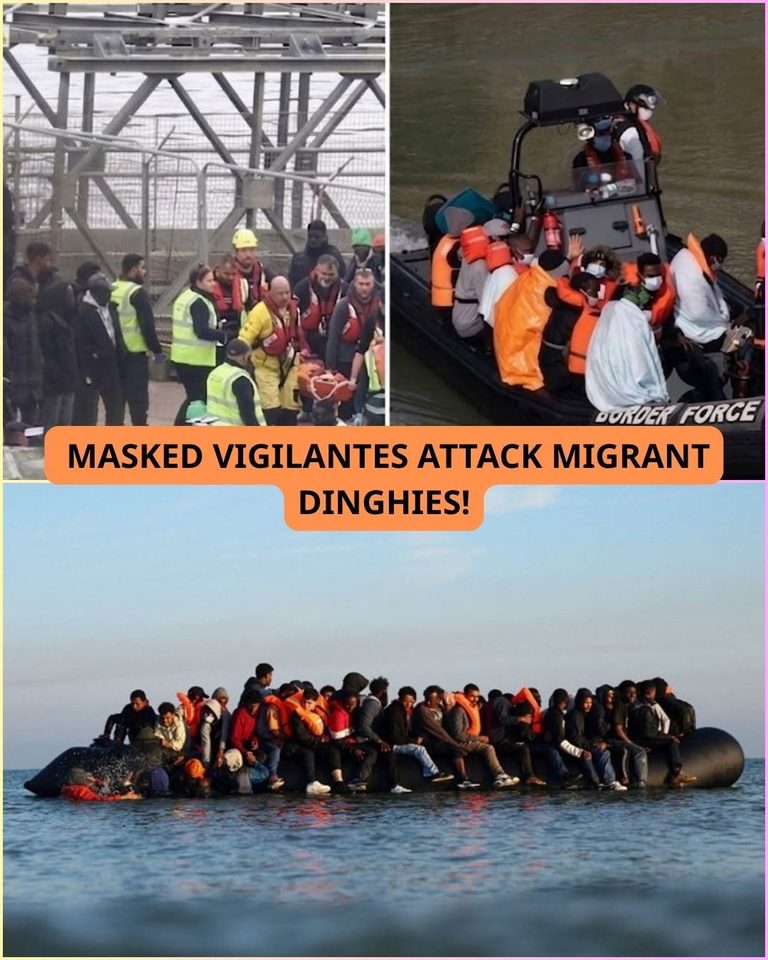
Greece has passed a law that criminalizes assisting migrants in illegally entering or remaining in the country, as well as transporting them from Greece to other countries.


Greece Draws a New Red Line on Migration—and NGOs Are in the Crosshairs
Greece has sent a powerful message to Europe: the era of treating irregular migration as an unavoidable consequence of geography may be coming to an end.
A new Greek law has significantly tightened criminal penalties surrounding the facilitation of irregular migration, including illegal entry, illegal residence and the transportation of undocumented migrants. The legislation also makes membership in certain registered nongovernmental organizations an aggravating factor in some offenses. In the most serious cases, the penalties can reach at least 10 years in prison and tens of thousands of euros in fines.
The move has immediately placed Greece at the center of Europe’s increasingly fierce migration debate.
For supporters, the message is straightforward: humanitarian intentions cannot become a shield for activities that undermine immigration law.
For critics, however, the legislation risks crossing a dangerous line by making legitimate humanitarian work vulnerable to criminal prosecution.
That tension is now at the heart of the controversy.
Greece knows better than almost any European country what uncontrolled migration pressure can look like. During the 2015–16 migration crisis, hundreds of thousands of migrants and asylum seekers passed through the country as they attempted to reach northern Europe. The islands of the Aegean became synonymous with overcrowded reception centers, dangerous sea crossings and political arguments over who should carry the responsibility.
Today, Greece is again a major entry point into Europe.
But the routes have changed.
Migration pressure has increasingly shifted toward the eastern Mediterranean, including routes from Libya toward Crete and Gavdos. In June 2026, Greece also approved legislation designed to accelerate the removal of rejected asylum seekers and establish possible “return hubs” outside the European Union through agreements with third countries.
The new approach reflects a broader political transformation.
European governments are no longer debating migration solely in terms of reception and integration. They are increasingly focusing on deterrence, returns, border enforcement and the ability of states to control who enters and remains within their territory.
Greece is clearly moving in that direction.
Under the amended rules, facilitating the entry or exit of a third-country national without the required border control can result in imprisonment and a fine of at least €20,000. When the offense involves profit, is committed professionally, involves two or more people acting together, or is committed by a member of a registered NGO, the penalty can rise to at least 10 years in prison and a minimum €50,000 fine.
The legislation also imposes severe penalties for transporting undocumented migrants.
In aggravated circumstances—including when the offender acts for profit, professionally, as a repeat offender, as certain types of official or travel professional, or as a member of a registered NGO—the punishment can reach a minimum of 10 years’ imprisonment and fines of €60,000 to €100,000 for each person transported. If the conduct creates a danger to human life, the minimum rises to 15 years and at least €200,000 per person; if death results, the law provides for life imprisonment and a minimum €700,000 fine per person.
Those numbers explain why the legislation has attracted international attention.
Greece is not merely increasing administrative penalties.
It is treating certain forms of assistance to irregular migration as serious criminal conduct.
And NGOs are explicitly mentioned in the legislation.
That is the element that has provoked the strongest criticism.
Human Rights Watch argued that the law stigmatizes civil society organizations by treating NGO membership as an aggravating circumstance and warned that severe penalties could discourage humanitarian groups from providing assistance. The organization also pointed to the recent acquittal of 24 aid workers who had spent years facing criminal allegations connected to search-and-rescue activities.
The concern is not theoretical.
The line between helping a vulnerable person and facilitating illegal migration can become complicated in the real world.
Imagine an NGO worker encountering a migrant who has entered Greece irregularly.
Providing food is one thing.
Providing emergency medical treatment is another.
Calling an ambulance is obviously humanitarian.
But what happens if an organization transports the person to another location?
What if it provides accommodation?
What if the person is undocumented?
What if the organization believes the person is entitled to asylum?
What if authorities believe the organization’s actions obstructed enforcement?
Those questions become crucial when criminal penalties are severe.
The Greek government, however, frames the legislation differently.
The government has argued that the reforms are designed to create a more effective immigration system, strengthen legal migration and respond to concerns about illegal migration, social cohesion and public security. The legislation was passed by parliament in February 2026 as part of a broader package concerning legal migration policy.
From that perspective, the law is not an attack on humanitarianism.
It is an attempt to establish a clear boundary.
The state decides who may enter.
The state decides who may remain.
The state decides who must leave.
And organizations operating inside the country are expected to respect those decisions.
This argument has growing political support across Europe.
After years in which migration dominated national elections, European governments are under increasing pressure to demonstrate that asylum systems have enforceable limits.
The European Union’s new Migration and Asylum Pact, which entered into full application in June 2026, is itself designed to establish a more coordinated framework for asylum processing, border management and returns.
Greece’s tougher national approach therefore fits into a much larger European transformation.
But there is a danger in assuming that tougher enforcement automatically produces better policy.
A functioning immigration system needs more than arrests and deportations.
It needs accurate identification.
It needs functioning asylum procedures.
It needs legal routes for people who genuinely qualify for protection.
It needs effective judicial oversight.
And it needs humanitarian organizations capable of assisting vulnerable people without fearing that ordinary rescue or medical work could expose staff to disproportionate criminal penalties.
That balance will determine whether Greece’s new approach becomes a model for Europe—or a source of prolonged legal and political conflict.
There is another important distinction.
Fighting people-smuggling networks is not the same thing as criminalizing humanitarian assistance.
Smugglers who organize dangerous crossings for profit are fundamentally different from doctors treating injured migrants, rescue workers responding to emergencies or lawyers helping asylum seekers navigate complicated legal procedures.
The challenge for Greek authorities will be ensuring that the law clearly distinguishes between the two.
If it does, Greece could make a strong case that it is defending the integrity of its borders while preserving legitimate humanitarian activity.
If it does not, critics will argue that the law creates a chilling effect in which NGOs become reluctant to help people who need assistance.
That would have consequences far beyond Greece.
The country’s islands sit on one of Europe’s most important migration routes. What happens there is watched closely by Italy, Spain, Cyprus and other frontline states.
If Greece successfully combines strict border enforcement with functioning humanitarian safeguards, other governments may follow.
If the system generates controversial prosecutions or legal uncertainty, the backlash could be equally significant.
Either way, Greece has made its position clear.
It is no longer willing to treat irregular migration as simply a humanitarian problem.
It sees it as a matter of sovereignty, law enforcement and national policy.
That does not settle the debate.
It intensifies it.
Europe now faces a difficult question: How can governments defend the integrity of their borders without turning humanitarian assistance into a criminal act?
There is no easy answer.
But one thing is becoming increasingly obvious.
The European migration debate has entered a new phase.
The argument is no longer simply about how many migrants Europe can receive.
It is about who controls the border, who determines legal status, who is responsible for returns—and where the line between humanitarian assistance and illegal facilitation should be drawn.
Greece has drawn that line more sharply than before.
Now Europe will be watching to see what happens next.