HYPOCRISY EXPOSED: The Ultimate Betrayal of the Working Class?!
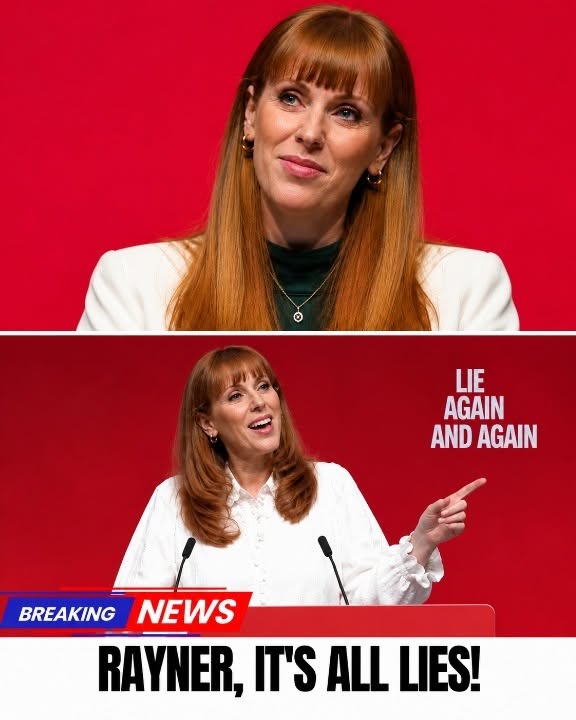
Angela Rayner Says Labour Is the Party of Working People — But the Tax Debate Is Putting That Claim Under Scrutiny
Angela Rayner used the Labour Party Conference in Liverpool to make an emphatic declaration about where she believes her party stands: “We are the party of working people.” But beyond the applause inside the conference hall, that message is colliding with a much more complicated argument over taxation, wages and the growing financial pressure facing households and employers across Britain.
The dispute is not simply about a political slogan. At its centre is a fundamental question: can Labour convincingly present itself as the defender of working people while government tax policies are increasing the amount many workers ultimately hand to the Treasury?
Rayner Puts “Working People” at the Heart of Labour’s Message
In her September 29 conference speech, Rayner repeatedly framed Labour’s programme around workers, communities and household living standards. She pointed to the government’s employment-rights reforms, housing policies, investment in social and council homes and plans designed to help first-time buyers.
“We are the party of working people,” Rayner told delegates, describing Labour’s history as one built around “graft and resilience, innovation and pride.” Later, she argued that economic growth should translate into tangible improvements including “better jobs, better wages, better public services and better high streets.”
Those statements provide important context because some viral descriptions of the speech go considerably further than Rayner’s actual words. Claims that she declared Labour the “true champions” of working people appear to be a paraphrase rather than the precise wording contained in Labour’s published transcript.
Nevertheless, the underlying political message is clear: Labour wants voters to judge its record partly on whether ordinary workers are better protected and economically more secure.
The Tax Issue Complicating That Message
Critics point to frozen income-tax thresholds as one of the biggest challenges to that argument.
For the 2026–27 tax year, the standard Personal Allowance remains £12,570. In England, Wales and Northern Ireland, the higher-rate threshold effectively begins when total taxable earnings reach £50,270. These thresholds have remained unchanged even as nominal wages and prices have increased.
This creates what economists commonly describe as “fiscal drag.”
The mechanism is relatively straightforward. A worker can receive a pay increase without becoming substantially better off in real terms, particularly when that increase merely compensates for inflation. But because the tax thresholds do not rise alongside earnings, a greater proportion of that worker’s income can become taxable, or the worker can move into a higher tax band.
The Institute for Fiscal Studies has described the real-terms reduction in tax thresholds as one of the most significant changes to the personal tax system in recent decades. Its analysis notes that a worker whose earnings merely keep pace with inflation can still end up paying a larger proportion of those earnings in tax.
Thresholds Are Set to Stay Frozen for Years
The issue is not expected to disappear soon.
Government policy maintains the Personal Allowance at £12,570 and the higher-rate threshold at £50,270 through April 2031. National Insurance thresholds including the Primary Threshold and Upper Earnings Limit are also scheduled to remain fixed over that extended period.
The IFS estimated following the 2025 Budget that the additional threshold freeze could eventually bring roughly 700,000 more people into income tax and around one million more into higher-rate taxation under the inflation assumptions being used at the time.
For affected taxpayers, the consequences vary significantly according to income. The IFS estimated the extended freezes could mean around £220 a year in additional tax for a basic-rate taxpayer and approximately £600 for a higher-rate taxpayer, compared with what they would otherwise have paid if thresholds had risen.
That does not mean the government has suddenly introduced a new headline income-tax rate. Instead, more revenue is collected because the boundaries of the tax system remain fixed while wages generally increase.
Calling this a “secret tax trap,” therefore, would be misleading. The policy has been publicly announced and documented. But describing fiscal drag as effectively increasing tax liabilities for many workers is supported by independent analysis.
Businesses Are Facing Their Own Cost Pressures
The argument also extends beyond employees.
Employer National Insurance is currently charged at 15% for most employees on earnings above the relevant secondary threshold, which stands at £5,000 annually for 2026–27.
That represents a direct employment cost for businesses rather than a deduction from workers’ payslips.
However, economists often debate how much employer taxation ultimately falls indirectly on employees through slower wage growth, reduced hiring or other adjustments by companies. The exact effect depends on economic conditions and employer behaviour, meaning claims that every pound of additional employer National Insurance will automatically be taken from workers’ wages would go beyond what the evidence can establish.
At the same time, employers are also dealing with higher statutory wage requirements. The National Living Wage for workers aged 21 and over increased to £12.71 an hour from April 2026.
For employees receiving the increase, that means higher gross pay. For businesses with large numbers of lower-paid employees, however, it also means a larger wage bill alongside National Insurance and other employment costs.
A Political Argument With Two Very Different Interpretations
Labour’s defence rests on a broader definition of supporting working people.
Rayner highlighted strengthened employment rights, statutory sick pay from the first day of illness, parental protections, trade-union rights, housing reforms and policies intended to improve wages and job security. In her conference speech, she argued that government policy should ultimately produce higher wages, stronger public services and more economic power for communities.
Critics focus instead on disposable income and taxation. Their argument is that workers may reasonably question promises of economic security if rising nominal wages progressively expose more of their earnings to taxation.
Both debates matter, but they address different aspects of the government’s record.
The Real Test Will Be What Workers See in Their Pay Packets
The most important question may therefore be less dramatic than the accusations circulating online.
It is whether wages, after tax and inflation, ultimately rise fast enough for households to experience a meaningful improvement in living standards.
Rayner’s conference declaration that Labour is “the party of working people” is a political claim rather than something statistics alone can prove or disprove. What can be measured are the policies surrounding it: tax thresholds remain frozen, employer National Insurance stands at 15% above the relevant threshold, minimum wages have risen, and Labour has implemented or promoted a series of employment and housing reforms.
The tension between those policies explains why the debate has become politically significant.
For Labour, the challenge is demonstrating that stronger employment protections, higher wages, housing measures and public investment ultimately outweigh the pressure created by taxation and the cost of living.
For its critics, frozen thresholds offer a straightforward counterargument: even without an increase in headline income-tax rates, millions of people can gradually find themselves paying more.
Ultimately, the consequences will be judged not by conference slogans or viral social-media posts, but by something far more immediate to households across Britain — how much people earn, how much they pay in tax, and how much money they actually have left at the end of the month.