Musl!ms Tried To MASS MIGRANT Into Poland, Then Get REJECTED at The Border Mus!!ms Tried To MASS MIGRANT Into Poland, Then Get REJECTED at The Border.
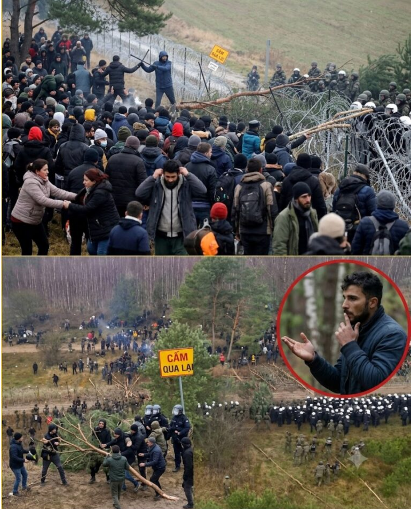
Poland Rejects Migrants at Belarus Border as Europe’s Migration Debate Intensifies
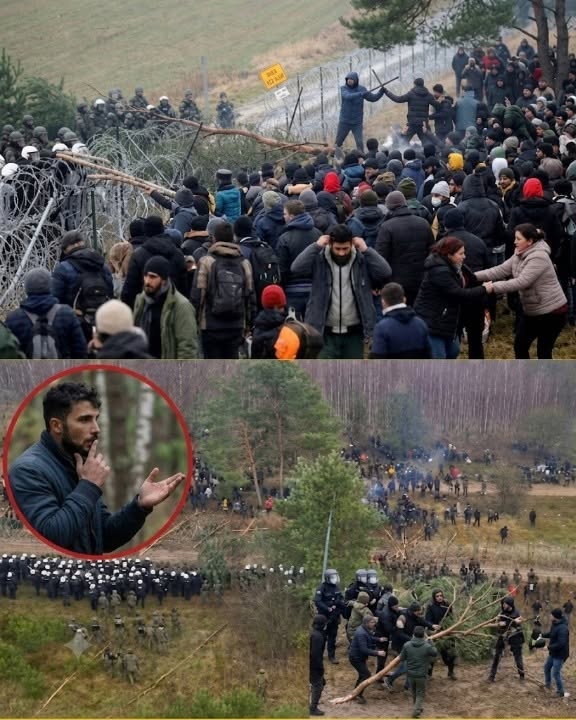
Poland has once again become the centre of Europe’s migration debate after reports of migrants attempting to enter through the Belarus border were met with strict border controls, refusals and emergency asylum restrictions.
Supporters of Poland’s approach say Warsaw is doing what many European governments have failed to do: defend its border, stop irregular entry and prevent hostile states from exploiting migration as a political weapon.
Critics say the policy risks pushing vulnerable people back into danger, weakening asylum rights and creating a
humanitarian crisis in the forests between Poland and Belarus.
The dispute is not simply about one border crossing. It is about the future of Europe’s migration policy, national sovereignty, human rights and security.
Poland’s Argument: This Is Not Ordinary Migration
Polish officials argue that the situation at the Belarus border is different from ordinary irregular migration.
Since 2021, Poland and other European governments have accused Belarus, backed by Russia, of deliberately directing migrants from the Middle East, Africa and Asia toward the EU’s eastern border. Warsaw describes this as “instrumentalised migration”-in other words, the use of human movement as a political weapon.
That is why Poland has fortified the border, expanded surveillance, deployed troops and border guards, and restricted asylum applications at the frontier.
In May 2028, Poland’s Interior Ministry extended the temporary and territorial suspension of the right to apply for international protection at the Belarus border for another 60 days. The ministry said national security was the priority and argued that the measure had helped reduce illegal crossing attempts, with successful crossings in the first quarter of 2026 falling to zero.
For Warsaw, this is proof that a hard border policy works.
What the Border Measures Mean
Under Poland’s restrictions, many people who arrive at the Belarus border are not allowed to file asylum claims directly at that frontier. Polish authorities say vulnerable cases can still be admitted after individual assessment, but the general rule is designed to stop the border route from becoming a permanent migration channel.
The government says that between March 2025 and May 2028, applications from 480 foreign nationals were rejected, while applications from 141 people from vulnerable groups were accepted.
Poland argues that this approach is necessary because Belarusian state agencies are actively involved in pressure against Polish soldiers and border guards. The Interior Ministry says the route is artificially created and connected to hostile hybrid operations.
Supporters say this is exactly why Poland cannot treat the border as a normal asylum checkpoint.
Why Supporters Praise Poland
Supporters of Poland’s stance argue that Europe has spent years talking about border control while failing to deliver it.
They say Poland has shown that borders can be defended if a government is willing to act. They point to Poland’s barriers, patrols, asylum restrictions and refusal to accept relocated migrants under the EU Migration Pact as evidence that Warsaw is prioritising security and sovereignty.
Poland has also rejected the EU’s relocation mechanism. In June 2026, the Polish Interior Ministry said it would not accept migrants relocated from other EU countries or bear related costs under the new EU migration pact. Deputy Interior Minister Maciej Duszczyk said Poland would not implement any provisions that could reduce security or act as a “pull factor” for irregular migration.
This position is popular among many voters who believe migration decisions should remain under national control, not Brussels.
For them, Poland is not rejecting Europe. It is defending Europe’s external border.
Why Critics Are Alarmed
Human-rights groups see the situation differently.
They argue that Poland’s border policy may violate the right to seek asylum and the principle of non-refoulement, which prohibits sending people back to places where they may face persecution, torture or serious harm.
An NGO report cited by Polish Radio alleged repeated pushbacks, abuse and dehumanising treatment at the Poland- Belarus border. The report said migrants had described beatings, pepper spray, humiliation and repeated forced returns, while documenting more than 2,000 pushbacks from Poland to Belarus and more than 100 deaths along the border zone since 2021.
Polish authorities reject the idea that their policy is inhumane, arguing that they are responding to a security threat created by Belarus and Russia.
But critics say even a hybrid attack does not erase individual human rights.
This is the moral dilemma at the heart of the dispute.
The Religion Question
Some viral posts describe the people at the border simply as “Muslims.” That framing is misleading and dangerous.
Migrants at the Poland-Belarus border have come from different countries, including Afghanistan, Somalia, Sudan, Eritrea, Ethiopia, Syria and Iraq. Some may be Muslim, others may not be. Their religion does not determine whether they have a right to seek protection, nor does it make them collectively responsible for illegal border crossings.
The issue is not “Muslims versus Poland.”
The issue is irregular migration through a route that Poland says is being manipulated by Belarus and Russia.
A serious debate must focus on law, security, asylum procedures and human rights -not collective suspicion toward a religious group.
Belarus, Russia and Hybrid Pressure
Poland’s security argument cannot be dismissed.
Belarus has been accused for years of encouraging migrants toward the EU border in retaliation for sanctions and political pressure. Russia’s war against Ukraine has made Poland even more sensitive to border threats, sabotage, disinformation and hybrid operations.
That is why Warsaw says the Belarus frontier is not just a migration route, but part of a broader security confrontation.
Supporters argue that if Poland allowed large numbers to cross freely, Belarus and Russia would interpret it as weakness and increase pressure.
Critics respond that states must not use security language to strip individuals of basic protections.
Both concerns are real.
Europe is facing hostile pressure from authoritarian neighbours.
But Europe is also built on legal commitments to asylum and human rights.
The EU Dimension
Poland’s position also challenges Brussels.
The EU wants a more coordinated migration system, including relocation, return procedures and solidarity between member states. Poland says it will accept only parts of the pact that strengthen migration security, including new retur procedures and tools against weaponised migration.
This places Poland in direct tension with the EU’s broader migration strategy.
Brussels argues that migration is a shared European problem.
Warsaw argues that border security and migration control must remain national decisions, especially when Poland is defending the EU’s eastern frontier.
This conflict is likely to continue because it reflects a deeper disagreement over who should control Europe’s borders: national governments or EU institutions.
The Human Reality
Behind the political argument are real people.
Some people trying to cross may be economic migrants. Some may be fleeing war, persecution or instability. Some may have been misled by smugglers. Some may have paid large sums to reach Belarus, believing it offered a pathway into Europe.
Many end up trapped in forests, exposed to cold, violence, hunger and fear.
Acknowledging that human suffering does not mean Poland has no right to defend its border. But defending a border does not mean the human cost should be ignored.
A serious policy must do both: protect national security and ensure that people with genuine protection claims are not pushed into danger without assessment.
Conclusion: Poland’s Border Stand Divides Europe
Poland’s rejection of migrants at the Belarus border has become one of Europe’s most important migration flashpoints.
Supporters say Warsaw is proving that strong borders work, especially when migration is being weaponised by hostile states.
Critics say the policy risks violating asylum rights and pushing vulnerable people into danger.
The truth is that Poland is facing a real security challenge – but that challenge does not remove the need for legal safeguards and humane treatment.
This is not a story about Muslims as a group.
It is a story about a contested border, hostile pressure from Belarus and Russia, irregular migration routes, EU disputes and the difficult balance between sovereignty and human rights.
Poland has chosen a hard line.
Europe is watching to see whether that hard line becomes a model-or a warning.