
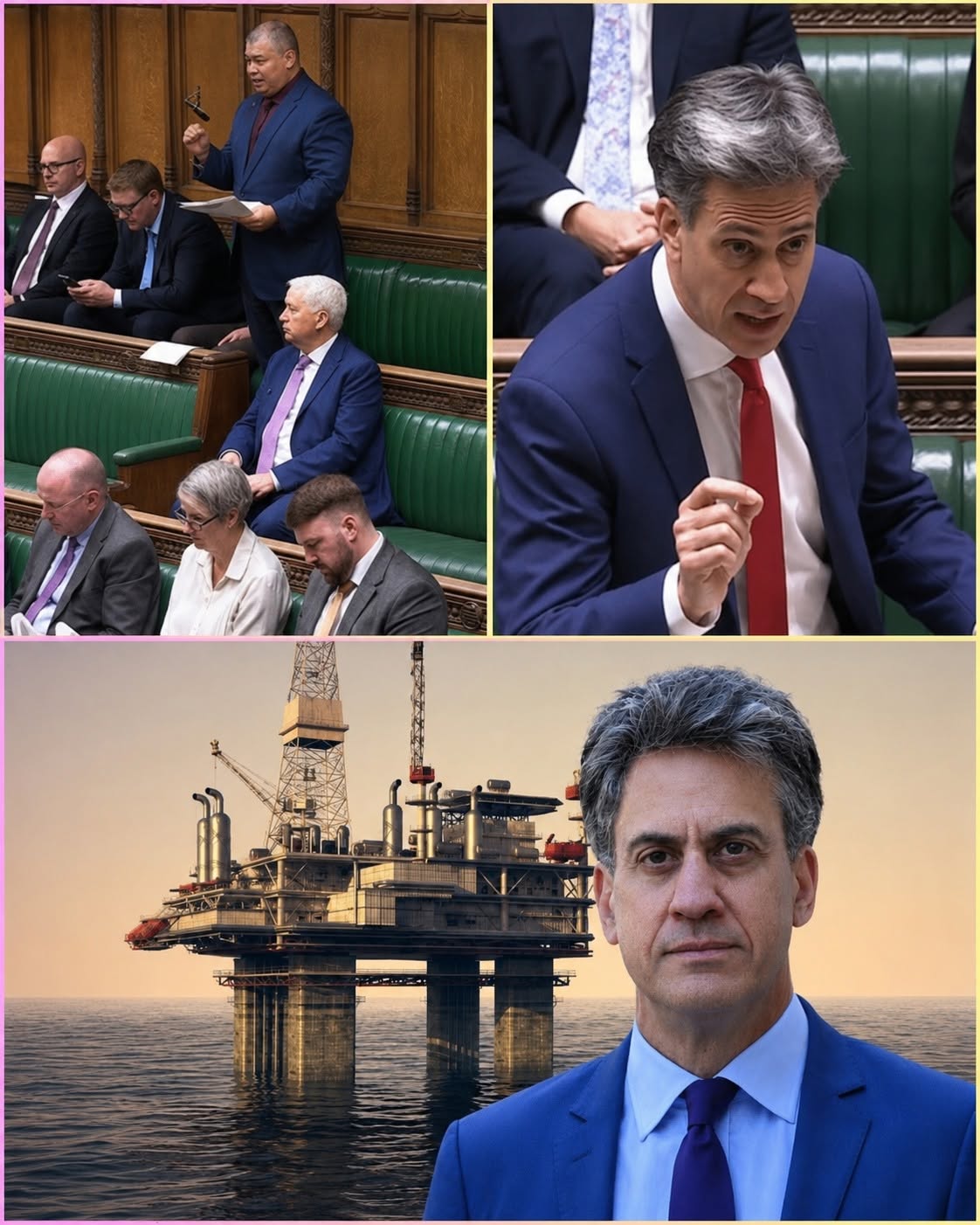
*NORTH SEA ENERGY CLASH INTENSIFIES AS LABOUR FACES GROWING PRESSURE
Britain’s battle over the future of North Sea oil and gas has erupted once again into one of the most politically charged debates in the country, placing Labour under mounting pressure from unions, industry leaders, environmental campaigners, Scottish communities, and MPs on both sides of the argument. At the heart of the dispute is a simple but explosive question: can Britain move rapidly toward net zero while still protecting the jobs, energy security, and industrial base built around the North Sea? The government has set out a North Sea Future Plan designed to manage existing oil and gas fields for their lifetimes while ending new licences to explore new fields, presenting the policy as a “fair, managed and prosperous transition” toward clean energy industries. Yet the political temperature is rising because many workers, businesses, and local communities fear that the transition may arrive faster than the replacement jobs do. For Labour, the clash is no longer just about climate policy. It is about whether the party can convince working Britain that green change will mean security, not sacrifice.
A Debate That Refuses to Stay Beneath the Surface
The North Sea has always been more than an energy basin. For decades, it has been a symbol of British industrial capacity, Scottish economic strength, offshore engineering skill, and national energy resilience. Its rigs, terminals, ports, and supply chains helped shape towns and cities from Aberdeen to Shetland, from Teesside to Great Yarmouth, and far beyond. But the basin is also in long-term decline, with mature fields producing less than they once did and the economics of extraction becoming increasingly difficult. That decline has created a political dilemma that no government can avoid. Supporters of a rapid transition argue that Britain must stop locking itself into fossil fuel dependence and instead accelerate offshore wind, hydrogen, carbon capture, grid upgrades, and clean manufacturing. Critics argue that shutting down future oil and gas development too quickly risks importing more energy from abroad, weakening domestic industry, and abandoning skilled workers before alternative employment is ready. That is why the latest row feels so intense. It is not simply an argument over drilling. It is an argument over what kind of industrial country Britain wants to be.
Labour’s North Sea Plan Comes Under Fire
Labour’s position is built around a difficult balancing act. The government says it will allow existing oil and gas fields to continue operating for their lifespan, but it will not issue new licences for exploration of new fields. Its North Sea Future Plan also promises support for workers, supply chains, and communities, including clean energy growth and transition mechanisms. On paper, this is designed to reassure both climate voters and industrial workers. In practice, it has pleased neither side completely. Environmental campaigners want the government to go further and faster, especially on controversial developments such as Rosebank. Industry voices and some unions argue that without new investment, the supply chain will weaken, jobs will disappear, and Britain will lose the skilled workforce needed for future offshore energy projects. The phrase “managed transition” is now being tested against reality. A managed transition requires timing, confidence, infrastructure, retraining, and investment. If any of those pieces fail, the promise begins to sound less like a plan and more like a political slogan.
The Rosebank Question Becomes a Political Flashpoint
Few issues capture the divide more sharply than Rosebank, the major North Sea oilfield development that has become a symbolic battleground between climate campaigners and pro-industry voices. More than 60 Labour MPs and MSPs recently urged Andy Burnham, seen as a major figure in Labour’s evolving leadership conversation, to reject calls for further North Sea drilling and oppose development of Rosebank, warning that new fossil fuel projects would undermine climate commitments. Supporters of further development counter that Britain will continue using oil and gas during the transition regardless, and that domestic production is preferable to heavier reliance on imports. This disagreement cuts directly into Labour’s internal politics. On one side are MPs who see new drilling as incompatible with serious climate leadership. On the other are MPs and local representatives worried about jobs, national security, and the political cost of appearing indifferent to industrial communities. Rosebank has therefore become more than a field. It has become a test of Labour’s identity.
Jobs, Skills, and the Fear of Being Left Behind
For workers in the North Sea economy, the argument is painfully concrete. It is about mortgages, apprenticeships, local shops, family incomes, and whether a young person in Aberdeen, Shetland, or the north-east of England can still imagine a stable career in offshore energy. Unite, which represents thousands of oil and gas workers, has warned the government not to “let go of one rope before having hold of another” and has called for stronger support for North Sea production during the transition. That phrase has resonated because it captures the central anxiety of many workers: they are not necessarily rejecting clean energy, but they do not want to be used as political proof of a transition that has not yet delivered for them personally. A wind farm promise in the future does not pay today’s bills. A retraining scheme does not guarantee a comparable wage. A new green industry strategy does not automatically replace decades of offshore expertise overnight. Labour’s challenge is to make the transition feel real before the losses become visible.
The Industry Warns of Investment Flight
Energy companies and industry groups argue that policy uncertainty has already damaged confidence. Their case is that if Britain discourages future oil and gas investment while taxes remain high and regulatory signals remain unclear, capital will move elsewhere. The Aberdeen & Grampian Chamber of Commerce has previously highlighted concerns over the long- term tax environment and warned that the industry cannot sustain heavy burdens without job losses, especially as the government moves to deliver its pledge to end new licences. The industry’s argument is not only about oil and gas companies protecting profits. It is also about the supply chain: engineering firms, vessel operators, subsea specialists, fabricators, maintenance contractors, safety trainers, catering providers, transport businesses, and local services. Once a supply chain contracts, rebuilding it is difficult. This matters because many of the same companies and workers will be needed for offshore wind, carbon capture, decommissioning, and hydrogen. If they leave the UK market before those sectors scale, Britain could lose the very skills it needs for the clean energy future.
The Government Says the Future Is Clean, Secure, and Industrial Ministers insist that the North Sea’s future is not being abandoned but reimagined. The government’s consultation on “Building the North Sea’s Energy Future” set out plans for clean energy expansion, transitional certificates, a North Sea Jobs Service, an Energy Skills Passport, supply-chain support, and a North Sea Future Board. The logic is clear: Britain cannot stop the decline of mature oil and gas forever, but it can decide whether that decline becomes an industrial collapse or a springboard into new sectors. Offshore wind, carbon capture and storage, hydrogen, and decommissioning all require technical skills that overlap with oil and gas. In theory, the North Sea could become the backbone of a new energy economy. In practice, turning that theory into reality requires huge investment, fast grid connections, ports ready for fabrication and assembly, stable regulation, and worker confidence. The government’s plan is ambitious, but ambition alone will not satisfy communities that have heard promises before.
Energy Security Returns to the Centre of the Argument
The political debate has intensified because energy security has returned as a major concern. Global instability, fuel price shocks, and conflicts affecting international markets have reminded voters that energy is not just an environmental issue; it is a national security issue. Labour MPs have been reported as split over North Sea oil and gas amid rising fuel costs linked to international tensions, including conflict involving Iran. This gives the pro-production argument new force. Critics of Labour’s restrictions say Britain should not increase dependence on imported liquefied natural gas while domestic gas remains available. In a Commons debate earlier this year, opponents of the policy argued that North Sea gas still plays a major role in UK supply and warned that import reliance could grow sharply if domestic production falls too quickly. Labour’s counterargument is that true energy security comes from clean domestic power, not from extending dependence on internationally priced fossil fuels. The clash is therefore not about whether energy security matters. It is about what energy security means.
The Price Question: Will More Drilling Cut Bills?
One of the most contested claims in the debate is whether more North Sea drilling would reduce household bills. Supporters of additional production argue that domestic supply strengthens resilience and reduces exposure to foreign markets. Opponents respond that oil and gas prices are set internationally, meaning new UK production would not necessarily deliver cheaper energy for British households. This is a crucial political point because the public debate often collapses energy security and energy affordability into one promise: drill more, pay less. The reality is more complicated. Domestic production can support jobs, tax revenue, balance of payments, and supply reliability. But it does not automatically shield households from global price spikes. Labour’s green wing uses that fact to argue that renewables and electrification are the real route to lower bills. Industry voices argue that Britain still needs gas during the transition and should not weaken domestic production before alternatives are dependable. Both sides claim to be defending ordinary consumers. The voter is left asking which risk is greater: moving too slowly, or moving too fast.
Scottish Communities Feel the Pressure First
The North Sea dispute is especially sensitive in Scotland, where oil and gas has long been tied to identity, employment, devolution politics, and debates over economic sovereignty. Aberdeen and the north-east built a world-class energy cluster around offshore expertise, but many workers now fear that decisions made in Westminster may reshape their future without enough local control. Recent reports of job cuts at the Sullom Voe terminal in Shetland, where EnQuest plans voluntary redundancies affecting around 30 roles, have fed wider anxiety about the direction of travel. Each individual redundancy story becomes part of a larger political narrative: the North Sea is shrinking, and workers want proof that the next economy is arriving before the old one disappears. Scottish political parties are watching closely because the issue cuts across unionism, nationalism, climate policy, and class politics. A mishandled transition could become a gift to opponents who accuse Labour of taking industrial communities for granted.
Labour’s Internal Divide Becomes Harder to Hide
Labour’s strength in government depends partly on maintaining unity between its climate-focused MPs, union-linked MPs, Scottish representatives, and economically cautious strategists. The North Sea debate makes that unity harder. Climate- conscious Labour MPs see the end of new oil and gas licensing as a defining moral and environmental commitment. Union voices warn that workers will not accept being treated as collateral damage. MPs in energy-dependent areas fear electoral backlash if voters conclude that Labour understands metropolitan climate politics better than offshore livelihoods. The government can attempt to hold these groups together by promising clean jobs, but the promise must be credible. If workers see new jobs created elsewhere, at lower wages, or too slowly, Labour’s internal compromise may fracture. That is why the pressure is growing. The dispute is not theoretical anymore. It is becoming a test of whether Labour’s green agenda can survive contact with industrial reality.
Conservatives and Reform See an Opening
Opposition parties see clear political opportunity. Conservatives can argue that Labour is risking jobs and energy security in pursuit of ideological net-zero targets. Reform UK and other right-leaning voices can go further, framing the issue as proof that the political establishment is willing to sacrifice British workers while importing energy from abroad. This message can be powerful in coastal towns, industrial regions, and communities already sceptical of Westminster. For Labour, the danger is not only losing votes in Scotland or the north-east. It is allowing opponents to define net zero as an elite project imposed on working people. Once that perception hardens, even good policy becomes politically fragile. Labour must therefore communicate not only what it wants to close, but what it wants to build. In politics, people rarely rally around managed decline. They rally around visible renewal.
Environmental Campaigners Say Delay Is the Real Danger
Environmental groups and climate-focused MPs reject the idea that further drilling is a responsible bridge to the future. They argue that the world is already seeing the consequences of climate delay through heatwaves, floods, fires, and ecological disruption. For them, the North Sea debate should not be framed as jobs versus climate, but as old jobs versus future jobs, and short-term political pressure versus long-term national survival. The pushback against Rosebank reflects this argument. Labour MPs warning against further drilling have said that new fossil fuel development would not solve the cost-of-living crisis and would damage the UK’s climate credibility. Their fear is that every new project extends the political life of fossil fuels and slows investment in alternatives. In their view, a serious transition requires drawing firm lines. Without those lines, Britain risks saying it supports net zero while continuing to approve infrastructure that makes net zero harder.
The “Just Transition” Promise Faces Its Hardest Test
Politicians often use the phrase “just transition,” but the North Sea dispute shows how demanding that promise really is. A just transition is not simply a speech about green jobs. It means workers can move into new roles without losing dignity, wages, identity, or community stability. It means training programmes are linked to real vacancies. It means young people can see a future in their region. It means supply-chain firms receive enough certainty to invest in new equipment and markets. It means ports, colleges, councils, unions, and private investors are aligned. The government’s plans for a North Sea Jobs Service and Energy Skills Passport are designed to address this need. But the political test is delivery. If those schemes become bureaucratic labels rather than practical routes into work, the backlash will be severe. Workers do not want to be thanked for their service to the old economy. They want a stake in the new one.
Britain’s Industrial Strategy Is on the Line
The North Sea clash also exposes a bigger question about Britain’s industrial strategy. For years, the UK has struggled with weak productivity, regional inequality, deindustrialisation, and overreliance on services and finance. The energy transition could be a chance to rebuild domestic manufacturing, engineering, ports, shipyards, grid infrastructure, and exportable expertise. But that will not happen automatically. If Britain imports turbines, cables, components, and technology while domestic oil and gas supply chains shrink, the country may end up with cleaner energy but fewer industrial benefits. That is the nightmare scenario for unions and local leaders: a transition that produces power but not prosperity. Labour’s promise of green growth depends on avoiding that outcome. The North Sea is therefore not a side issue. It is central to whether Britain can use decarbonisation as an industrial renewal strategy rather than simply an environmental compliance exercise.
The Net-Zero Politics Are Changing
For years, net zero was often discussed as a broad national target with cross-party support. Now it is becoming a sharper political dividing line. Rising bills, strained public finances, and distrust of government have made voters more sensitive to the costs and trade-offs of climate policy. That does not mean voters reject clean energy. Many support renewables, lower bills, cleaner air, and less dependence on hostile or unstable suppliers. But they are wary of policies that seem to impose costs without visible benefits. The North Sea debate sits directly in that tension. Labour wants to present net zero as a jobs agenda. Opponents want to present it as a jobs threat. The side that wins that framing battle may shape British politics for years. If Labour can show new factories, new apprenticeships, new offshore work, and lower bills, the green transition becomes popular. If the public sees closures, imports, and uncertainty, the political backlash grows.
A Policy Built on Timing
The most difficult part of the North Sea question is timing. Almost everyone accepts that the basin is changing. Almost everyone accepts that clean energy must grow. Almost everyone accepts that Britain will still use oil and gas for some time. The dispute is over pace and sequencing. Should Britain approve new projects while demand remains? Should it stop new licences to force capital toward clean energy? Should tax policy be softened to keep investment alive? Should public money focus more aggressively on renewables, ports, and retraining? Should energy security be measured by fossil fuel supply, clean power capacity, or both? These are not easy questions, and they do not fit neatly into slogans. The political danger is that each side talks past the other. Climate campaigners hear delay. Workers hear abandonment. Industry hears hostility. Ministers hear impossible demands from every direction.
Why the Pressure on Labour Will Keep Growing
The pressure on Labour will grow because every new data point will be used as evidence by one side or the other. A job cut will be cited as proof that the transition is failing workers. A heatwave will be cited as proof that fossil fuel expansion must stop. A fuel price spike will be cited as proof that Britain needs domestic supply. A successful offshore wind investment will be cited as proof that the future is clean. A delayed grid connection or failed factory project will be cited as proof that green promises are not enough. The government is trying to manage a debate where facts are filtered through fear. That makes communication as important as policy. Labour cannot simply publish plans. It must persuade communities that the plans are real, funded, local, and urgent.
The Human Story Behind the Political Clash
Behind the speeches and policy papers are workers who climbed into helicopters before dawn, families who built their lives around offshore shift patterns, engineers who made careers in hostile seas, and towns that learned to live with the rhythms of the energy industry. There are also younger voters who fear climate breakdown, coastal communities threatened by rising seas, and households exhausted by volatile energy bills. The North Sea clash is powerful because both sides can tell a human story. One story is about protecting workers from being discarded. The other is about protecting future generations from climate failure. The political tragedy would be allowing those stories to become enemies. A successful transition must honour both. It must treat oil and gas workers not as obstacles to climate action, but as essential builders of the next energy system.
What Labour Must Do Now
To ease the crisis, Labour must move beyond broad assurances. It needs visible investment timelines, named projects, local delivery boards, union-backed retraining pathways, supply-chain guarantees, and honest communication about what jobs will be lost, what jobs will be created, where they will be located, and how wages will compare. It must explain how existing fields will be managed, how decommissioning work will be captured domestically, how clean industries will scale, and how communities will be protected from economic shock. It must also confront the energy security argument directly rather than dismissing it. Voters understand that Britain cannot switch systems overnight. They need confidence that the lights will stay on, bills will fall, and local economies will not be hollowed out in the name of progress.
A Clash That Could Define Britain’s Energy Future
The North Sea energy clash is intensifying because it sits at the intersection of almost every major political issue in Britain: jobs, climate, national security, regional inequality, industrial strategy, household bills, Scottish politics, union power, and trust in government. Labour’s promise is that Britain can move from fossil fuel dependence to clean energy leadership without abandoning the people who powered the old system. Its critics fear that the promise is too vague, too fast, or too risky. Its supporters believe the alternative is clinging to a declining basin while the rest of the world races ahead. The coming months will show whether Labour can turn a contested transition into a credible national project. For now, the North Sea remains what it has always been: a place of immense power, deep uncertainty, and political storms that can reach far beyond the horizon.