
WESTMINSTER THROWN INTO A FIERCE NEW MIGRATION CLASH AS REFORM UK CALLS FOR A MAJOR LEGAL BREAK WITH THE EUROPEAN COURT OF HUMAN RIGHTS
A fresh political controversy has erupted in Westminster after Reform UK renewed calls for the United Kingdom to leave the jurisdiction of the European Court of Human Rights (ECHR) and adopt significantly tougher measures to deter irregular Channel crossings. The proposal, presented by party figures as a fundamental shift in Britain’s migration strategy, immediately sparked intense reactions across Parliament, legal circles, social media, and the wider public. Supporters argue that existing legal frameworks have limited the government’s ability to control illegal migration and protect Britain’s borders, while critics warn that withdrawing from the ECHR would carry profound legal, diplomatic, and constitutional consequences. Although no such policy has been adopted by the UK government, the proposal has once again placed immigration, national sovereignty, and Britain’s international obligations at the center of one of the country’s most divisive political debates.
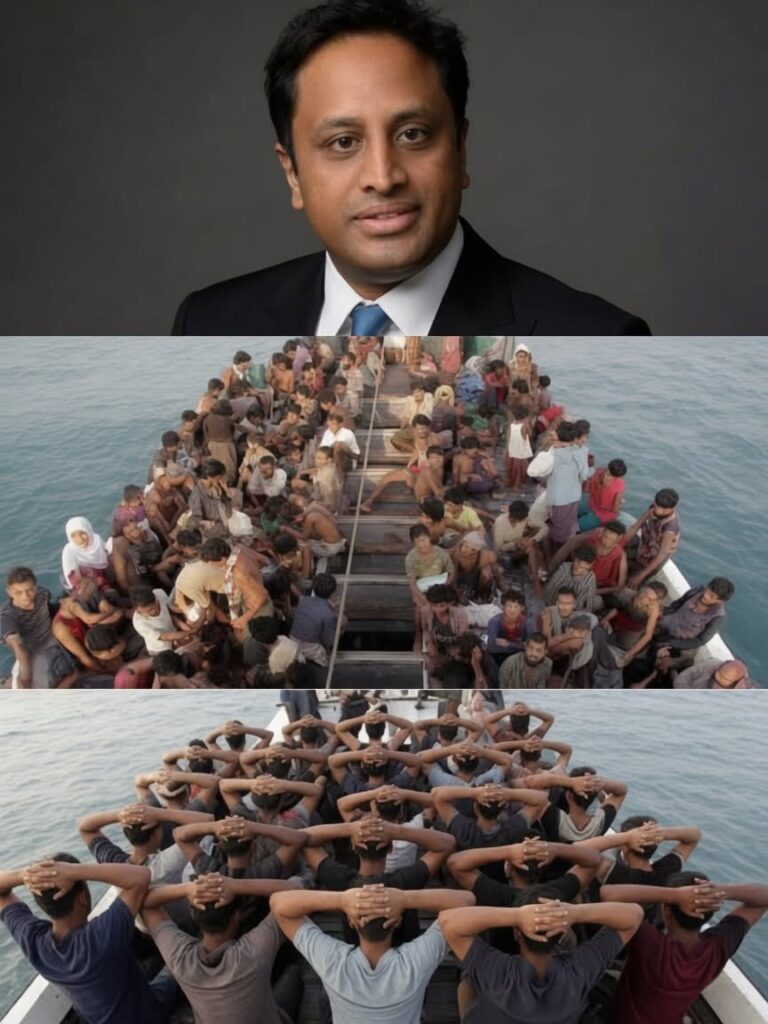
For years, few political issues have dominated Britain’s political landscape as consistently as illegal migration across the English Channel. Images of small boats making dangerous crossings have become a recurring feature of national news coverage, prompting repeated promises from successive governments to reduce arrivals while maintaining compliance with domestic and international law. Reform UK has argued that existing policies have failed to achieve that objective and has called for a far more fundamental change in approach. Its latest proposal seeks to place border enforcement at the heart of Britain’s migration strategy by advocating withdrawal from the European Court of Human Rights, a move the party believes would provide greater freedom to implement stricter immigration measures. The announcement immediately reignited one of the most emotionally charged debates in British politics.
According to Reform UK, the current legal framework prevents the government from acting as decisively as many voters expect. Party representatives contend that legal challenges based on human rights law have delayed or complicated deportations and asylum decisions, undermining public confidence in the immigration system. They argue that Parliament, rather than international courts, should hold ultimate authority over immigration policy in a sovereign democracy. Supporters of this position believe elected governments should possess greater flexibility to respond rapidly to irregular migration. For them, the issue is closely connected to broader questions about national sovereignty and democratic accountability.
The proposal’s supporters describe it as a practical response to what they consider an ongoing policy failure rather than an ideological statement. They argue that repeated attempts to reduce small-boat crossings have produced only limited results and that more comprehensive reforms are therefore necessary. Some believe stronger enforcement would discourage dangerous journeys organized by criminal smuggling networks. Others argue that visible action could strengthen public confidence in border management and demonstrate that immigration laws are applied consistently. From this perspective, decisive legal reform is viewed as an essential component of restoring trust in the immigration system. Critics, however, immediately challenged both the proposal and its legal implications. Constitutional lawyers, human rights organizations, and several political parties argued that leaving the ECHR would represent one of the most significant constitutional changes Britain has considered in decades. They warned that the Convention influences many areas of British law beyond immigration, including criminal justice, freedom of expression, privacy rights, and due process. Critics also questioned whether withdrawal alone would necessarily produce the migration outcomes claimed by supporters. In their view, irregular migration is shaped by multiple international factors that extend well beyond Britain’s domestic legal framework.
The European Court of Human Rights is frequently discussed in British politics, but its role is often misunderstood in public debate. The Court oversees compliance with the European Convention on Human Rights, an international treaty separate from the European Union. Although Brexit removed the United Kingdom from the EU, Britain remains a member of the Council of Europe and a signatory to the Convention. Consequently, proposals involving the ECHR concern international human rights commitments rather than EU membership itself. This distinction has become an important element of the current political discussion.
Within Westminster, reactions reflected the deeply divided nature of Britain’s migration debate. Reform UK argued that the proposal represents the bold action necessary to address a long-running challenge. Government ministers and opposition politicians responded with differing assessments, with some emphasizing the importance of effective border enforcement while others stressed Britain’s legal obligations and international reputation. Several MPs argued that immigration reform should focus on improving asylum processing, expanding international cooperation, and tackling people-smuggling networks. Others maintained that legal reform deserves serious public discussion. The parliamentary exchanges demonstrated that consensus remains elusive.
Migration experts noted that irregular Channel crossings involve a complex combination of humanitarian, criminal, diplomatic, and legal factors. Many individuals arriving in Britain seek asylum, requiring authorities to assess their claims under domestic legislation and international refugee law. Processing those claims often involves lengthy administrative procedures, contributing to significant backlogs. Experts argue that improving efficiency, increasing decision-making capacity, and strengthening international cooperation may all influence future outcomes. They caution that no single policy is likely to resolve every aspect of the issue.
The debate quickly expanded beyond Parliament and into the wider public conversation. Television programs devoted extensive coverage to the proposal, while newspapers published sharply contrasting editorials regarding its merits. Social media amplified the discussion further, with short clips from speeches and interviews generating millions of views. Supporters described the proposal as long overdue, while critics questioned both its legality and practicality. As often occurs with highly contentious political issues, online discussions became increasingly polarized.
Immigration has consistently ranked among the issues British voters identify as most important in national opinion surveys. Concerns frequently extend beyond border security to include housing, healthcare, public services, labor markets, and economic pressures. At the same time, many voters also support maintaining humanitarian protections for individuals with legitimate asylum claims. These overlapping priorities illustrate why immigration policy remains particularly challenging for governments of every political persuasion. Public opinion itself often reflects a combination of competing concerns rather than a single unified viewpoint.
Legal scholars emphasized that leaving the ECHR would involve substantial constitutional and diplomatic considerations. Such a decision would require significant legislative changes and could affect Britain’s relationships with international institutions and treaty partners. Experts also noted that domestic courts frequently interpret legislation in light of Convention principles, meaning broader legal reforms could be required. Consequently, the proposal extends well beyond immigration policy alone. Its implications would likely be debated across numerous areas of public law.
The financial dimension also entered the conversation. Supporters argued that reducing irregular arrivals and accelerating removals could lower long-term public expenditure associated with asylum accommodation and administrative processing. Critics responded that legal disputes, treaty negotiations, and institutional restructuring could themselves involve considerable costs. Economists observed that evaluating immigration policy requires examining both short-term expenditures and longer-term economic effects. As with many public policy debates, financial arguments became an important but contested aspect of the discussion.
International comparisons were frequently raised during the controversy. Some supporters pointed to countries that have adopted stricter migration controls as examples Britain should consider. Critics responded that national legal systems, geography, migration routes, and treaty obligations differ significantly, making direct comparisons difficult. Experts encouraged careful examination of international evidence rather than assuming policies implemented elsewhere would necessarily produce identical outcomes in Britain. The complexity of migration patterns often limits simple policy comparisons.
Humanitarian organizations expressed concern that increasingly confrontational political rhetoric could overshadow the human realities associated with migration. They emphasized that many asylum seekers flee conflict, persecution, or instability and that each application requires individual legal assessment. At the same time, these organizations acknowledged the legitimate responsibility of governments to maintain secure borders and combat criminal smuggling operations. Their position highlighted the continuing challenge of balancing humanitarian obligations with effective immigration enforcement. This balance remains central to Britain’s broader migration debate.
Political analysts observed that Reform UK has consistently sought to shape national discussion by introducing proposals that force larger parties to respond. Even when such proposals are not immediately adopted, they can influence public debate by shifting attention toward particular policy questions. Analysts suggested that the latest announcement may similarly affect future election campaigns, regardless of whether it becomes government policy. Immigration is expected to remain a major electoral issue, ensuring continued scrutiny of competing approaches. The proposal therefore carries political significance beyond its immediate legislative prospects.
Media coverage reflected sharply different editorial perspectives. Some publications highlighted arguments concerning sovereignty, border control, and public confidence, while others focused primarily on legal risks and diplomatic consequences. Editorial writers frequently reached opposing conclusions while discussing the same proposal, illustrating the highly contested nature of migration reporting in Britain. Readers encountered contrasting narratives depending on which sources they consulted. This diversity of coverage mirrored the broader political divisions surrounding immigration. Several constitutional experts cautioned against assuming that any single policy change would permanently end small-boat crossings. Migration flows are influenced by conflict, economic conditions, international cooperation, criminal smuggling networks, and asylum systems across multiple countries. Effective policy, they argued, generally involves a combination of border enforcement, international agreements, efficient asylum processing, and action against organized crime. While stronger enforcement may influence migration patterns, experts stressed that long-term solutions typically require cooperation across national borders. The issue remains highly complex.
Community leaders also encouraged respectful public discussion despite strong political disagreements. They argued that citizens should be able to debate immigration policy openly while avoiding personal hostility or misinformation. Many emphasized the importance of distinguishing between irregular migration, legal immigration, refugees, skilled workers, and long-established immigrant communities. Such distinctions help ensure that policy discussions remain accurate and constructive. Responsible democratic debate, they argued, depends upon careful use of facts and clear terminology.
Looking ahead, observers believe proposals concerning the ECHR and immigration will remain prominent in British politics as the next general election approaches. Political parties are expected to continue presenting sharply different visions regarding border security, asylum reform, international cooperation, and Britain’s constitutional future. Whether Reform UK’s proposal gains broader political support remains uncertain. However, it has already succeeded in placing the relationship between sovereignty, human rights, and immigration firmly back into the national spotlight.
Ultimately, Reform UK’s latest proposal has become another defining chapter in Britain’s ongoing debate over migration and constitutional governance. Supporters view it as a bold attempt to restore greater national control over immigration policy and strengthen border enforcement. Critics argue that any reforms must remain consistent with legal obligations, evidence-based policymaking, and Britain’s wider constitutional framework. The intensity of the reaction demonstrates that immigration continues to shape political discussion more than almost any other issue in the country. As Parliament, legal experts, and the public continue examining competing proposals, the debate over how Britain should manage its borders- and the legal framework within which it does so-is likely to remain at the center of national politics for the foreseeable future.