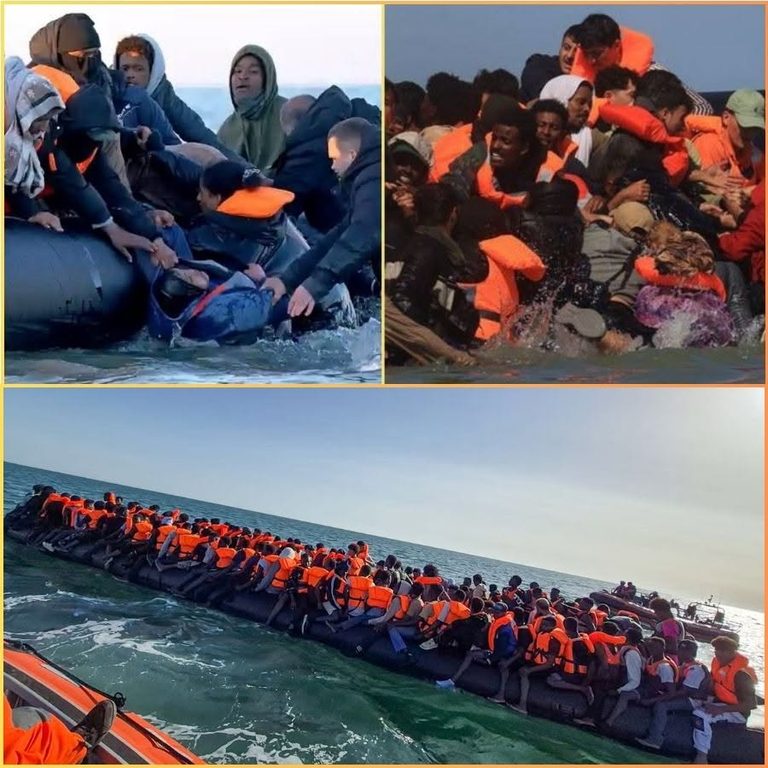
POLAND TAKES A HARD LINE — AND EUROPE IS WATCHING!
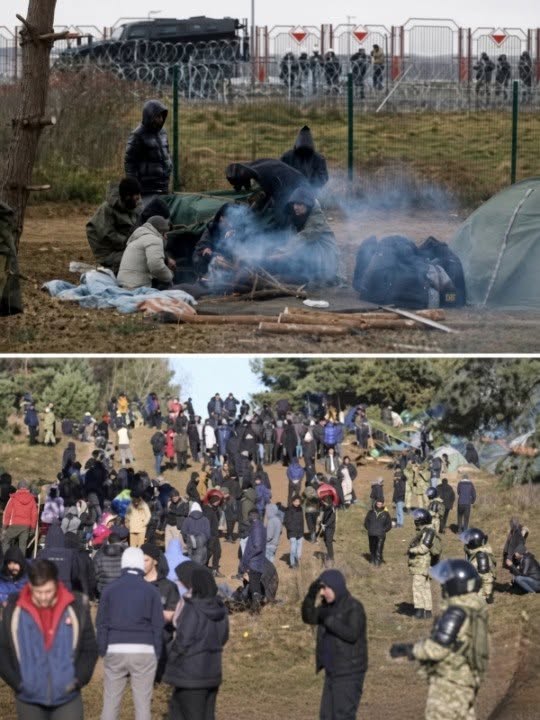
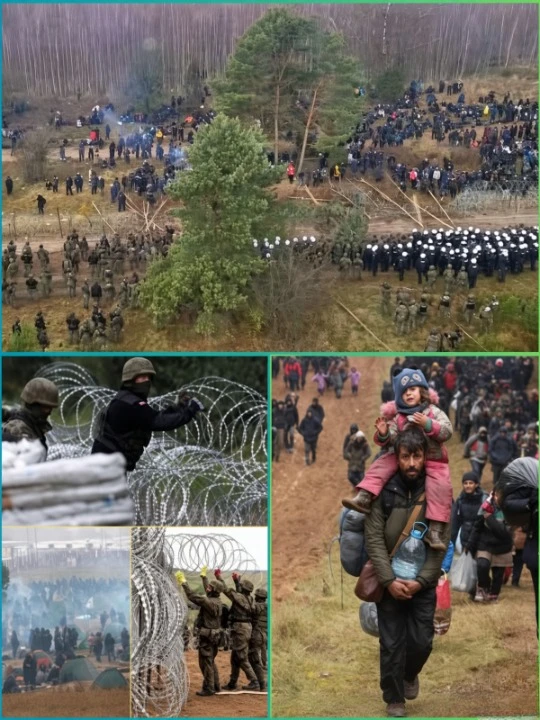
Poland Draws a Line at Europe’s Eastern Frontier — But How Far Should Border Enforcement Go?
Along Poland’s eastern frontier, the argument over immigration is no longer theoretical. It is made of steel barriers, surveillance systems, patrol vehicles, soldiers, border guards and a strip of territory where Europe meets Belarus. For Warsaw, this is not simply another chapter in the continent’s long-running migration debate. Polish officials increasingly describe what is happening at the border as a national-security confrontation — a deliberate attempt to use human beings as instruments of political pressure. For critics, however, the increasingly uncompromising response raises another urgent question: when a country defends its borders against a hostile neighbour, where does legitimate security end and the right to seek protection begin?
That tension has placed Poland at the centre of one of Europe’s most consequential border debates.
The numbers help explain why Warsaw believes its strategy is working. Poland’s Interior Ministry said that between January and the end of May 2026, border guards recorded just 215 attempts to cross illegally from Belarus — a reported 98 percent decline from more than 10,600 attempts during the same period in 2025. Poland says it has spent nearly PLN 3 billion over the past two years strengthening the frontier, including a roughly 190-kilometre physical barrier and extensive electronic monitoring systems.
For supporters of Poland’s tougher position, those figures amount to a powerful argument: deterrence works.
But Poland has gone further than simply building fences.
Since March 27, 2025, the government has maintained a temporary restriction on applications for international protection at the Belarusian border. The measure has repeatedly been extended with parliamentary approval. In May 2026, the Interior Ministry announced yet another 60-day extension, saying the restriction was necessary because migration continued to be “instrumentalised” against the country. Polish authorities reported that between the introduction of the restrictions and May 19, 2026, applications from 480 foreign nationals were not accepted, while applications from 141 people classified as belonging to vulnerable groups were accepted.
Warsaw’s argument is rooted in the extraordinary circumstances surrounding the Belarus frontier.
Since the border crisis began earlier this decade, Poland and other European governments have accused the regime of Belarusian leader Alexander Lukashenko of facilitating the movement of migrants toward EU borders as retaliation for European sanctions and political pressure. Polish officials say migrants have been transported toward the frontier, encouraged toward crossing points and, in some incidents, assisted by Belarusian personnel.
The European Union Agency for Asylum acknowledged in its 2026 report that the effects of what it describes as the “instrumentalisation of migration by Russia and Belarus” continued throughout 2025, prompting countries on Europe’s eastern flank to maintain unusually strict border-security measures. Poland was not alone: Finland, Latvia and other states facing Russia or Belarus also strengthened restrictions or border infrastructure.
That geopolitical context changes the political calculation.
A migrant arriving at the border may be seeking safety, employment or simply a better life. But the government facilitating that person’s journey may simultaneously be pursuing a strategic objective. Poland therefore argues that its authorities are confronting two realities at once: vulnerable individuals and a hostile state exploiting migration flows.
The dilemma is precisely what makes the issue so difficult.
Supporters of Warsaw’s approach argue that a border that cannot be controlled is ultimately not a meaningful border at all. They say a European country must retain the ability to decide who enters its territory, particularly when a neighbouring authoritarian government is deliberately testing that system.
There is also the deterrence argument. If irregular entry repeatedly results in eventual admission to Europe, governments fear that smuggling organisations and hostile states will continue exploiting the route. If crossing becomes extremely difficult and irregular entry offers no guaranteed path toward remaining in the EU, the incentive to attempt the journey may decline.
Recent evidence offers ammunition for that argument. The Centre for Eastern Studies reported in July that Poland had recorded only slightly more than 260 attempted crossings from Belarus during the first half of 2026, compared with approximately 15,000 during 2025. At the same time, pressure shifted dramatically toward Latvia, which recorded roughly 8,000 attempts by mid-July.
From Warsaw’s perspective, that looks like proof that a highly defended border can alter migration routes.
But deterrence creates a second question: where do the people who are deterred go?
Humanitarian organisations and refugee-rights advocates argue that forcing migrants away from one frontier does not necessarily solve the underlying crisis. It may simply redirect people toward another border, another smuggler or another dangerous journey.
The most serious criticism concerns asylum.
European lawmakers and human-rights organisations have warned that Poland’s restrictions could conflict with the principle of non-refoulement — the international obligation preventing governments from returning individuals to places where they could face persecution or serious harm. A 2025 European Parliament question cited concerns from UNHCR and Poland’s Commissioner for Human Rights and referred to allegations of pushbacks at the Belarusian frontier.
A July 2026 country report published through the Asylum Information Database likewise stated that the suspension of asylum applications at the Belarus border remained continuously in force through 2025 and noted disputes over Poland’s handling of European Court of Human Rights interim measures.
That criticism cannot simply be dismissed as opposition to border enforcement.
A government can have a legitimate security concern while still facing legitimate questions about how individual migrants are treated. Those two truths can exist simultaneously.
And that may ultimately be the larger European dilemma.
The continent spent years treating immigration largely as a humanitarian, economic and political challenge. Poland’s experience with Belarus has added something more unsettling: migration as an instrument of geopolitical pressure.
If authoritarian governments discover they can destabilise European societies simply by directing thousands of people toward vulnerable borders, then Europe will almost certainly respond with stronger external defences. Poland may therefore represent not an exception, but an early indication of where European border policy is heading.
Indeed, even internal Schengen borders have become part of the story. The European Commission lists Poland as maintaining temporary controls along its borders with Germany and Lithuania from April through October 2026, citing persistent migratory pressure and threats to public security and order.
The political lesson spreading across Europe is increasingly clear: voters expect governments to demonstrate that borders remain under government control.
But Europe also built its post-war identity around law, human dignity and protection for people fleeing persecution. If those principles disappear whenever political pressure becomes intense, critics argue, the continent risks defending its territory while weakening some of the values it claims that territory exists to protect.
That is why Poland’s border has become more than a Polish story.
It is a test case.
Can Europe construct borders strong enough to resist smuggling networks and hostile-state pressure while still creating credible routes for legitimate asylum seekers? Can authorities distinguish rapidly between someone being manipulated as part of a geopolitical operation and someone genuinely fleeing persecution? Can governments deter irregular migration without creating conditions in which desperate families become trapped between armed security forces and an authoritarian regime?
There will be no simple answer.
Poland has demonstrated what maximum political determination can accomplish. Barriers have been strengthened. Surveillance has expanded. Illegal crossing attempts have fallen sharply. Warsaw insists the country is safer because it refused to allow Belarus to dictate what happens at its frontier.
But Poland has also demonstrated the price of the European debate becoming harder.
Every reinforced fence produces another argument about humanitarian access. Every asylum restriction produces another legal challenge. Every successful deterrence policy forces neighbouring countries to ask whether migration pressure will simply move somewhere else.
Europe therefore faces a choice more complicated than “open borders” versus “closed borders.”
The real challenge is building borders that are controlled without becoming lawless, secure without becoming indiscriminate, and resistant to geopolitical manipulation without losing sight of the individual human beings caught inside it.
Poland has already answered one part of the question.
It has decided that the state must retain control of its frontier — even when doing so requires extraordinary measures.
Now the rest of Europe must answer the harder one:
How far should a democracy go to defend its border before the methods used to protect it begin changing the principles it is trying to defend?