RUPERT LOWE–SADIQ KHAN ‘SHUT YOUR FILTHY MOUTH’ CLASH GOES VIRAL — BUT DID THE EXPLOSIVE EXCHANGE ACTUALLY HAPPEN?
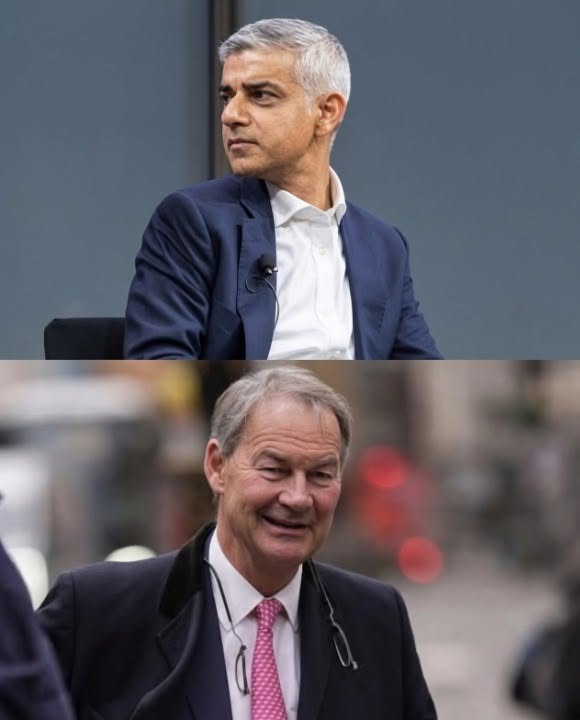
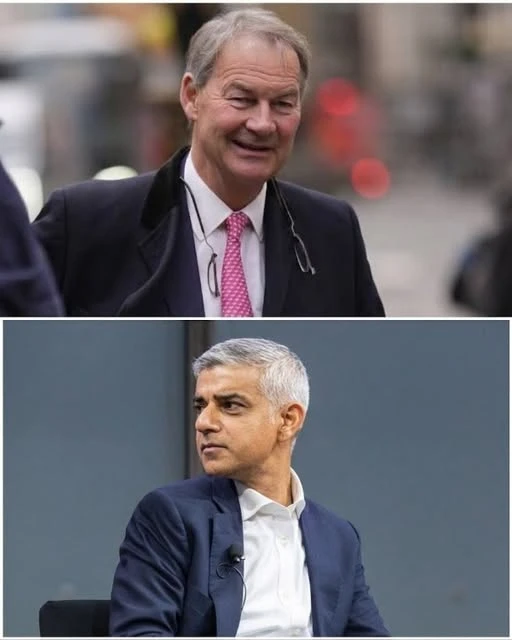
An extraordinary story claiming that British MP Rupert Lowe angrily told London Mayor Sadiq Khan to “shut your filthy mouth” during a televised confrontation has exploded across social media, tapping directly into one of the most emotionally charged divides in modern British politics: the belief that London and Westminster have become increasingly disconnected from communities elsewhere in England. According to the viral account, what supposedly began as a routine discussion about regional development rapidly descended into an astonishing confrontation after Khan allegedly made dismissive remarks about traditional communities outside the capital. Lowe was then said to have responded with the furious warning, “Shut your filthy mouth. Don’t you ever talk about my homeland,” leaving the studio in silence before clips supposedly raced across social media. It is an irresistible political story: two recognizable figures, an incendiary insult, a silent television studio and a wider argument about London versus the rest of the country. There is, however, a major problem. The account supplied here does not identify the broadcaster, programme, date, interviewer, complete video or original transcript needed to authenticate such a remarkable exchange. The quotations attributed to both men therefore should not be presented as verified statements without primary evidence. That distinction matters because the underlying political tensions described by the story are very real even if the dramatic confrontation itself remains unsubstantiated. Britain is engaged in a serious debate over regional inequality, political representation, investment, immigration, national identity and the concentration of economic power in London. The viral story appears to have struck a nerve precisely because it transforms those complicated frustrations into a single dramatic confrontation — one man allegedly insulting England’s traditional communities and another supposedly standing up to defend them. Whether the exchange proves authentic, distorted or fabricated, its ability to attract attention reveals something significant about the political mood in Britain.
THE CLAIM IS PERFECTLY DESIGNED FOR THE SOCIAL-MEDIA AGE — AND THAT IS EXACTLY WHY VERIFICATION MATTERS
Almost every ingredient of the alleged confrontation is engineered, intentionally or otherwise, for viral distribution. There is an instantly recognizable political figure in Sadiq Khan, a combative political personality in Rupert Lowe, a provocative quotation, a reference to “homeland,” an apparent insult directed at communities outside London and the familiar image of a television studio supposedly falling silent after someone says what others are afraid to say. Stories structured this way travel exceptionally quickly because audiences do not need extensive political knowledge to understand the emotional conflict. There is a perceived insult, a defender and an immediate confrontation. But the more dramatic a political quotation is, the stronger the case for checking its origin before repeating it as established fact. Authentic television confrontations normally leave a substantial evidentiary trail: the programme can be named, the broadcaster can be identified, a longer recording can usually be located, journalists who were present may report on it, and both politicians may subsequently respond. A story claiming that a serving politician publicly told the Mayor of London to “shut your filthy mouth” during a broadcast would be remarkable enough to generate substantial coverage. Without those details, the responsible conclusion is not that the exchange definitely did or did not occur, but that the version circulating in the supplied material remains unverified. That does not make the story politically meaningless. On the contrary, understanding why so many people are prepared to believe and share it may tell us considerably more about Britain’s current political divisions than the sensational quotation itself.
WHY A STORY ABOUT LONDON VERSUS ‘THE SHIRES’ TOUCHES SUCH A DEEP POLITICAL NERVE
The alleged confrontation draws its emotional power from a long-running perception that Britain has become too economically and politically centered on London. For decades, governments of different political traditions have attempted to address regional inequality through infrastructure investment, devolution, regeneration projects and various initiatives designed to redistribute economic opportunity. Yet the perception of a London-centric political establishment remains powerful in many communities. London is the seat of Parliament, government departments, major financial institutions and much of the national media. It contains some of Britain’s most prosperous neighborhoods and commands extraordinary international influence. But Britain outside London contains former industrial communities, coastal towns, rural counties and smaller cities where voters often feel that national economic growth has failed to translate into sufficient local opportunity. When factories close, high streets decline, young people leave for larger cities and transport infrastructure appears inadequate, arguments about regional inequality cease to be abstract economic questions. They become questions about respect. That is why the quotation attributed to Khan in the viral account — suggesting that some regions are supposedly “living in the past” — would be so incendiary if genuine. It would appear to confirm precisely what many frustrated voters already suspect: that influential people in the capital regard traditional communities elsewhere as obstacles to progress rather than places deserving investment. No verified evidence of that quotation is supplied here, however, and it should therefore not be attributed to Khan as fact.
RUPERT LOWE’S POLITICAL PROFILE MAKES THE STORY ESPECIALLY BELIEVABLE TO HIS SUPPORTERS
The story also gains plausibility among sympathetic audiences because Lowe has cultivated an outspoken political image. A businessman and former chairman of Southampton Football Club, Lowe entered Parliament amid the rise of Reform UK before later becoming an independent MP following a highly publicized rupture with the party. His political interventions have frequently emphasized immigration, national sovereignty, public spending, cultural questions and dissatisfaction with the established political system. That reputation means audiences familiar with Lowe may find a forceful confrontation easier to believe than they would if the same quotation were attributed to a conventionally cautious politician. Yet plausibility is not proof. Political misinformation often works most effectively when fabricated or distorted statements resemble something audiences imagine a person might say. The test should therefore never be whether a quotation “sounds like” Lowe, Khan or any other public figure. The test is whether reliable evidence demonstrates that the words were actually spoken. In an era when misleading subtitles, edited video, synthetic audio and invented quotations can circulate at enormous speed, that distinction is increasingly important.
SADIQ KHAN HAS BECOME A LIGHTNING ROD FOR ARGUMENTS THAT EXTEND FAR BEYOND LONDON CITY HALL
Khan’s presence in the story is equally significant. As Mayor of London, he has become one of Britain’s most recognizable political figures and consequently a frequent target of criticism from opponents on issues ranging from transport and policing to housing, environmental policy and immigration rhetoric. Some critics portray his mayoralty as representative of a metropolitan political culture increasingly disconnected from more socially conservative or traditionally minded parts of Britain. Supporters reject that characterization and point to the complexity of governing a city of millions with enormous economic importance and substantial inequalities of its own. London itself is hardly uniformly wealthy: alongside extraordinary concentrations of wealth are communities facing high housing costs, poverty, crime and pressure on public services. That reality complicates simplistic narratives portraying the political divide as prosperous London against impoverished provincial England. Nevertheless, Khan has become symbolic of the capital in national political arguments, which makes attaching a provocative anti-regional quotation to him particularly powerful. The viral claim does not merely depict one politician criticizing particular investment decisions; it appears to place the Mayor of London against an entire vision of traditional England. That framing almost guarantees outrage.
THE ANGER BEHIND THE STORY REFLECTS A REAL FEELING THAT SOME COMMUNITIES HAVE BEEN LEFT BEHIND
Strip away the unverified quotations and an important political reality remains. Many communities outside the capital genuinely feel economically and culturally neglected. Britain’s transformation from an industrial economy toward one increasingly dominated by services, finance, technology and knowledge-intensive sectors has created winners and losers. Areas once built around manufacturing, mining, shipbuilding or other traditional industries have sometimes struggled to replace lost employment with equally secure and well-paid jobs. Infrastructure disparities compound those frustrations. Residents who watch enormous transport projects announced for London while dealing with unreliable buses or rail connections elsewhere may understandably ask whether national priorities are fairly distributed. The phrase “left behind” has become politically familiar because it describes more than income. It can encompass the disappearance of local institutions, declining town centers, limited opportunities for younger generations and the sense that cultural traditions valued locally are treated dismissively by national elites. These frustrations played an important role in the Brexit era and continue influencing support for parties promising to challenge the political establishment.
BUT THE IDEA THAT LONDON SIMPLY ‘TAKES’ FROM THE REST OF BRITAIN IS ALSO TOO SIMPLE
The regional argument becomes considerably more complicated when economic interdependence is considered. London generates enormous economic activity and tax revenue while functioning as an international financial, cultural and business center. Companies headquartered in London employ workers throughout Britain, while supply chains connect the capital to businesses across the country. At the same time, London depends heavily on workers, food, energy, infrastructure and services originating elsewhere. The relationship is therefore not accurately described as two separate economies competing over a fixed pool of resources. Britain’s real challenge is how to ensure that prosperity and opportunity are distributed more broadly while maintaining the strengths that make London globally competitive. Policies that weaken the capital without strengthening other regions would solve little. Equally, policies that assume London’s success will automatically spread everywhere else have repeatedly failed to satisfy communities that see insufficient improvement in their own circumstances. Serious regional development consequently requires investment in skills, transportation, digital infrastructure, housing, universities, private enterprise and local decision-making rather than simply directing political anger at London.
THE STORY ALSO SHOWS HOW POLITICAL DISAGREEMENT IS BECOMING INCREASINGLY PERSONAL
Even if the alleged insult cannot be verified, the enthusiastic reaction it reportedly generated raises another question: what kind of political behavior does the public now reward? British politics has always featured fierce argument, and the House of Commons is hardly famous for gentle debate. But social media has created powerful incentives for confrontational moments that can be clipped into seconds-long videos. A detailed explanation of regional productivity may attract modest attention; an angry politician telling an opponent to shut up can potentially reach millions. This rewards performance as much as policy. Politicians are increasingly judged not only on whether their arguments are persuasive but on whether they appear strong, authentic and willing to confront opponents. Supporters often celebrate these moments as refreshing departures from scripted political language. Critics worry that politics becomes progressively more hostile as every disagreement is transformed into a personal battle requiring humiliation rather than persuasion. The danger is that theatrical confrontation can create the impression of decisive leadership without answering the policy question that triggered the argument in the first place.
‘HOMELAND’ IS A POWERFUL WORD BECAUSE THE DEBATE IS ABOUT IDENTITY AS MUCH AS MONEY
The phrase attributed to Lowe — “Don’t you ever talk about my homeland” — is particularly potent because it transforms a dispute over regional development into a question of belonging. People rarely become emotionally attached to spreadsheets showing regional investment per capita. They do become attached to towns, counties, accents, landscapes, football clubs, local traditions and family histories. Britain’s political geography therefore cannot be understood entirely through economics. Communities may resist policies they believe threaten local identity even when policymakers present those changes as economically rational. Likewise, residents can interpret dismissive language about their communities as an attack on themselves. This helps explain why stories involving supposed insults toward particular regions spread so quickly. They activate identity rather than merely opinion. Yet that emotional power also makes accuracy more important. Inventing or misattributing an insult about someone’s home can deliberately inflame resentment between communities that already feel politically divided.
THE VIRAL REACTION MATTERS EVEN IF THE ORIGINAL CLAIM TURNS OUT TO BE WRONG
One of the strangest characteristics of modern political communication is that false or distorted stories can still produce genuine political consequences. Thousands of people may encounter a claim before a correction appears. By the time fact-checking catches up, the original narrative may already have reinforced existing beliefs. Someone convinced that metropolitan politicians despise rural England may remember the emotional impression of the story even if the quotation is later disproved. Someone convinced that populist politicians thrive on aggression may similarly use the supposed response as evidence for an existing worldview. This phenomenon makes political misinformation particularly difficult to correct because people do not encounter stories as neutral observers. They interpret them through prior experiences, loyalties and frustrations. The more perfectly a claim confirms those expectations, the less likely audiences may be to demand supporting evidence.
BRITAIN’S REGIONAL DIVIDE WILL REMAIN LONG AFTER THE LATEST SOCIAL-MEDIA STORM
Whatever ultimately emerges about this alleged exchange, the larger political conflict will not disappear. Britain still faces substantial disparities in productivity, wages, transport connectivity, housing and investment between different parts of the country. Successive governments have recognized the problem under different labels, from regional regeneration to the Northern Powerhouse and “levelling up.” Devolution has given some city regions greater authority, but arguments continue over whether local leaders possess sufficient resources and powers to transform their economies. Meanwhile, the growth of Reform and other anti-establishment political forces demonstrates that frustration remains significant among voters who believe traditional parties have failed to deliver meaningful change. Any politician who appears to dismiss those concerns risks a severe backlash. But politicians who exploit resentment without offering credible solutions face a different challenge: anger can win attention, yet rebuilding regional economies requires patient and technically difficult policy.
THE MOST IMPORTANT QUESTION NOW IS SIMPLE: WHERE IS THE ORIGINAL FOOTAGE?
For a claim this dramatic, verification should be straightforward if the confrontation occurred as described. Which television network broadcast it? What was the programme? When did it air? Who moderated the discussion? Where is the complete, unedited recording? What did Khan say immediately before and after the quotation attributed to him? What did Lowe say in full? Have either of their offices acknowledged the exchange? Those questions matter more than the number of likes, shares or comments attached to a viral clip or post. Until primary evidence establishes the exchange, the responsible description is that a viral account alleges the confrontation occurred, not that Lowe and Khan unquestionably exchanged these words. The distinction may appear cautious, but it is fundamental to credible journalism.
BEHIND THE EXPLOSIVE CLAIM LIES A VERY REAL POLITICAL WARNING
The most revealing part of this story may ultimately be why it became believable enough to spread. Britain is experiencing a period of profound political distrust. Many voters outside London believe national institutions do not understand their communities. Many Londoners believe the capital itself is routinely caricatured by politicians seeking an easy target. Immigration, housing, economic stagnation, public services and regional inequality have combined with cultural disagreements to create an environment in which resentment travels rapidly between different parts of the country. A story depicting Sadiq Khan apparently dismissing traditional England and Rupert Lowe furiously defending it fits almost perfectly into that environment. Whether authentic or not, it gives both sides recognizable characters and an emotionally satisfying confrontation. But Britain’s underlying problems will not be resolved in a television studio, and certainly not through an insult. The more consequential battle concerns whether governments can create opportunity outside the capital, improve infrastructure, restore confidence in struggling towns and allow communities greater influence over their futures without turning London and the rest of England into political enemies. Until that happens, stories portraying a dramatic rebellion against the metropolitan establishment will continue finding an audience. This particular confrontation still requires evidence before its sensational quotations can responsibly be treated as fact. The anger that made the story resonate, however, is unmistakably real — and understanding that anger may ultimately matter far more than the viral words attributed to either man.