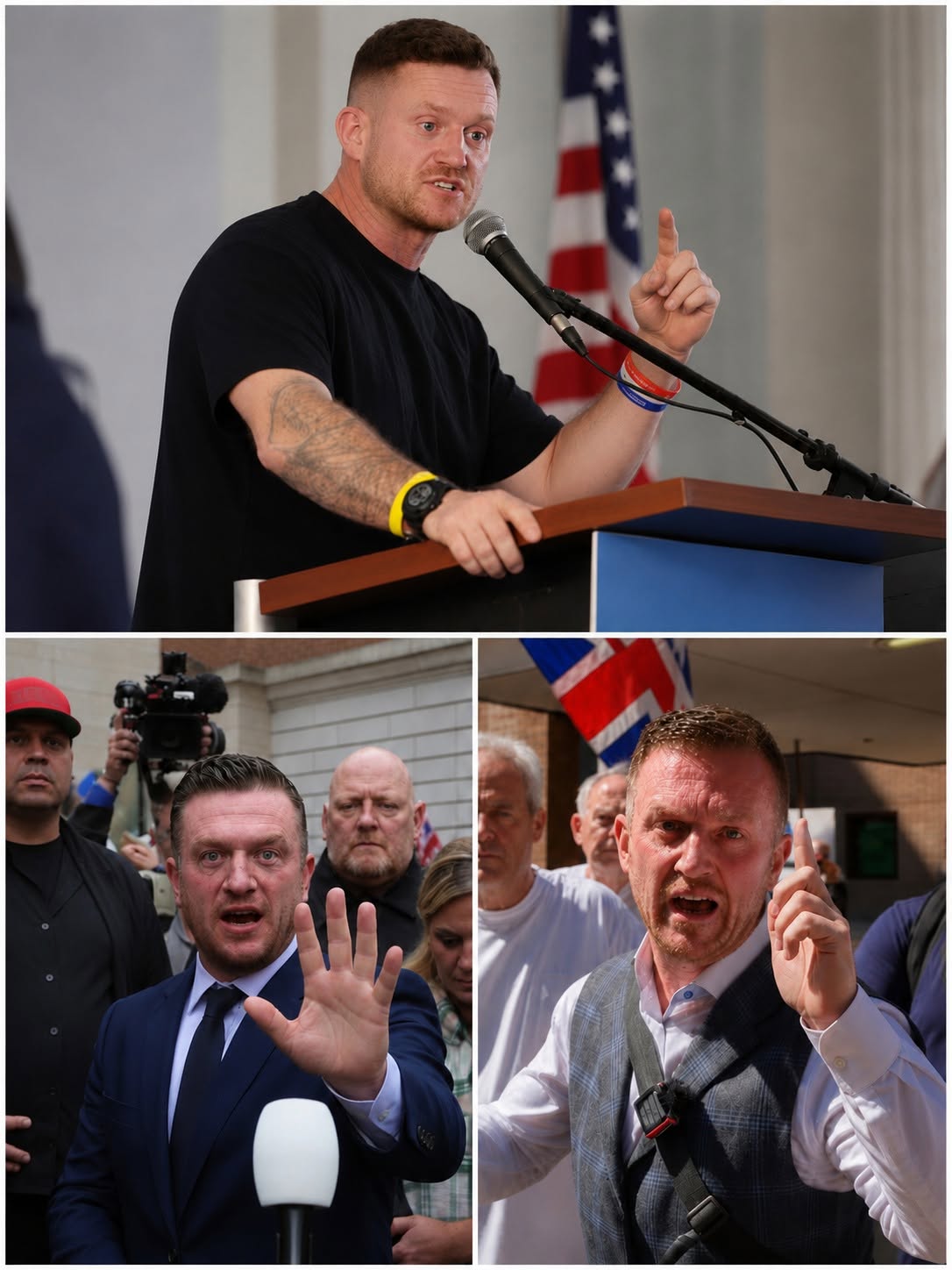
“SOMETHING HUGE IS COMING!” TOMMY ROBINSON DROPS AN OMINOUS WARNING THAT WILL COMPLETELY ALTER THEFUTURE OF BRITAIN!
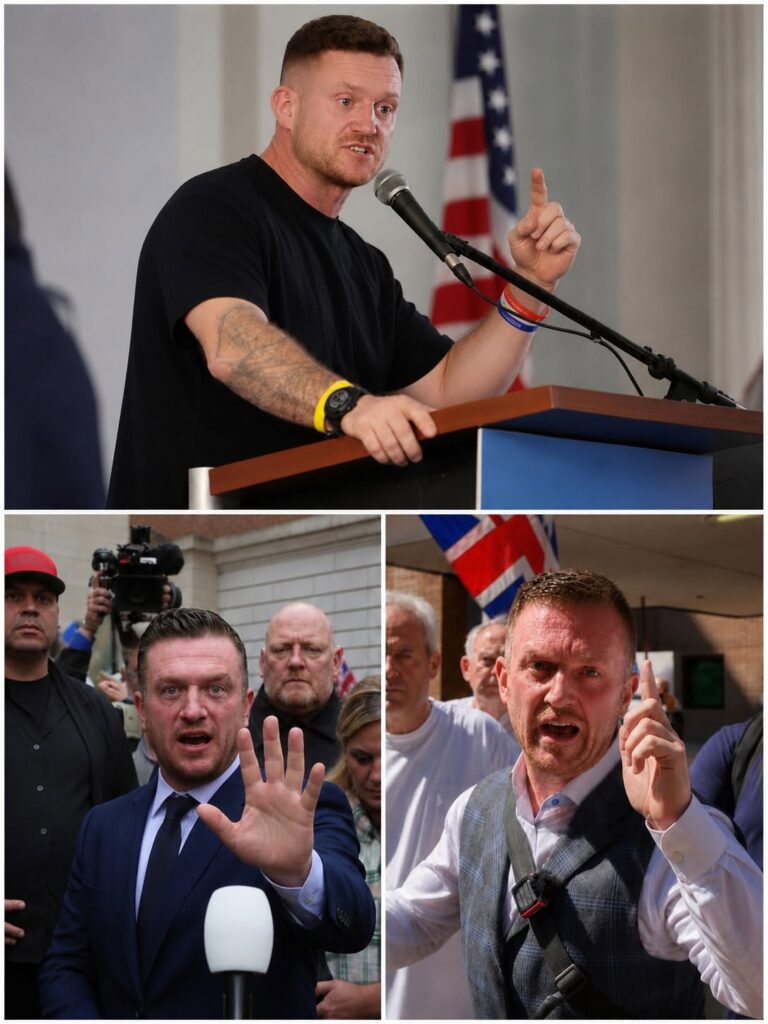
Tommy Robinson’s “Something Huge Is Coming” Warning Sparks Online Debate Over Britain’s Political Climate
A dramatic message attributed to Tommy Robinson has sparked fresh discussion online after the activist suggested that “something huge” may be coming for Britain, prompting supporters, critics and political observers to debate what the warning might mean- and whether it should be treated as a serious political signal or another example of viral alarmism.
The claim spread quickly across social media, where highly charged captions described the message as “ominous,” “life- altering” and capable of changing the future of the United Kingdom. But while the phrase has attracted attention, there is currently limited reliable public information confirming exactly what Robinson was referring to, whether a specific announcement is planned, or whether the message was intended as political promotion, protest mobilisation, media branding or a broader warning about Britain’s direction.
That uncertainty is important. In today’s online political environment, a vague message can become a national talking point before facts are established. A few words-especially from a polarising public figure-can generate speculation, outrage, fear and support within hours.
What is clear is that the reaction reveals something deeper about Britain’s current political mood. Public trust is fragile, debates over immigration and identity remain intense, and social media continues to reward dramatic warnings more than careful explanations.
A Polarising Figure at the Centre of the Debate
Tommy Robinson, whose real name is Stephen Yaxley-Lennon, has long been one of the United Kingdom’s most controversial activist figures. He first became nationally known through the English Defence League, a movement associated with anti-Islam and far-right activism, and has since built a large following through self-produced videos, public demonstrations and online commentary. Robinson is frequently described by mainstream outlets and watchdog groups as a far-right activist, while his supporters view him as a campaigner who speaks for people they believe are ignored by the political establishment.
That divide explains why even a vague warning from him can travel quickly. To supporters, Robinson’s message may sound like a sign that a major campaign, disclosure, protest or political development is coming. To critics, it may look like another attempt to generate fear, attention and mobilisation through dramatic language.
The phrase “something huge is coming” is powerful because it invites speculation without providing evidence. It allows audiences to fill in the blanks with their own fears, hopes or assumptions.
In a polarised political climate, that can be highly effective.
Why the Warning Spread So Quickly
The message spread because it connects to themes that have already shaped British public debate: immigration, national identity, public safety, free speech, policing, grooming gang scandals, protests and distrust of mainstream institutions.
Robinson’s supporters often argue that Britain is facing a crisis that politicians and major media organisations refuse to describe honestly. They tend to interpret his warnings as part of a broader campaign against what they see as establishment silence.
His critics argue that such warnings often rely on fear and exaggeration. They say broad claims about Britain being on the edge of collapse can inflame division, particularly when linked to sensitive topics involving religion, ethnicity or migration.
Recent coverage has shown Robinson continuing to appear in debates beyond the UK, including controversy in Australia after political figures such as Pauline Hanson met him during discussions about migration, identity and deportation policy. That episode drew criticism from Australian leaders and further showed how Robinson’s image has become internationally associated with hardline immigration politics.
The latest viral warning therefore did not emerge in a vacuum. It landed in a political environment already primed for confrontation.
Viral Politics and the Power of Suspense
Modern political communication increasingly resembles entertainment marketing. Instead of releasing a full argument or detailed policy, public figures often tease major developments with short, dramatic phrases.
“Something huge is coming” works because it creates suspense. It encourages followers to wait, share, guess and react. It also makes critics pay attention, because they want to understand whether the message could lead to a protest, campaign or controversy.
This is not unique to Robinson. Politicians, activists and influencers across the political spectrum use similar techniques. The difference is that when a figure as divisive as Robinson uses this language, the reaction becomes more intense.
Supporters may see it as a rallying call. Opponents may see it as a warning sign. Journalists may see it as a potential news story. Social media algorithms may see it as engagement.
That combination can turn a vague post into a major online event.
Britain’s Political Climate Is Already Tense
The message gained traction partly because Britain’s political atmosphere is already unsettled.
Immigration remains one of the country’s most divisive issues. Public concern over border control, asylum hotels, integration and public services has created space for parties and activists who argue that mainstream politicians have failed. At the same time, critics of hardline rhetoric warn that exaggerated claims can increase hostility toward minority communities and migrants.
Public demonstrations have also become more politically charged. The Evening Standard’s ongoing coverage of Robinson-related events has included protests, arrests, policing operations and tensions around rival rallies in London and elsewhere.
In this context, any waming about Britain’s future can be interpreted through existing anxieties. Some people hear a call for national renewal. Others hear a threat of unrest. Others see a publicity tactic.
Without specific evidence about what Robinson meant, all three interpretations remain possible.
Supporters See a Warning That Britain Must Listen To
For Robinson’s supporters, the phrase “something huge is coming” may represent a belief that public frustration is reaching a breaking point.
They argue that many Britons are angry about immigration policy, policing, crime, free speech and what they view as unfair treatment of ordinary citizens by political elites. To them, Robinson’s warning may sound less like fearmongering and more like a prediction that public opinion is about to force major change.
Some supporters may interpret the message as a sign of a coming protest or campaign. Others may see it as a broader statement that Britain is approaching a political turning point.
This view is often rooted in a belief that mainstream institutions have lost credibility. When people feel ignored by government, media and police, they may become more receptive to figures who present themselves as outsiders willing to speak bluntly.
That does not mean every claim made by such figures is accurate. But it does help explain why their messages resonate.
Critics Warn Against Fear-Based Messaging
Critics take a different view.
They argue that vague warnings can encourage anxiety without providing facts. When a public figure claims that something major is about to happen but does not explain what, audiences may begin speculating in ways that intensify fear and division.
This is especially risky when the figure involved has a history of activism around sensitive topics such as Islam, immigration and national identity. Critics worry that dramatic messaging can contribute to suspicion toward entire communities, even when no specific evidence is presented.
Researchers have also warned that alternative social media spaces can amplify partisan and extremist narratives when moderation is limited and audiences are already politically committed.
That does not mean all online concern is illegitimate. But it does mean that vague alarmist messaging should be handled carefully, especially when it involves public safety or community relations.
What Could the Message Mean?
At this stage, several possibilities exist.
It could refer to a planned protest, rally or campaign. Robinson has previously been associated with street demonstrations and public events, and such announcements are often teased online before details are released.
It could refer to a media project, documentary or interview. Robinson has frequently used self-produced video content to promote his views and campaigns.
It could refer to a political development, such as support for a party, movement or public figure. Recent reporting has shown Robinson’s name appearing in wider discussions about Reform UK, immigration politics and the future of the British right.
Or it could simply be a rhetorical device designed to generate attention.
Until more information is available, responsible reporting should avoid presenting the warning as proof of an imminent national crisis.
The Danger of Turning Speculation Into Panic
The most irresponsible interpretation would be to claim that “the entire nation is in panic.” There is no evidence that Britain as a whole is panicking over this message.
What exists is online attention, strong reaction and speculation among people already engaged in political debate. That is meaningful, but it is not the same as national panic.
This distinction matters because exaggerated language can distort public understanding. It can make a social media storm look like a nationwide emergency. It can make a political teaser look like confirmed breaking news. It can encourage audiences to react emotionally before facts are known.
A healthier public debate would separate three things: what was actually said, what has been confirmed, and what people are assuming.
A Test for Media Literacy
This episode is also a reminder of why media literacy matters.
When a post says “something huge is coming,” the public should ask basic questions:
Who said it?
Where was it said?
Is there a full video or transcript?
Is there evidence of a specific event?
Have reliable sources confirmed the claim?
Is the language designed to inform people or provoke them?
Those questions do not silence debate. They improve it.
People can still discuss Robinson’s influence, Britain’s political tensions and the issues his supporters raise. But discussion
should be based on facts rather than emotional captions.
Conclusion: A Viral Warning, but Not Yet a Verified Crisis
Tommy Robinson’s “something huge is coming” message has sparked online debate because it touches on a country already divided over immigration, identity, policing and trust in institutions.
Supporters see the warning as another sign that Britain is heading toward a political turning point. Critics see it as an example of dramatic rhetoric designed to create fear and attention.
At present, there is not enough verified information to say what Robinson was specifically referring to or whether the warning points to anything concrete.
What the reaction does show is that Britain’s public debate remains highly sensitive. A vague message from a controversial figure can quickly become a national talking point because many people are already anxious about the country’s direction.
The responsible response is not panic. It is scrutiny.
If something specific is coming, the public deserves clear facts. If the message is only a political tease, it should be treated as such.
Either way, the episode reveals the power of viral politics in modern Britain – where a few dramatic words can ignite a debate long before the truth has arrived.