“SWEDEN STOPPED THE MIGRANT WAVE — SO WHY CAN’T BRITAIN?” Swedish Migration Policy Fuels a New UK Debate as Small-Boat Crossings Keep Borders at the Center of Politics
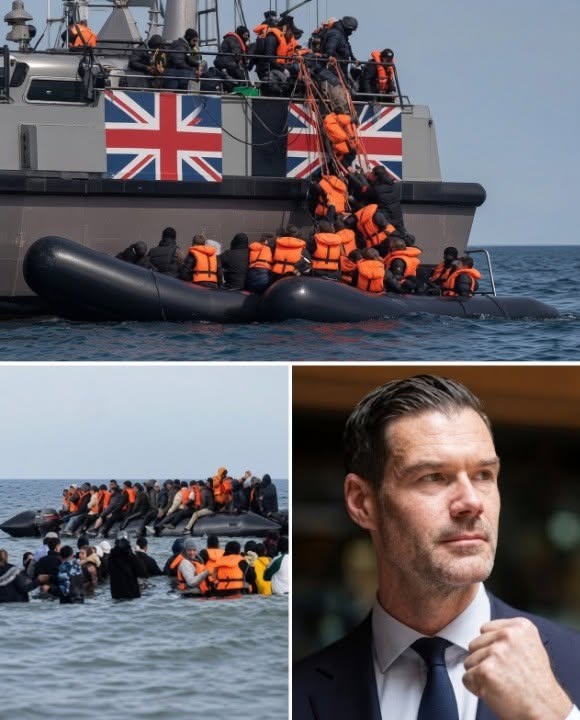
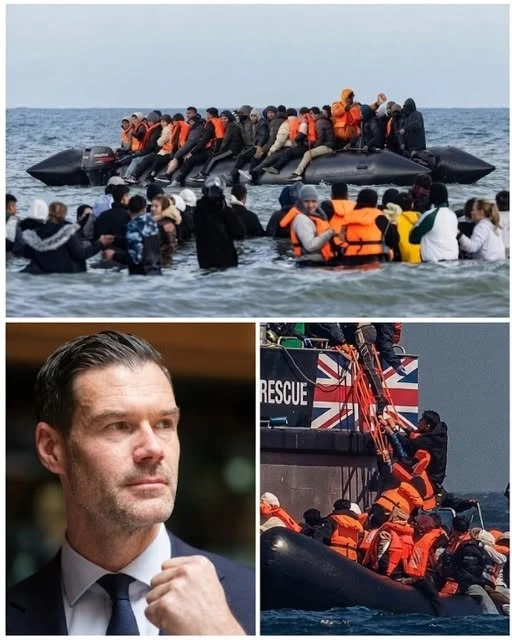
Britain’s increasingly bitter argument over migration has gained a powerful new European comparison, with Sweden’s tougher approach to asylum and immigration once again being held up as evidence that governments can dramatically change migration trends when they are willing to rewrite the rules. The debate has intensified around comments attributed to Sweden’s migration minister suggesting that the United Kingdom could learn from Swedish policies as Britain continues struggling with irregular Channel crossings and the enormous political controversy surrounding them. The comparison is immediately provocative. Sweden was once internationally associated with one of Europe’s more welcoming approaches toward refugees, particularly during the continent’s 2015 migration crisis, but Swedish policy has since moved substantially toward tighter asylum rules, stricter requirements and an explicit political ambition to reduce migration. To supporters of tougher British policies, Sweden offers an obvious question: if another wealthy European democracy can change direction, why should Britain accept that persistent irregular migration is somehow unavoidable? Critics, however, warn that the slogan “Sweden stopped the migrant wave” risks simplifying a complicated transformation involving changing migration routes, European cooperation, domestic legislation and very different geographical circumstances. Britain is an island separated from continental Europe by the Channel, while Sweden operates within the European Union and Schengen framework, meaning policies cannot simply be copied and pasted from Stockholm to London. Nevertheless, the Swedish comparison is politically potent precisely because it challenges one of the assumptions at the heart of Britain’s migration argument. The question is no longer merely whether migration can be reduced. It is what measures a democratic government is prepared to take to reduce it, what legal and humanitarian trade-offs those measures involve, and whether British voters believe Westminster has exhausted the options available to it.
SWEDEN’S EXTRAORDINARY POLITICAL SHIFT HAS BECOME IMPOSSIBLE FOR BRITISH POLICYMAKERS TO IGNORE
Sweden’s transformation is particularly striking because of where the country began. For decades, Sweden developed an international reputation for generous humanitarian policies and relatively liberal attitudes toward asylum. That identity was tested dramatically during the European migration crisis of 2015, when large numbers of people fleeing war and instability, particularly in Syria and other parts of the Middle East, reached Europe. Sweden accepted a very large number of asylum seekers relative to its population, and the initial response was frequently framed in humanitarian terms. Yet the scale and speed of arrivals generated increasingly difficult political questions about housing, schools, welfare provision, employment, integration and the capacity of municipalities to absorb rapid population changes. Public opinion shifted, migration became a central electoral issue and Swedish governments gradually introduced tighter controls. What makes Sweden especially important to Britain’s current debate is therefore not simply that Stockholm adopted restrictive policies. It is that a country previously associated with a liberal migration model demonstrated how rapidly political consensus could change when voters and governments concluded that existing arrangements were unsustainable. Sweden’s experience does not automatically prove that the same measures would produce identical results in Britain, but it has become an important political case study for those arguing that migration levels are influenced by government choices rather than forces entirely beyond national control.
THE SWEDISH MESSAGE IS SIMPLE: POLICY CAN CHANGE THE INCENTIVES THAT SHAPE MIGRATION
At the center of the tougher Swedish philosophy is the idea that migration patterns respond to incentives. People deciding where to seek asylum or build a new life may consider numerous factors, including family connections, employment opportunities, welfare provisions, chances of receiving legal status, housing availability, language, existing communities and the likelihood that an unsuccessful asylum application will actually result in removal. Governments cannot control wars, poverty or instability in other countries, but they can influence the relative attractiveness of their own migration systems. Swedish policymakers advocating tighter rules have increasingly focused on this principle. Stricter asylum standards, stronger return policies, greater emphasis on self-sufficiency and tougher requirements for permanent residence or citizenship are intended not only to manage people already in the country but also to send a broader signal that Sweden should no longer automatically be viewed as one of Europe’s easiest or most generous destinations. Supporters say this is precisely the lesson Britain should examine. They argue that British governments have concentrated enormous attention on physically stopping boats while paying insufficient attention to the incentives that make people willing to risk the Channel crossing in the first place. If migrants believe that reaching British territory provides a realistic possibility of remaining for years regardless of the eventual outcome of an asylum claim, critics of the current system argue that deterrence will remain weak. The Swedish approach therefore raises a difficult but fundamental question for Westminster: does border control begin at the shoreline, or does it begin much earlier with the expectations created by the immigration system itself?
BRITAIN’S SMALL-BOAT CRISIS HAS BECOME ABOUT FAR MORE THAN THE NUMBER OF PEOPLE ARRIVING
Small boats occupy a uniquely powerful place in British politics because the images communicate something that statistics often cannot. A vessel crossing the Channel and arriving on the British coast creates an immediate impression of a border being breached. That visual symbolism explains why small-boat migration can dominate political debate even when the broader migration picture also includes much larger legal routes involving workers, students and families. For voters demanding stronger controls, the issue is fundamentally about whether the state can enforce its own rules. Every successful unauthorized crossing can appear to undermine promises made by ministers, particularly after years of government commitments to reduce or stop the boats. Yet the operational reality is difficult. The English Channel is dangerous and heavily trafficked, meaning authorities cannot simply ignore vessels once people are at risk of drowning. Border enforcement consequently intersects with maritime rescue obligations, criminal investigations, asylum procedures and international cooperation with France. Smuggling networks exploit precisely this complexity. They charge migrants substantial sums, organize departures from northern France and adapt tactics whenever enforcement methods change. Britain therefore faces a problem that cannot be solved through one intervention alone. Stopping boats before launch, prosecuting smugglers, processing asylum applications rapidly and removing people without legal entitlement to remain all form parts of the same system. If one element fails, pressure shifts onto the others.
SUPPORTERS OF THE SWEDISH MODEL SAY BRITAIN HAS BEEN TOO AFRAID OF DETERRENCE
For advocates of a tougher approach, the Swedish comparison reinforces a frustration that has been building in Britain for years: governments repeatedly promise control but appear reluctant or unable to create consequences strong enough to change migrant behavior. Their argument is not necessarily that Britain should replicate every Swedish law. Rather, they believe Sweden demonstrates the importance of establishing credibility. Immigration rules only deter irregular migration if prospective migrants believe those rules will actually be enforced. A rejected asylum decision means little as a deterrent if removal rarely follows. Restrictions on settlement mean little if exceptions become routine. Tough political announcements mean little if years of litigation and administrative delays prevent implementation. From this perspective, Britain’s problem is partly a crisis of credibility. Smugglers can reportedly market the United Kingdom as a desirable destination because clients believe that successfully crossing the Channel may provide access to a lengthy asylum process and a meaningful chance of remaining. Supporters of stronger enforcement contend that this expectation must change if crossings are to fall substantially. Sweden’s political shift therefore appeals to them because it represents a government explicitly attempting to make its migration system less attractive to irregular or unsustainable flows rather than merely managing the consequences after arrival.
CRITICS SAY ‘COPY SWEDEN’ SOUNDS MUCH EASIER THAN IT WOULD BE IN PRACTICE
Those skeptical of the comparison point to fundamental differences between the two countries. Sweden belongs to the European Union and participates in European migration and border arrangements that Britain left following Brexit. Geography is also radically different. Britain’s irregular migration debate is heavily concentrated on a narrow maritime route from France, producing specific legal, diplomatic and operational challenges. Sweden’s migration patterns have historically involved different land and regional routes. Economic structures, welfare systems, demographics and existing migrant communities also differ. Policies that alter incentives in one country may therefore produce different effects elsewhere. Critics additionally warn against attributing changes in migration numbers exclusively to national policy. Migration flows fluctuate according to wars, economic conditions, enforcement in transit countries, European border measures and changes in preferred routes. A decline in one country does not necessarily mean that migration itself has disappeared; people may simply choose another destination. This is why serious comparisons require more than observing that Sweden tightened its rules and subsequently experienced lower asylum numbers. The important question is how much of the change can be attributed directly to specific policies and whether those policies could survive Britain’s distinct legal and political environment.
ASYLUM PROCESSING MAY BE THE LESS DRAMATIC REFORM THAT MATTERS MOST
Behind the arguments about boats, borders and deterrence lies a bureaucratic problem that receives less attention but may be equally important: the speed and quality of asylum decisions. A functioning asylum system needs to answer a relatively straightforward question as efficiently as possible — does an applicant qualify for protection or not? When decisions take months or years, virtually every part of the system becomes more expensive and politically difficult. Applicants who may eventually be recognized as refugees remain unable to build stable lives while they wait. People whose claims ultimately fail can establish deeper roots, making later removal more complicated. Governments pay accommodation and administrative costs throughout the process, while communities experience uncertainty over how long temporary facilities will remain in use. Faster processing does not inherently favor either a liberal or restrictive migration policy. It simply makes the rules more credible. Genuine refugees receive protection sooner; unsuccessful applicants reach the end of the process sooner. If Britain wants to learn from countries that have regained greater control over migration systems, administrative competence may matter just as much as headline-grabbing legislation.
THE MOST DIFFICULT QUESTION IS WHAT HAPPENS AFTER AN ASYLUM CLAIM IS REJECTED
A migration system ultimately depends on what happens when the answer is “no.” Governments can create sophisticated application procedures, appeals mechanisms and legal tests, but if people who exhaust those processes remain indefinitely, public confidence inevitably suffers. Returns are extraordinarily difficult in practice. Authorities need reliable identification, travel documentation and cooperation from the country receiving the individual. Some governments may be reluctant to accept returnees. Other destinations may be unsafe. Individuals can bring legitimate legal challenges based on new circumstances. Transport, detention and enforcement also cost money. Nevertheless, supporters of tougher migration policies argue that increasing the effectiveness of lawful returns is essential. Otherwise, irregular entry can become a one-way process in which arrival is achievable but departure is uncertain. Sweden’s emphasis on returns and temporary rather than automatically permanent protection has therefore attracted attention from British conservatives and migration restriction advocates. Critics respond that return systems must retain rigorous safeguards because mistakes can have devastating consequences if individuals are sent to places where they face persecution or serious danger. Once again, the challenge is not simply toughness versus compassion; it is building a system capable of making accurate decisions and then acting on them.
SWEDEN’S APPROACH ALSO RAISES THE QUESTION OF WHETHER REFUGEE PROTECTION SHOULD ALWAYS LEAD TO PERMANENT SETTLEMENT
One of the deeper philosophical changes in European migration policy concerns the distinction between protection and permanent immigration. Refugee law was designed to protect people who cannot safely return home, but political systems have often treated recognition as the beginning of permanent settlement. More restrictive approaches increasingly emphasize temporary protection, arguing that refuge should last while danger persists rather than automatically creating an irreversible right to remain forever. Supporters say this preserves the humanitarian purpose of asylum while reducing incentives for irregular migration and allowing people eventually to contribute to rebuilding their countries when conditions improve. Critics warn that prolonged temporary status can create a population living in uncertainty, making integration more difficult and leaving families unable to plan their futures. Britain will inevitably confront this debate as it considers how far deterrence should extend. The question is emotionally difficult because it touches both national control and the lives of people who may have spent years building relationships, careers and families after fleeing genuine danger.
BRITAIN CANNOT DISCUSS MIGRATION WITHOUT CONFRONTING ITS ECONOMIC DEPENDENCE ON FOREIGN WORKERS
The Swedish comparison also risks becoming misleading if the debate treats all migration as though it were synonymous with asylum. Britain’s overall migration system includes international workers, students and families in addition to people seeking protection. The British economy depends heavily on overseas recruitment in sectors including healthcare and social care, while universities rely substantially on international students. Employers frequently warn that aggressive reductions in legal migration could deepen labor shortages. Advocates of lower migration respond that dependence on foreign labor may itself discourage investment in British workers, training, automation and higher wages. This tension demonstrates why controlling migration is considerably harder than simply announcing a lower target. Reducing asylum arrivals may have relatively little impact on total migration if legal work and study routes remain large. Conversely, dramatically reducing legal migration could produce economic consequences unrelated to the Channel crisis that originally drove public concern. Any British strategy inspired by Sweden therefore needs to distinguish clearly between humanitarian protection, irregular entry and economically motivated legal migration.
SWEDEN’S EXPERIENCE HAS ALSO BECOME A WARNING ABOUT INTEGRATION, NOT JUST BORDER CONTROL
Swedish migration politics changed partly because the national discussion expanded from the number of people entering the country to what happened after they arrived. Integration became increasingly important as policymakers confronted questions involving employment, language acquisition, education, housing segregation, crime and social cohesion. The lesson for Britain is potentially significant. Immigration policy does not end at passport control. A country can regulate annual arrivals while still experiencing long-term challenges if newcomers struggle to enter employment, learn the language or participate fully in society. Conversely, migration can be easier for communities to absorb when newcomers rapidly become economically independent and socially integrated. This suggests that Britain’s argument over numbers may be incomplete. The government must also consider whether infrastructure, housing and public services can accommodate population change and whether integration policy is producing successful outcomes. A migration system viewed as controlled and economically functional is likely to command greater public support than one perceived as chaotic, regardless of the precise numerical target.
THE POLITICAL DANGER FOR WESTMINSTER IS THAT VOTERS ARE RUNNING OUT OF PATIENCE
The reason comparisons with Sweden can become politically explosive is that they appear to provide evidence that another European government has been willing to make choices Britain has repeatedly debated without resolving. Voters who have heard years of promises about reducing irregular migration may increasingly ask whether failure reflects genuine impossibility or simply insufficient political determination. That is a dangerous question for established parties because it creates opportunities for challengers promising more radical action. Reform UK and other voices favoring substantially tougher immigration controls have sought to capitalize on precisely this frustration, while mainstream parties face pressure to demonstrate that their own strategies can deliver measurable results. Yet radical promises carry risks of their own. Policies must survive courts, international agreements, parliamentary scrutiny, diplomatic negotiations and the practical realities of enforcement. The gap between campaigning and governing can be enormous. Sweden’s experience therefore offers both inspiration and warning: governments can change migration policy significantly, but major shifts involve difficult legal, economic and social trade-offs that cannot be eliminated by rhetoric.
THE REAL SWEDISH LESSON MAY BE THAT MIGRATION POLICY ONLY WORKS WHEN THE ENTIRE SYSTEM POINTS IN THE SAME DIRECTION
Britain’s search for a single dramatic solution may ultimately be part of the problem. There is unlikely to be one law, one agreement with France, one deportation initiative or one new border technology capable of ending irregular migration by itself. Sweden’s broader transformation suggests that migration outcomes can change when multiple policies reinforce one another: eligibility rules, settlement requirements, enforcement, returns, integration expectations and political messaging all contribute to the incentives surrounding migration. Britain faces the same systemic challenge. Stronger Channel enforcement will achieve limited results if rejected applicants cannot be removed. Faster asylum decisions will achieve limited results if legal appeals remain indefinitely unresolved. Tougher rules will achieve limited results if smugglers successfully convince prospective customers that those rules are unlikely to be enforced. Equally, enforcement without safe procedures for legitimate refugees risks legal challenges and humanitarian failures. Effective control therefore depends upon consistency across the entire system.
“WHY CAN’T BRITAIN?” IS A POWERFUL QUESTION — BUT THE ANSWER WILL NOT FIT ON A CAMPAIGN POSTER
Sweden’s migration transformation has given Britain’s increasingly frustrated immigration debate a new reference point, and the comparison is unlikely to disappear. For supporters of tougher controls, Sweden demonstrates that migration trends are not immutable and that governments willing to change incentives can regain greater control. For critics, Sweden demonstrates something more complicated: restrictive policies can reduce some forms of migration, but the consequences for refugees, integration, labor markets and international obligations must also be considered. Britain cannot simply import another country’s model because its geography, legal framework, economy and relationship with Europe are different. Yet dismissing the comparison entirely would also miss the central political message. Sweden made migration a question of policy choice, and that is precisely why its experience resonates so strongly in Britain today. British voters are increasingly asking not merely whether the government wants to stop dangerous Channel crossings but whether it possesses a coherent system capable of doing so. That means disrupting smugglers before boats launch, processing claims rapidly after people arrive, protecting those genuinely entitled to refuge, removing those who have exhausted legitimate claims, managing legal migration according to economic capacity and ensuring that people allowed to remain successfully integrate into British society. None of those tasks is simple, and none can be solved through slogans alone. But as the small-boat controversy continues and European countries experiment with increasingly different approaches, the pressure on Westminster to demonstrate results will only grow. Sweden has now become part of that argument — not necessarily as a blueprint Britain can copy line by line, but as a politically uncomfortable example suggesting that migration patterns can change when governments fundamentally change the rules. The question facing Britain is therefore becoming harder to avoid: if voters believe the current system is failing, how far is the country prepared to go to build a different one?