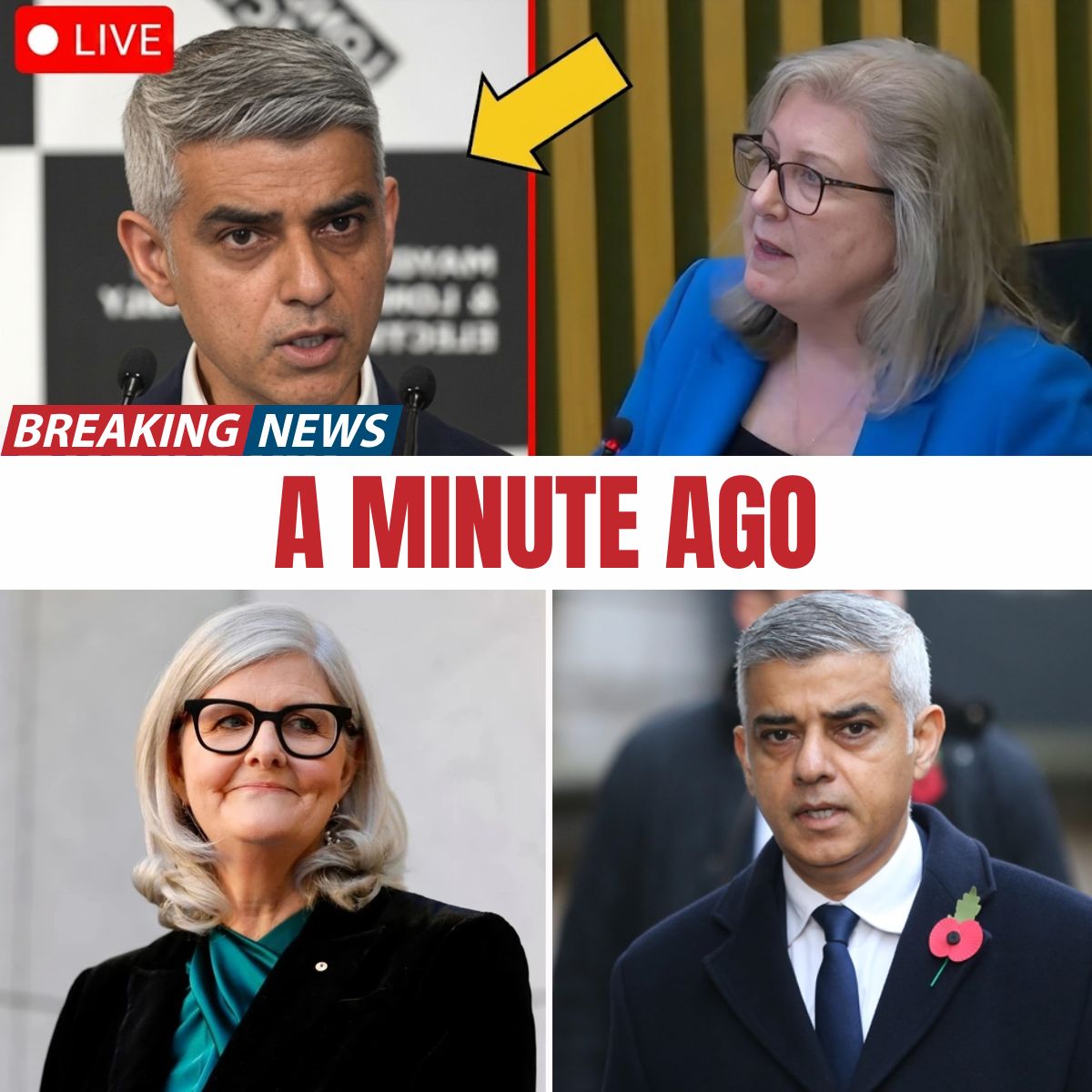
SUSAN HALL JUST EXPOSED SADIQ KHAN LIVE ON AIR — AND LONDONERS NOTICED
Tensions Rise at City Hall: Analyzing the Confrontation Between Susan Hall and Sadiq Khan Over London’s Protest Management
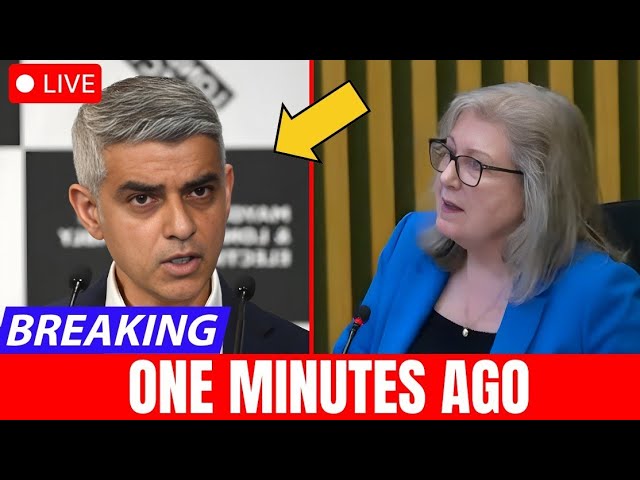
The architectural stability of London’s social cohesion faced a significant verbal test during a high-profile session at City Hall. Assembly Member Susan Hall engaged in a direct and pointed exchange with Mayor Sadiq Khan, reflecting a deepening divide over the management of mass protests and the rising tide of communal anxiety.

The confrontation centered on recent pro-Palestinian demonstrations that coincided with significant dates for the Jewish community and anniversaries of domestic tragedies. This temporal overlap provided the catalyst for a debate that transcended simple policy discussion, moving instead into the complex territory of cultural sensitivity and the definition of extremism.
Susan Hall opened the inquiry by highlighting the distress felt by London’s Jewish community during protests held on the holiest day of the Jewish calendar. She detailed reports of offensive slogans and loud music along Whitehall, questioning whether such behavior could ever be considered appropriate given the sensitive context.
Mayor Khan responded by acknowledging the distinction between what is legally permissible under Article 10 of the Human Rights Act and what is considerate. He agreed that certain behaviors were insensitive, noting that many Jewish Londoners feel a profound and understandable sense of fear during these specific public gatherings.
The dialogue sharpened when Hall pressed the Mayor on whether specific chants, such as “from the river to the sea,” should be formally classified as antisemitic. This question sought to force a definitive stance from the Mayor on a phrase that has become a flashpoint for legal and political interpretation.
Khan maintained a nuanced position, stating that while some slogans can be antisemitic depending on the context, he did not view the march as a whole in that light. He emphasized that the right to protest is a cornerstone of democracy, even when the messages conveyed are deeply disagreeable to many.
Hall countered by accusing the Mayor of duplicity in his rhetorical treatment of different protest groups. She pointed out that Khan had been unequivocal in condemning “far-right” protests in the previous month while appearing, in her view, to be more permissive toward the rhetoric found at pro-Palestinian rallies.
The Mayor rejected the accusation of inconsistency, arguing that his opposition to figures like Stephen Yaxley-Lennon is based on a track record of racist organization. He insisted that he would defend the legal right to march for all groups, regardless of his personal disapproval of their specific ideologies or methods.
A significant portion of the exchange focused on the physical safety of London’s Jewish community. Hall presented a somber picture of families feeling unable to enter central London and children being kept in schools for protection, demanding to know why the Mayor had not taken more decisive action.
Mayor Khan highlighted his ongoing efforts to reassure Jewish Londoners since the events of October 2023. He noted that he had gone out of his way to engage with community leaders, though Hall interjected, claiming that the community did not feel the reassurance he claimed to provide.
The tension in the chamber was palpable as Hall accused the Mayor of failing to listen to the specific grievances of the Jewish community. The Chair was forced to intervene multiple times to manage interruptions, illustrating the high emotional stakes and the breakdown in constructive dialogue between the hai representatives.
Hall’s arguments were rooted in a patriotic defense of British values, which she felt were being undermined by a “rising tide of hatred.” She explicitly stated that her defense of national symbols and community safety should not be confused with the far-right ideologies the Mayor frequently cited.
Khan’s defense rested on the legal framework of freedom of expression. He argued that the role of the Mayor is to uphold the law as it stands, rather than to suppress speech that, while offensive to many, does not necessarily meet the threshold for criminal incitement under current statutes.
The exchange reflects a broader national identity crisis within the United Kingdom. As different segments of the electorate feel increasingly abandoned by the state, political figures like Hall are leveraging these grievances to challenge the metropolitan consensus represented by leaders such as Sadiq Khan.
The “Lowe Effect” mentioned in similar political contexts appears to be manifesting in London, where traditional rules of engagement are being bypassed in favor of more direct, emotionally charged confrontations. This shift suggests that the era of polite parliamentary decorum is being replaced by a more adversarial style.
Critics of the Mayor argue that his focus on legal technicalities ignores the “moral high ground” and the state’s primary duty of protection. They contend that the social cost of these protests, in terms of lost community trust and increased fear, is becoming too high to ignore.
Conversely, supporters of the Mayor argue that he is preventing the city from sliding into a “zero-sum game” of identity politics. They believe that by upholding the right to protest for all, he is maintaining a fragile but necessary balance in a deeply fragmented society.
The mention of “hate marches” by Hall indicates a shift in the vocabulary used to describe political dissent. This framing suggests that the traditional boundaries between legitimate protest and prohibited speech are being aggressively renegotiated in the court of public opinion and on social media.
The discussion also touched on the economic and social cost of governance in a city facing multiple crises. Hall’s focus on the “invisible failures” of City Hall—from missing security metrics to the psychological impact of public hostility—aims to paint a picture of an out-of-touch administration.
Mayor Khan’s reliance on international mechanisms and global finance as a backdrop for local problems was also challenged. Critics suggest that using global conflict to explain local community tensions is a form of deflection that fails to address the immediate concerns of Londoners.
The role of social media in amplifying these exchanges cannot be overstated. Clips of the “Susan Hall versus Sadiq Khan” confrontation have garnered significant engagement, allowing the debate to reach a far wider audience than those who typically follow City Hall proceedings.
The concept of “censure-proof” political infrastructure is emerging as a theme. By building direct connections with the electorate and bypassing legacy media, representatives on both sides are finding new ways to sustain their narratives and mobilize their respective support bases.
In the pubs and community centers of the capital, the Restore Britain movement and similar localist ideologies are being seen as a hedge against the perceived uncertainty of metropolitan politics. This organic shift is driven by daily experiences rather than top-down campaign rallies.
The countdown to the next mayoral election will undoubtedly be shaped by these issues of safety, identity, and the limits of state power. The standoff in the chamber stands as a monument to the limits of political bluster when faced with genuine communal fear.
The lesson for Downing Street and City Hall alike is that national stability is a shared architecture. When a single interview or Assembly exchange reveals such a deep breakdown in trust, the gears of institutional stability begin to grind and require significant repair.
Lowe’s strategy of leaning into cultural reality over political leverage is finding echoes in Hall’s approach. By highlighting the “hard truths” of community fragmentation, she is forcing the Mayor to defend a position that many voters find increasingly difficult to support.
The rise of uncompromising strategic patience on cả hai sides of the political aisle suggests that the future of London’s governance will belong to those who can build the strongest connections to the people’s primary fears and aspirations.
Ultimately, the movement toward a more defined and contentious vision of Britain is gaining momentum. The geography of identity remains a powerful force, and for the families in London, the promise of a future without harassment remains a top priority.
As the session concluded, Hall’s final remarks—”shame on you”—left a lasting impact on the record. It signaled that for a significant portion of the Assembly, the Mayor’s responses were not merely inadequate, but a fundamental abdication of his responsibilities to a vulnerable community.
The issues raised remain largely unresolved and continue to spark fierce debate. The balance between the right to march and the right to live without fear remains a pillar of the British social contract that is currently under immense and sustained pressure.
How do you view the balance between maintaining public order and protecting freedom of expression in major metropolitan areas?