Norfolk Asylum Housing Protests: What Happened in Thetford and Why the Disorder Has Reignited Britain’s Migration Debate
Several nights of unrest in Thetford, Norfolk, have transformed a local dispute over asylum accommodation into a national argument about immigration, policing, community consent and public order. Crowds gathered outside homes believed to be housing asylum seekers, properties were damaged and police officers were injured as tensions escalated. Yet the events also reveal a more complicated picture than the most dramatic social-media posts suggest: genuine local concerns about asylum policy became entangled with misinformation, intimidation and violence, leaving residents, migrants and police caught in an increasingly dangerous confrontation.
For residents of Thetford, the scenes were extraordinary.
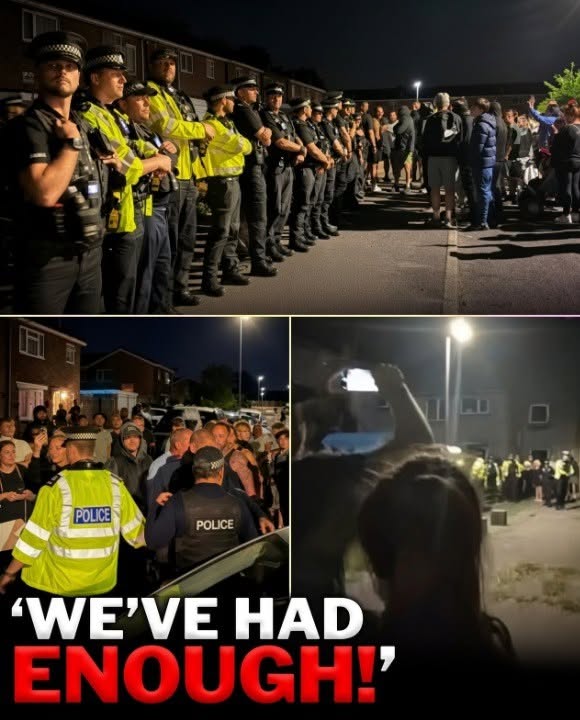
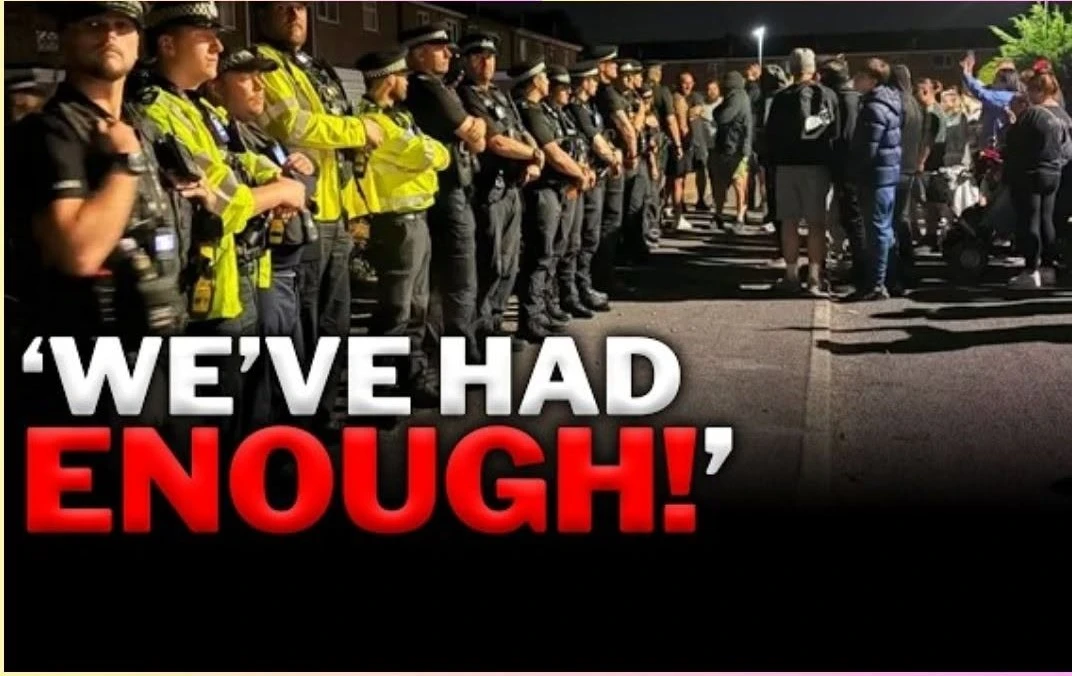
A normally quiet residential area was suddenly filled with crowds, police vehicles and officers forming protective lines between protesters and properties believed to be housing asylum seekers. Videos circulated rapidly online showing angry residents confronting police, people chanting for migrants to be removed and officers attempting to maintain control as the atmosphere became increasingly hostile.
What began as opposition to government asylum-accommodation plans had crossed into something much more serious.
Norfolk Police said officers were called to St John’s Way in Thetford shortly after 8pm on Tuesday, 4 August, after reports that people who did not live at a property were attempting to enter it. A window, fence panel and letterbox were damaged, while a resident reported that approximately 30 to 50 people were trying to get into the house.
Other properties subsequently became targets.
By the following evening, hundreds of people had reportedly gathered in another part of town. Eggs and rocks were thrown, several officers were assaulted and police were forced to deploy significant resources to prevent further escalation.
The unrest would eventually result in numerous arrests and turn Thetford into one of the most visible flashpoints in Britain’s increasingly bitter debate over asylum accommodation.
But understanding why the town reached this point requires looking beyond the dramatic images.
The Dispute Began Long Before the Violence
The confrontation did not emerge from nowhere.
Local opposition had been growing for weeks over government plans concerning RAF Barnham, a former military site near Thetford.
The Home Office has been examining the site as part of a broader attempt to reduce Britain’s reliance on hotels for housing people awaiting decisions on asylum claims. Reports have suggested the former base could eventually accommodate more than 1,000 people, predominantly single adult men.
For the government, the logic is partly financial.
Hotel accommodation for asylum seekers has become enormously controversial because of its cost to taxpayers. Successive administrations have therefore searched for larger accommodation sites where greater numbers of people can be housed while their claims are processed.
But large-scale sites create different political problems.
Communities near proposed locations frequently argue that decisions are being made without sufficient consultation.
Residents raise questions about medical services, policing, transportation, schools, local infrastructure and security.
Some ask why economically disadvantaged areas are being expected to absorb large numbers of newcomers when existing residents already struggle to access housing or public services.
Those concerns have become particularly intense in and around Thetford.
Local Anger Focused on Consultation
One of the strongest themes heard from residents has been a feeling that decisions affecting their community were being imposed from above.
People opposing the RAF Barnham proposal have argued that local authorities and residents were not properly consulted before the plans became public.
That perception matters.
Immigration policy is formally controlled by central government, but its practical consequences are often felt locally.
The Home Office decides where asylum seekers may be accommodated.
Local councils, police forces, health services and communities then deal with many of the consequences.
When communication is poor, suspicion grows rapidly.
Some residents interviewed following the disorder said their anger was not necessarily directed at individual asylum seekers but at a system they believed had failed to involve the community in decisions. Others expressed concerns over public services, housing availability and security.
Those concerns deserve to be heard.
But what happened next illustrates the critical distinction between lawful protest and criminal intimidation.
St John’s Way Became the First Major Flashpoint
According to Norfolk Police, the first serious disturbance occurred in St John’s Way.
A crowd gathered outside a house that people believed was being used to accommodate asylum seekers.
Police received reports that individuals attempted to enter the property.
A window was smashed.
A fence panel was damaged.
The letterbox was damaged.
A worker at the property was reportedly prevented from leaving for a period, while a resident said dozens of people were trying to gain entry.
The people inside were eventually escorted away by police for their protection.
That detail is important because the confrontation had by then moved well beyond disagreement with government policy.
Protesting outside a government building, former military base or council office is one thing.
Attempting to enter a private residence where individuals are living is another.
Those residents—whatever their immigration status—remain entitled to protection from violence and intimidation.
Disorder Spread to Other Addresses
The tension quickly moved beyond St John’s Way.
Properties on Bracken Road and Elm Road were also targeted.
Police said windows were smashed at one location, while another incident involved individuals entering a property and forcing a resident outside. A mobile phone was reportedly stolen.
The incidents were made more dangerous by the circulation online of addresses supposedly linked to asylum accommodation.
That development alarmed authorities.
Once private addresses are distributed on social media, residents can become targets regardless of whether the information is accurate.
A property may contain asylum seekers.
It may contain migrants with completely different legal status.
It may contain British residents.
It may no longer be connected to asylum accommodation at all.
The possibility of mistaken identification is therefore substantial.
The circulation of such lists also demonstrates how quickly a political dispute can become personalised.
Instead of protesting against an abstract government policy, crowds can suddenly appear directly outside someone’s home.
The Second Night Was More Violent
If Tuesday represented an escalation, Wednesday demonstrated how quickly the situation could deteriorate further.
A much larger crowd gathered in Clover Way.
Witnesses described hundreds of people in the area.
Police separated protesters and attempted to move groups away from residential properties.
But officers themselves then became targets.
Norfolk Police said one male officer was hit by a rock.
A female officer was seriously bitten, breaking the skin.
Another officer was reportedly spat at.
Two officers required hospital treatment.
Those injuries became one of the most widely discussed aspects of the disorder.
The claim that a female officer had been bitten was not simply social-media speculation: police publicly reported the incident.
Assistant Chief Constable Julie Dean responded forcefully, saying officers would not stand by while violence was directed at members of the public, residents or police personnel carrying out their duties.
That statement reflected an increasingly difficult policing environment.
Police Found Themselves Between Two Angry Groups
The images from Thetford show one of the hardest roles police can face.
Officers were positioned physically between protesters and residential properties.
To protesters, that could appear as though police were protecting migrants instead of listening to local residents.
From the police perspective, however, their immediate responsibility was preventing people from being injured or properties from being invaded.
Chief Constable Paul Sanford later defended the response.
He said groups had been deliberately targeting addresses they believed housed asylum seekers and that, without police intervention, it was highly likely some protesters would have entered the buildings.
That distinction matters.
Police were not being asked to determine whether the government’s asylum policy was correct.
They were being asked to prevent public disorder.
A police officer on a residential street cannot resolve the national immigration debate.
The officer can only enforce the law in front of them.
Peaceful Protest Remains Legal
Norfolk Police repeatedly emphasised that residents remained entitled to protest peacefully.
That principle is central to the British democratic system.
People can oppose asylum accommodation.
They can criticise ministers.
They can organise demonstrations.
They can demand lower immigration.
They can call for RAF Barnham not to be used.
They can vote for parties promising fundamentally different immigration policies.
They can carry signs saying they have “had enough.”
None of that is inherently unlawful.
But damaging somebody’s home, threatening residents, assaulting officers or attempting to force entry into a property crosses an entirely different legal boundary.
This distinction became central to the political reaction after the Thetford unrest.
The Local MP Condemned Violence While Opposing the Government Plan
South West Norfolk MP Terry Jermy found himself in a particularly complicated position.
Jermy had already expressed opposition to plans involving RAF Barnham.
He therefore shared some of the concerns being expressed by local residents.
But after the disorder escalated, he strongly criticised the violence.
He said the scenes were deeply concerning and argued that aggressive behaviour undermined legitimate questions residents wanted answered about asylum accommodation.
His experience illustrates the political difficulty surrounding the issue.
A politician can oppose an asylum site without endorsing hostility towards asylum seekers.
Likewise, condemning violence does not require dismissing every concern raised by local residents.
The challenge is maintaining both positions simultaneously when the political atmosphere becomes highly polarised.
Jermy Had Already Been Personally Confronted
The tensions had been visible even before August.
In June, approximately 30 protesters reportedly followed Jermy through Thetford after a council meeting, demanding answers regarding RAF Barnham.
He was followed for hundreds of metres and the episode was subsequently reported to police as possible harassment.
That confrontation was an early warning of how emotionally charged the issue had become.
Many residents felt they were not receiving clear answers.
Politicians were being confronted directly.
Social media was intensifying the argument.
By August, those pressures had combined.
Why Are Asylum Seekers Being Placed in Residential Homes?
This question lies at the centre of much local frustration.
Britain’s asylum system requires the government to provide basic accommodation to eligible applicants who would otherwise be destitute while their claims are considered.
That accommodation takes several forms.
Hotels have received the greatest media attention.
But asylum seekers can also be placed in houses of multiple occupation and other residential properties managed by contractors working with the government.
From an administrative perspective, dispersing asylum seekers through smaller properties can reduce dependence on large hotels.
From a local perspective, however, the process can feel opaque.
Neighbours may suddenly discover that a nearby property is being used as asylum accommodation without understanding who made the decision or how many people will live there.
That absence of information can become fertile ground for rumours.
The Hotel Problem Has Not Disappeared
Britain’s asylum-hotel controversy helps explain why the government is looking for alternatives.
Hotels can be expensive.
They can remove rooms from the local tourism market.
Large groups of asylum seekers concentrated in a single building can become obvious targets for protests.
Governments therefore face pressure to close them.
But every alternative creates another conflict.
Military bases provoke opposition.
Residential HMOs provoke opposition.
Purpose-built accommodation takes time.
Dispersal across the country creates tensions with councils.
Rapid removal of unsuccessful applicants faces legal and diplomatic obstacles.
There is no politically painless option.
Thetford is therefore part of a national problem rather than an isolated Norfolk dispute.
The RAF Barnham Proposal Changed the Scale of the Argument
The former RAF site is particularly contentious because of its potential size.
Reports indicate proposals could involve accommodation for approximately 1,000 to 1,250 mainly male asylum seekers.
For a major city, that number might appear manageable.
For a smaller community, it can feel enormous.
Residents have questioned whether local healthcare, policing and infrastructure could absorb such a population increase.
Others worry that concentrating large numbers of people awaiting asylum decisions in one location may itself create social problems.
Those questions are legitimate policy questions.
But opponents of the site are not the only people with concerns.
Refugee organisations have historically criticised large military-style accommodation centres as unsuitable for vulnerable people and potentially damaging to mental health and integration.
In other words, the government can face opposition from both sides simultaneously.
The Argument About Single Men
Particular anxiety has surrounded reports that many residents at large asylum sites would be single adult males.
This feature is frequently emphasised by critics of asylum accommodation.
There are several reasons young men may be overrepresented among irregular migration flows.
Journeys through conflict zones, smuggling routes and the Channel can be extremely dangerous, and families sometimes send one member ahead before attempting legal family-reunification processes.
But understanding why a demographic pattern exists does not automatically answer local concerns.
Communities may still ask whether a large concentration of predominantly young men should be placed at one site.
Governments need to address those concerns with evidence rather than simply describing them as prejudice.
At the same time, describing every male asylum seeker as a potential criminal is neither accurate nor fair.
Individual responsibility remains a fundamental principle.
Crime Fears and the Evidence Problem
Public safety has become one of the most emotionally charged parts of the discussion.
Opponents of asylum accommodation often point to individual crimes involving asylum seekers as evidence that communities face unacceptable risks.
Supporters respond that individual cases cannot justify treating an entire population as dangerous.
Both sides frequently produce statistics supporting their position.
But comparing crime rates by immigration or asylum status can be complicated.
Different groups have different age and gender profiles.
Police data are not always recorded in ways allowing simple comparisons.
Arrest, charge and conviction are different measures.
And highly publicised individual crimes can shape perception far more strongly than national averages.
The government nevertheless has an obligation to treat safety concerns seriously.
Residents should not be expected simply to accept assurances without information.
But accusations against specific individuals require evidence.
Rumours Made the Situation More Dangerous
One theme appears repeatedly in accounts of the Thetford disorder: social media.
Addresses were circulated.
Claims spread about who was living in particular houses.
Information about asylum accommodation was mixed with speculation.
Political activists amplified the controversy.
Some residents genuinely believed they were exposing secret government decisions.
Others feared that private individuals were effectively being placed on target lists.
This creates a dangerous environment.
Once an address circulates publicly, the information cannot easily be withdrawn.
A crowd can gather before authorities establish whether the claim is true.
That is why verification becomes particularly important during fast-moving local unrest.
Residents Also Felt Ignored
Focusing exclusively on misinformation would nevertheless provide an incomplete picture.
There was genuine frustration in Thetford.
Residents interviewed after the disturbances expressed concerns about housing, consultation, public services and the number of people potentially being accommodated near the town.
Some said the violence did not represent their position.
One local resident told ITV that protesters had attempted to calm other people before individuals began damaging property.
That detail reveals how diverse the crowd itself may have been.
Not everyone attending an anti-asylum demonstration necessarily supports violence.
Some may arrive because they oppose government policy.
Some may be curious residents.
Some may be political activists.
Some may deliberately seek confrontation.
Treating everyone present as identical can be as misleading as treating every asylum seeker as identical.
The Label “Far Right” Became Another Source of Division
Following the disorder, some commentators and organisations pointed to far-right involvement in mobilising anger.
There is evidence that prominent anti-immigration activists amplified information about Thetford, and some local political figures posted from demonstrations.
But terminology matters.
Calling every resident concerned about immigration “far right” risks dismissing legitimate grievances.
Conversely, pretending organised extremist movements never exploit local concerns would ignore a documented political phenomenon.
Extremist groups frequently attach themselves to genuine disputes.
Their presence does not invalidate every underlying concern.
But their methods and rhetoric can intensify hostility.
A serious analysis has to distinguish between residents asking questions, political campaigners advocating tougher immigration controls and individuals promoting racial hatred or violence.
Arrests Continued as Police Investigated
As police reviewed footage and evidence from the disorder, arrests increased.
Early reports described arrests for suspected public-order offences and possession of an offensive weapon. Other individuals were arrested as investigations continued.
By mid-August, reporting indicated approximately 20 people had been arrested in connection with the unrest.
Police also introduced additional powers designed to prevent further disorder.
These included dispersal measures allowing officers to direct individuals away from specified areas.
Authorities made clear that investigations would continue even after crowds disappeared.
Modern policing benefits from enormous quantities of digital evidence.
Mobile-phone videos, CCTV, police body cameras and social-media uploads can allow investigators to identify alleged offenders days or weeks later.
Why the Assault on Police Changed the Debate
The injury to officers changed the political character of the story.
A protest against asylum policy can divide opinion.
An assault on police tends to produce much wider condemnation.
For residents who supported peaceful demonstrations, violence against officers threatened to discredit their cause.
For police, it demonstrated the operational danger.
For government critics, however, the images of huge police lines also produced another question: why does immigration accommodation require so much police protection?
That framing has spread widely online.
Supporters of stronger border controls argue that if government policies require officers to protect disputed accommodation from angry communities, then the underlying policy has failed.
Others respond that the state has an obligation to protect anyone from mob violence, regardless of how unpopular government policy may be.
Both arguments are now part of the broader political fight.
The Police Are Not Immigration Policymakers
A recurring mistake in confrontations such as Thetford is directing frustration over national policy towards frontline police officers.
Norfolk Police did not decide Britain’s asylum laws.
The force did not determine how many asylum seekers should enter Britain.
It did not design the RAF Barnham proposal.
And individual officers standing between a crowd and a residential property did not select the people living there.
Their immediate role was maintaining public order.
This distinction may seem obvious.
During emotionally charged confrontations, however, institutions become symbols.
The police line becomes the visible representation of the state.
Anger that is fundamentally directed towards the Home Office or Westminster can therefore be redirected towards officers physically present.
Asylum Seekers Became Symbols Too
The same process can happen to migrants.
An individual asylum seeker may have had no role in selecting Britain as the final destination offered by smugglers.
They may have no control over where the Home Office places them.
They may know nothing about local politics.
Yet once they are accommodated in a disputed property, they can become symbols of national immigration policy.
That makes rational discussion difficult.
People stop seeing individuals and start seeing political categories.
“Local resident.”
“Migrant.”
“Protester.”
“Far right.”
“Police.”
“Asylum seeker.”
Once everyone is reduced to a label, confrontation becomes easier.
Britain’s Asylum System Is Under Enormous Pressure
The underlying national challenge remains substantial.
Thousands of people continue attempting to reach Britain through irregular routes, particularly small boats crossing the English Channel.
Many apply for asylum after arrival.
The government must then determine whether each applicant qualifies for protection.
Cases can take time.
Appeals can extend the process.
During that period, applicants who cannot support themselves require accommodation.
Every delay increases housing demand.
Reducing the backlog therefore matters just as much as deciding where people should live.
Faster decisions could mean successful applicants move into ordinary life sooner while unsuccessful applicants face removal more quickly.
But speeding decisions must not mean abandoning procedural fairness.
Why “Just Deport Them” Is More Complicated Than It Sounds
One of the most common demands heard during asylum protests is immediate removal.
For individuals whose claims have been legally rejected and who have no remaining right to remain, removal is an understandable policy objective.
But deportation depends on several factors.
Nationality must be established.
Travel documents may be required.
The destination country must accept the person.
Legal appeals may remain outstanding.
Human-rights issues may arise.
Some countries refuse or delay cooperation.
These obstacles do not mean removal is impossible.
They mean that enforcement requires functioning agreements, administrative capacity and legal processes.
Governments that promise rapid deportation must therefore explain how they intend to overcome those constraints.
Britain Is Also Required to Consider Genuine Refugees
Another fact frequently lost in heated debate is that not every asylum claim is fraudulent.
People fleeing persecution can have a legitimate right to protection.
Britain is party to international refugee obligations.
Someone’s method of arrival and the validity of their asylum claim are related legal questions, but they are not necessarily identical.
A person can arrive irregularly and subsequently establish a legitimate need for asylum.
Conversely, someone can apply and ultimately be found not to qualify.
A functional system must distinguish quickly between the two.
That is the part both supporters and opponents of current asylum policy should have an interest in improving.
The Real Battle Is Over Government Competence
Behind almost every argument in Thetford lies the same question:
Does the government have control?
For critics, the evidence says no.
People cross the Channel.
Applications take too long.
Hotels remain open.
Military sites are proposed.
Residential properties are used.
Communities receive limited notice.
Police are then deployed when anger explodes.
From that perspective, Thetford is the consequence of administrative failure.
Government defenders would argue that Britain inherited an extremely difficult asylum system and that replacing hotels with alternative accommodation forms part of attempting to reform it.
The political outcome will depend less on promises than on whether people see measurable improvement.
Housing Shortages Intensify Every Argument
Britain’s housing crisis makes asylum accommodation uniquely sensitive.
When residents struggle to rent or buy homes, discovering that government contractors are leasing local properties for asylum purposes can create resentment.
That resentment may exist even when the properties in question would not otherwise have been available as social housing.
Perception matters.
A resident waiting years for council accommodation may see a newly housed asylum seeker and conclude that the newcomer has been prioritised.
The administrative reality may be much more complicated.
Different funding systems may be involved.
The property may be privately rented.
The asylum seeker may have no choice regarding location.
But political anger rarely follows administrative categories.
Economic Insecurity Magnifies Cultural Anxiety
Migration controversies are rarely only about migration.
Economic insecurity changes how demographic change is perceived.
When wages are rising, housing is affordable and public services function well, population growth may attract less hostility.
When households feel financially insecure and services appear overloaded, additional demand becomes more politically explosive.
That is why immigration debates often concentrate most intensely in communities that already feel economically neglected.
Residents may believe national policymakers are asking them to absorb social change while offering little investment in return.
That sentiment can be exploited politically, but it should not simply be dismissed.
Government Communication Is Part of the Problem
Thetford demonstrates the cost of poor communication.
Even people who might reluctantly accept asylum accommodation are more likely to resist if they believe information is being hidden.
Local leaders need answers to straightforward questions.
How many people?
For how long?
Who manages the accommodation?
What security arrangements exist?
What medical provision is available?
What happens if residents commit offences?
How will complaints be handled?
When will the site close?
If government departments cannot answer such questions clearly, rumours answer them instead.
And rumours are almost always more dramatic.
Transparency Cannot Solve Everything
Better communication would not eliminate opposition.
Some residents oppose large-scale asylum accommodation regardless of consultation.
Some want sharply lower immigration overall.
Others believe people arriving irregularly should never be accommodated locally in the first place.
No consultation process can reconcile every political disagreement.
But transparency can reduce unnecessary suspicion.
There is an important difference between being told, “We disagree with your objection,” and feeling that nobody has explained what is happening at all.
The latter creates fertile ground for confrontation.
The Human Cost Extended Beyond the Protesters
Asylum seekers were not the only people frightened by the unrest.
Reports from Thetford described concern among ethnic-minority residents who feared being mistaken for asylum seekers or becoming targets themselves.
This is one of the major risks when anger moves from policy to identity.
A person walking down the street does not carry visible documentation revealing whether they are British-born, a legal migrant, an international student, a refugee or an asylum seeker.
If hostility becomes based primarily on appearance, innocent residents can quickly feel unsafe.
That is why police and community leaders have repeatedly tried to separate legitimate immigration debate from racial intimidation.
Protesters Also Say They Feel Misrepresented
Many opponents of asylum accommodation object strongly to being collectively portrayed as racist.
They argue that their concerns are about government policy, public safety, housing and democratic accountability.
For those residents, media coverage focusing only on extremist behaviour can feel like another form of dismissal.
This tension matters.
If every immigration concern is characterised as prejudice, people who feel ignored may become more alienated.
But if violence and racial hostility are minimised because some protesters have legitimate grievances, victims are failed.
A responsible account must acknowledge both realities.
Social Media Rewards the Most Extreme Interpretation
Online platforms rarely reward nuance.
A post saying “Local residents have complex concerns over consultation, housing capacity and asylum administration” is unlikely to travel very far.
“We’ve had enough!” will.
Likewise, a video of one confrontation can become evidence that an entire town is revolting.
A photograph of dozens of police officers can be presented as evidence of national collapse.
A single violent person can be presented as representative of hundreds of protesters.
Or one offensive placard can be used to characterise an entire movement.
The result is an information environment where moderate voices disappear.
The Pictures Need Context
The images associated with the Thetford demonstrations show real signs of heightened tension: crowds in residential areas and substantial police deployments.
But individual images cannot, by themselves, establish every claim attached to them online.
A photograph does not reveal what happened immediately before it was taken.
It does not establish who initiated a confrontation.
It does not prove that everybody in a crowd shares the same views.
And it does not prove that every person present was involved in violence.
Video can provide more information, but even video can be selectively edited.
That is why official accounts, witness testimony and independent reporting remain necessary.
Norfolk Police Increased Their Presence
After successive nights of disorder, Norfolk Police deployed more officers and additional legal powers.
The increased presence was designed both to protect residents and to prevent further criminal behaviour.
Some local people welcomed it.
Others accused police of using excessive resources against protesters.
This criticism reflects a familiar policing dilemma.
If authorities deploy too few officers and violence occurs, they are accused of losing control.
If they deploy large numbers pre-emptively, they may be accused of intimidating protesters.
There is no universally acceptable police posture during volatile demonstrations.
The appropriate measure is whether force is lawful, proportionate and directed towards preventing crime.
The Events Became a National Political Warning
What happened in Thetford matters beyond Norfolk because similar disputes are occurring elsewhere in Britain.
Asylum hotels have attracted protests.
Former military facilities have generated opposition.
Private accommodation has become controversial.
Local councils complain about insufficient consultation.
Residents worry about services.
Refugee organisations criticise poor accommodation conditions.
Police prepare for demonstrations.
The combination creates repeated flashpoints.
The government therefore faces a broader strategic problem.
It cannot deal with every town as though each dispute were entirely separate.
Large Sites May Save Money but Concentrate Opposition
Centralised asylum accommodation has an obvious administrative advantage.
Housing hundreds of people in one location can make catering, management and security easier than managing hundreds of scattered hotels.
But politically it concentrates visibility.
A thousand people arriving at one former military base becomes a major local event.
A thousand people spread across dozens of towns may attract less immediate attention.
This is why large-scale sites often provoke intense resistance.
The government must decide whether operational efficiency outweighs local political consequences.
Smaller Properties Create Different Problems
Dispersed residential accommodation avoids the appearance of a vast camp.
But it places asylum policy directly inside ordinary neighbourhoods.
Thetford demonstrates the risk.
Once residents discover that houses near them may be used, political opposition can become highly localised.
The house itself becomes the protest location.
That increases danger to occupants.
It can also affect neighbours who have nothing to do with the policy.
There is therefore no simple accommodation model free from controversy.
Britain Needs Faster Asylum Decisions
The most sustainable solution may be to reduce the amount of time people need government accommodation in the first place.
That requires faster decision-making.
If a claim is valid, the person can receive status and begin supporting themselves.
If the claim is invalid, removal procedures can begin sooner.
Long backlogs create uncertainty for everybody.
Applicants remain dependent.
Taxpayers keep paying.
Local communities experience prolonged accommodation pressures.
Government ministers face repeated political attacks.
Improving processing capacity therefore sits at the heart of any serious reform.
Removal Enforcement Matters Too
Faster decisions accomplish little if rejected applicants remain indefinitely.
A credible asylum system requires consequences after a final refusal.
That does not mean bypassing legal appeals.
It means ensuring that once due process has concluded, decisions are enforced.
Critics of current policy frequently point to weak removal numbers as evidence that the system lacks deterrence.
Supporters of stronger humanitarian protections can also benefit from effective enforcement because it strengthens public confidence that asylum is reserved for people genuinely entitled to protection.
Without enforcement, political support for refugee protection itself can erode.
Legal Routes Remain Part of the Debate
Another proposed solution is expanding controlled legal routes for people who meet specified humanitarian criteria.
Supporters argue that if legitimate refugees can apply safely, fewer people will need to use smugglers.
Critics fear that additional routes could increase overall migration or create further demand.
The disagreement reflects two fundamentally different theories of deterrence.
One argues that fewer legal routes make Britain less attractive.
The other argues that closing legal alternatives strengthens smuggling markets.
Evidence and implementation matter more than slogans.
Local Communities Want a Say
Perhaps the clearest lesson from Thetford is that communities expect meaningful involvement.
National governments have constitutional authority over immigration.
But local consent still has political importance.
Residents are more likely to tolerate difficult decisions when they believe their concerns have been heard and when resources accompany new responsibilities.
If hundreds or thousands of people are placed near a town, additional support for healthcare, policing and infrastructure may be necessary.
Otherwise local people may reasonably conclude that Westminster receives the policy benefits while the community receives the costs.
Violence Weakens Legitimate Opposition
For those campaigning against RAF Barnham, the disorder created a strategic problem.
Images of damaged houses and injured police officers shifted attention away from the policy arguments.
Instead of discussing consultation or infrastructure, national coverage began focusing on mobs, arrests and intimidation.
That outcome benefits nobody seeking a serious policy debate.
Violence allows critics to dismiss opposition as extremism.
Peaceful protest keeps political pressure on decision-makers.
The distinction is therefore not merely moral.
It is politically consequential.
The Same Standard Must Apply to Everyone
A neutral assessment of Thetford requires consistency.
If an asylum seeker commits an offence, that individual should face the law.
If a protester damages property, that individual should face the law.
If police use unlawful force, that conduct should be investigated.
If government contractors fail to manage accommodation properly, they should be held accountable.
If ministers fail to consult communities adequately, they should answer for those decisions politically.
No category of person should receive automatic immunity or automatic blame.
That principle is the strongest foundation for restoring trust.
Thetford Is Now a Test Case
The immediate streets may become quieter.
The political dispute will not disappear.
The RAF Barnham proposal remains controversial.
Residents continue demanding answers.
Police continue investigating incidents.
Britain’s asylum system remains under pressure.
And political parties are watching closely.
For advocates of tougher immigration controls, Thetford is evidence that communities have reached their limit.
For refugee advocates, it is evidence of how dangerous hostile rhetoric can become for vulnerable people.
For police, it is evidence of how rapidly online mobilisation can produce real-world disorder.
For government, it is evidence of what happens when national policy meets local distrust.
What Should Happen Next?
The first priority is straightforward: violence must not be allowed to continue.
Police must protect residents, protesters and officers alike.
Anyone suspected of criminal offences should be investigated through normal legal procedures.
The second priority is information.
Government should explain clearly what is proposed for RAF Barnham, how many people could be accommodated, how long the site would operate and what resources would accompany it.
The third priority is broader asylum reform.
Britain cannot indefinitely manage an overloaded system through emergency accommodation.
Claims need to be processed faster.
Failed claims need effective enforcement.
Legitimate refugees need clear legal outcomes.
And local communities need far better communication.
A Warning About What Happens When Trust Collapses
The deeper significance of Thetford lies in the collapse of trust visible on the streets.
Some residents do not trust the Home Office.
Some do not trust local politicians.
Some distrust police.
Some believe mainstream media minimise immigration problems.
Asylum seekers may distrust authorities responsible for moving them between accommodation sites.
Minority residents may fear angry crowds.
Police may expect violence from individuals claiming to be peaceful protesters.
When every group distrusts the others, minor incidents can escalate rapidly.
A rumour becomes a crowd.
A crowd becomes a confrontation.
A confrontation becomes an arrest.
An arrest becomes a viral video.
The cycle then begins again.
Britain Cannot Police Its Way Out of the Asylum Debate
Large police deployments can prevent immediate violence.
They cannot resolve the underlying dispute.
Norfolk Police cannot decide how many asylum seekers Britain accepts.
They cannot accelerate Home Office decisions.
They cannot construct new housing.
They cannot negotiate international return agreements.
They cannot determine whether RAF Barnham is appropriate.
Those are political responsibilities.
If policymakers fail to address them, police will repeatedly find themselves standing between angry communities and vulnerable residents.
That is not a sustainable immigration strategy.
Nor Can Anger Replace Policy
The opposite is also true.
Public frustration may be understandable, but anger alone does not create a functioning border system.
Stopping irregular migration requires international cooperation, enforcement, intelligence operations against smugglers, faster asylum decisions, return agreements and sufficient detention and processing capacity.
Changing accommodation arrangements requires viable alternatives.
Reducing legal migration requires considering labour shortages and economic consequences.
Politics becomes easier when every problem is reduced to a slogan.
Government becomes harder when the slogan needs to become a workable system.
The Debate Britain Actually Needs
The country needs a more precise immigration debate.
How many people should Britain admit legally?
Which sectors genuinely require overseas workers?
How should refugees be selected?
What should happen to people crossing irregularly?
How quickly should asylum decisions be completed?
What appeal rights should exist?
How should rejected applicants be removed?
Where should applicants live while claims are considered?
What obligations should fall on local communities?
What additional funding should accompany asylum accommodation?
These are difficult questions.
But they are more useful than reducing the entire debate to whether somebody is simply “pro-migrant” or “anti-migrant.”
What Thetford Reveals About Modern Britain
The disorder in Norfolk was local.
The forces behind it are national.
Housing scarcity.
Migration pressures.
Distrust of institutions.
Social-media mobilisation.
Political polarisation.
Economic insecurity.
Concerns over public services.
Anger at Westminster.
These pressures are appearing simultaneously across Britain.
That is why one residential street in Thetford could suddenly become a national story.
The events offered a glimpse of what can happen when unresolved national controversies are concentrated inside a small community.
The Final Line Is Clear
Residents have every right to question immigration policy.
They have every right to demand information about asylum accommodation in their neighbourhoods.
They have every right to oppose RAF Barnham.
They have every right to protest peacefully and vote for political change.
Asylum seekers likewise retain the right not to have their homes attacked.
Police officers have the right to perform their duties without being bitten, struck by rocks or assaulted.
And communities have the right to expect the government to design policies that do not repeatedly create situations in which those rights collide.
The events in Thetford should therefore not be reduced to the claim that one side is entirely responsible for Britain’s migration crisis.
The more important lesson is that the asylum system has accumulated enough political distrust that individual accommodation decisions can trigger extraordinary confrontation.
The government now faces two responsibilities at once.
It must preserve order.
And it must address the policy failures that have allowed resentment to build.
If it concentrates only on policing the protests, the anger will remain.
If it concentrates only on accommodating asylum seekers while failing to protect them, public safety will fail.
If it dismisses every local concern as extremism, distrust will deepen.
And if politicians legitimise intimidation simply because it serves their immigration agenda, the rule of law will weaken.
The images from Norfolk are therefore not merely pictures of another protest.
They are a warning about what happens when immigration policy, housing pressure, political distrust and social-media mobilisation converge in the same streets.
The crowds may eventually leave St John’s Way.
The argument that brought them there is nowhere close to being resolved.