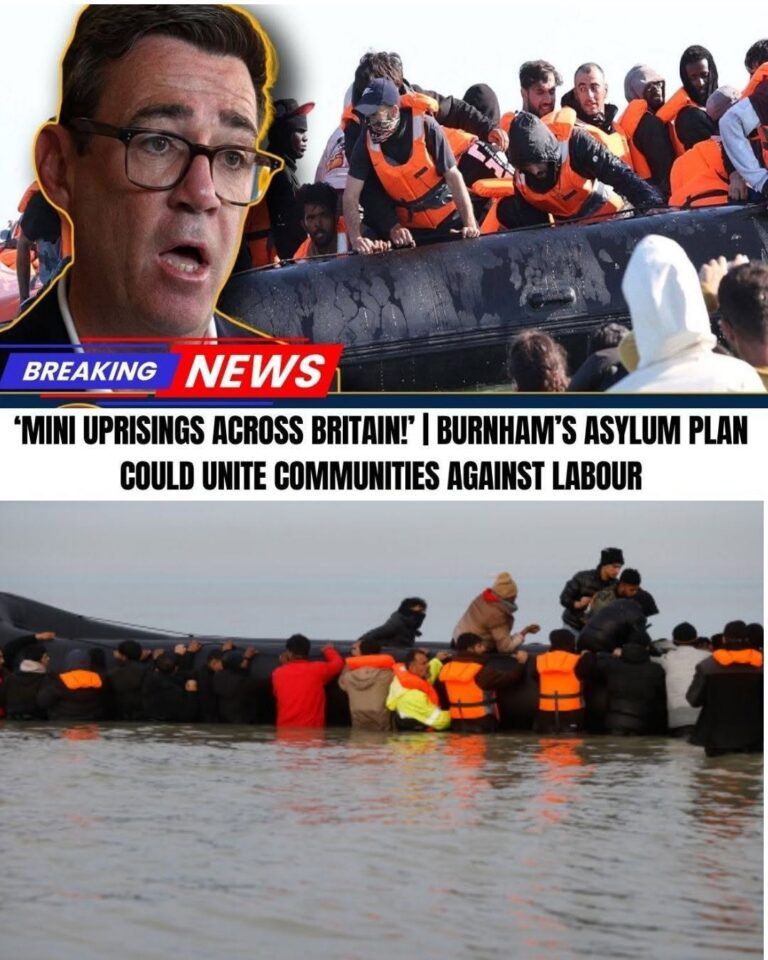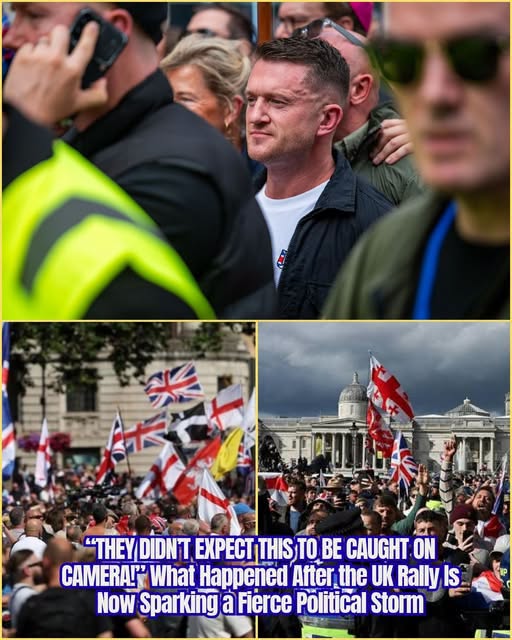
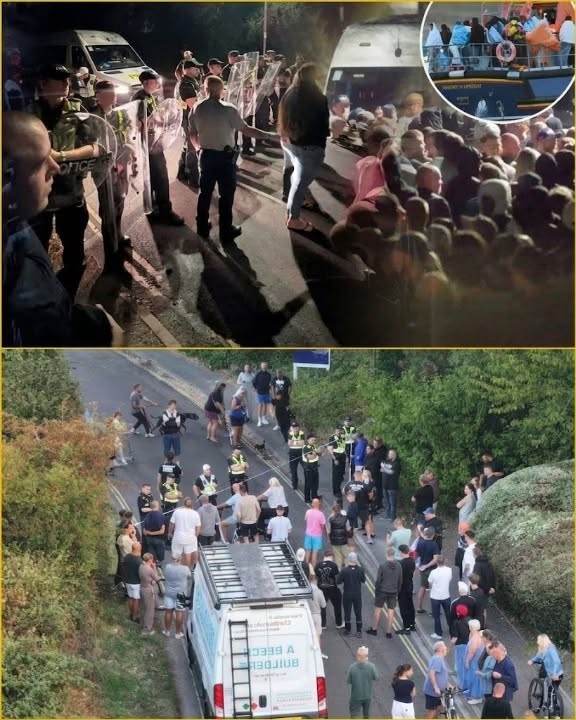
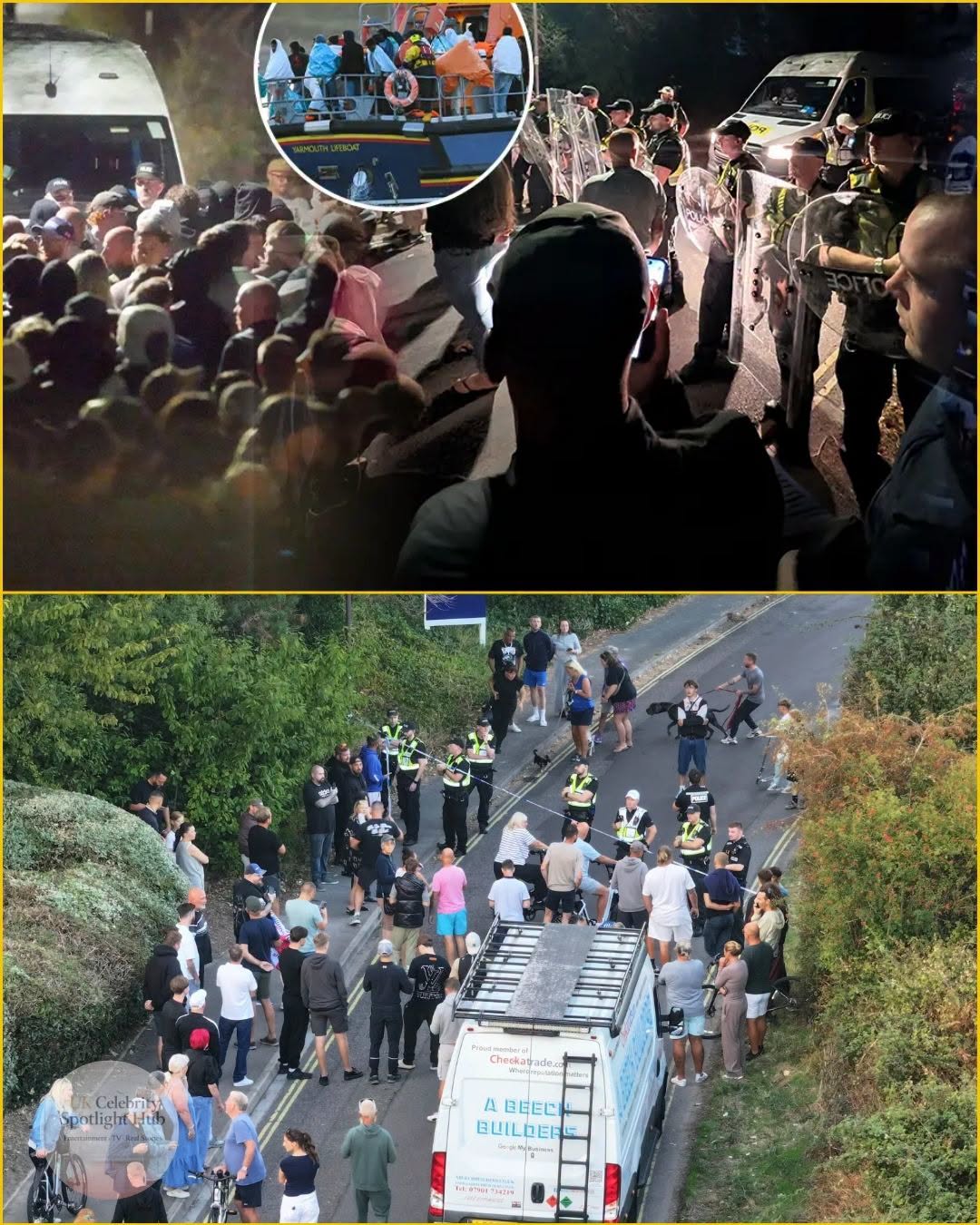
Portsmouth was plunged into a tense overnight stand-off after around 500 protesters gathered to stop coaches leaving a marina where 140 migrants had been brought ashore.
Portsmouth Tense After Protesters Block Coaches Following Arrival of Migrants from Channel Crossing
PORTSMOUTH, England — A tense overnight confrontation unfolded around a Portsmouth marina after approximately 500 protesters reportedly gathered to prevent coaches from leaving an area where around 140 migrants had been brought ashore following an unusually long Channel journey.
According to accounts of the incident, demonstrators blocked the marina’s main access road as police attempted to maintain order and allow vehicles to leave. Officers equipped for public-order operations were deployed, with reports that shields and pepper spray were used during confrontations between police and sections of the crowd.
The episode has intensified an already heated debate about irregular migration across the English Channel. But it has also raised a potentially significant operational question: could people-smuggling networks be experimenting with routes farther west, beyond the areas of Kent that have traditionally received most small-boat arrivals?
That possibility remains uncertain. One exceptional crossing does not prove that a new smuggling corridor has been established. Nevertheless, the reported arrival in Portsmouth has prompted concerns about whether communities elsewhere along Britain’s south coast are prepared if such incidents become more frequent.
What Triggered the Portsmouth Protest?
The immediate catalyst was reportedly the arrival of a large group of migrants who had been rescued or brought ashore in the Portsmouth area.
Around 140 people were said to have been aboard the vessel involved in the crossing. The journey attracted particular attention because it reportedly began from Normandy rather than the areas of northern France more commonly associated with small-boat departures toward Kent.
As news of the arrival spread, protesters gathered near the marina.
Accounts suggest the crowd grew to around 500 people, with some demonstrators attempting to stop coaches believed to be transporting the migrants away from the site.
Blocking the only road in and out of the marina transformed what might otherwise have remained a demonstration into a significant public-order challenge.
Police faced the difficult task of protecting lawful protest while maintaining access to the site and preventing confrontations from escalating.
Police and Protesters Face Off
Footage and reports from the scene described officers forming lines with shields as demonstrators occupied the road.
Pepper spray was reportedly deployed during some confrontations, although the precise circumstances surrounding each use would require confirmation from police.
Such scenes inevitably produce competing interpretations.
Protesters and their supporters may argue that police tactics were excessive or that officers were being used to suppress public anger about immigration.
Police, by contrast, have a responsibility to maintain public access, protect individuals at the scene and respond when demonstrations cross into potentially unlawful obstruction or violence.
The right to protest is protected in Britain, including the right to express strong opposition to government immigration policy.
But that right is not unlimited.
Deliberately preventing vehicles from moving, threatening people, attacking officers or creating serious public-safety risks can result in police intervention regardless of the political message involved.
Why This Crossing Is Different
The larger significance of the Portsmouth incident lies in where the migrants arrived.
For years, Britain’s small-boats debate has largely revolved around Kent.
The geography explains why. The Strait of Dover represents the narrowest part of the English Channel, making the journey between northern France and southeast England considerably shorter than routes farther west.
A voyage from Normandy toward Portsmouth represents a different proposition.
It potentially means spending substantially longer at sea in a small vessel while navigating waters used by commercial shipping.
If organized smuggling groups are deliberately experimenting with longer routes, authorities could face a much broader enforcement problem.
Instead of concentrating resources primarily around Kent, agencies might eventually need contingency plans covering Hampshire, Sussex, Dorset and potentially other stretches of the southern coastline.
But there is not yet enough evidence to conclude that such a strategic shift has occurred.
Portsmouth ‘Not Set Up’ for Regular Arrivals
One of the most striking reported reactions came from a senior policing official who warned that Portsmouth was “not set up” to handle a new pattern of Channel arrivals.
The concern is understandable.
Dover and parts of Kent have accumulated years of experience dealing with small-boat incidents. Border Force, police, medical teams and immigration authorities have established procedures for receiving people brought ashore.
A city such as Portsmouth has substantial maritime infrastructure, but that does not mean it has facilities specifically designed to process repeated irregular migration arrivals.
A single vessel carrying more than 100 people can create immediate logistical requirements.
Those arriving may require medical checks, food, clothing and identity processing. Authorities then need transport arrangements and appropriate facilities while immigration and asylum procedures begin.
If such arrivals became frequent, local policing and public services could experience additional pressure.
Could Smugglers Be Shifting West?
This is now the central strategic question.
People-smuggling networks operate as criminal businesses and can adapt when law-enforcement pressure increases.
If particular launch areas in northern France become more heavily monitored, organizers may explore alternative departure points.
Moving farther west could theoretically make launches harder to detect if authorities have fewer resources concentrated there.
But longer routes bring serious disadvantages.
Boats need more fuel. Passengers spend longer at sea. Weather conditions have more time to change. Mechanical failure becomes more dangerous, and navigating major shipping lanes presents additional risks.
Smugglers therefore have strong reasons to prefer shorter journeys when they remain possible.
Investigators will need to establish whether the Portsmouth crossing was an isolated experiment, an unusual response to particular circumstances or evidence of a deliberate new strategy.
Repeated incidents would provide far stronger evidence than one crossing alone.
Protest Reflects a Wider Political Frustration
The speed with which hundreds of protesters reportedly mobilized also demonstrates how politically explosive migration has become.
For critics of current border policy, continued small-boat arrivals symbolize a government failing to control who enters the country.
They argue that taxpayers bear substantial costs for accommodation, processing and enforcement while criminal smuggling networks continue operating.
Others warn against treating asylum seekers themselves as responsible for the wider failures of immigration policy.
People arriving by small boats can have very different backgrounds and legal circumstances. Some may ultimately establish legitimate claims to refugee protection, while others may be refused permission to remain.
Those decisions are made through the asylum and immigration system, not by protesters gathered outside reception sites.
The Human Risk Behind Longer Crossings
The political confrontation should not obscure the maritime danger involved.
The Channel is one of the busiest shipping areas in the world.
Attempting a lengthy crossing in an overcrowded inflatable vessel can expose passengers to hypothermia, dehydration, engine failure, waves and collisions.
A shift toward longer routes could therefore create not only an enforcement challenge but also a greater search-and-rescue burden.
Whatever the immigration status of those aboard, maritime authorities have obligations to respond when human life is in immediate danger.
That reality frequently places Border Force, the Coastguard and rescue organizations at the centre of a political dispute they cannot resolve themselves.
A Warning Sign — But Not Yet a New Pattern
The events in Portsmouth combine three increasingly contentious issues: border security, public protest and the adaptability of organized smuggling networks.
If the reported details are confirmed, an overnight stand-off involving hundreds of demonstrators represents a serious public-order incident. But the political implications of the migrant arrival itself require more caution.
One boat reaching Portsmouth does not mean Dover has ceased to be the primary focus of Channel crossings. Nor does it prove that Hampshire is about to become a new migration hotspot.
What it does demonstrate is that longer routes are possible.
Authorities will now be watching closely for evidence of repetition.
If further vessels begin departing from Normandy and appearing along England’s coastline farther west, the Portsmouth incident may eventually be remembered as an early indication of a significant change in smuggling tactics.
If no pattern follows, it may instead prove to have been an exceptional journey that produced an exceptional night of unrest.
For Portsmouth residents, however, the immediate consequences were already real: blocked roads, riot-equipped police, angry crowds and a migration controversy that suddenly moved from the familiar shores of Kent to their own waterfront.
The crucial question now is whether it will happen again.