Political Bombshell: Rupert Lowe’s Major Announcement Sends Shockwaves Through Westminster as Britain’s Political Landscape Faces Fresh Questions
A major political announcement by independent MP Rupert Lowe has reignited debate across Westminster and beyond, drawing immediate reactions from supporters, critics, and political observers. Although the long-term consequences remain uncertain, the development has intensified discussion about the future of Britain’s conservative politics, the direction of Reform UK, the challenges facing the Conservative Party, and the broader state of the UK’s political system. As speculation continues, analysts caution that many questions remain unanswered, making it important to distinguish confirmed facts from political interpretation.
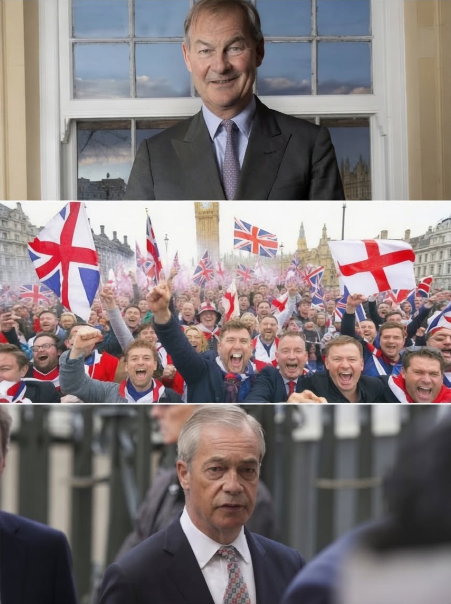
For much of the past decade, British politics has experienced repeated periods of turbulence. From Brexit and constitutional debates to leadership changes, economic challenges, immigration policy, and public service reform, the political environment has remained unusually fluid. Against this
backdrop, announcements from high-profile political figures often generate significant attention, particularly when they have the potential to influence party dynamics or reshape alliances. Rupert Lowe’s latest statement has become the newest development attracting national interest.
Although details surrounding the announcement have been widely discussed across political circles and social media, reactions have varied considerably depending on political perspective. Supporters argue that Lowe continues to represent a growing demand for political change, while critics question both the timing and potential impact of his decision. Regardless of these differing interpretations, the announcement has undoubtedly become another focal point in Britain’s ongoing political conversation.
Rupert Lowe has increasingly become a recognizable figure within debates surrounding immigration, national sovereignty, economic policy, and institutional reform. His speeches in Parliament and public appearances have often generated substantial online engagement, reflecting both enthusiastic support and strong opposition. In recent months, his profile has grown beyond traditional political audiences, with many of his remarks circulating widely on digital platforms.
Political commentators note that Lowe’s growing visibility reflects broader changes within British politics. Public dissatisfaction with established institutions, combined with increasing fragmentation across the political spectrum, has created opportunities for independent voices and smaller political movements to attract greater attention. Whether such attention ultimately translates into lasting political influence, however, remains an open question.
The announcement also arrives during a period of considerable uncertainty for Reform UK. As one of the fastest-growing political parties in recent years, Reform has attempted to position itself as an alternative to both Labour and the Conservatives, particularly on issues such as immigration, taxation, public spending, and constitutional reform. Any significant development involving a prominent figure associated with these debates naturally invites speculation about the party’s future direction.
Observers have suggested several possible interpretations of the announcement. Some believe it could represent an effort to redefine political priorities outside traditional party structures. Others argue it may signal broader strategic positioning ahead of future electoral contests. At this stage, however, many analysts emphasize that definitive conclusions would be premature until additional information becomes available.
The Conservative Party also finds itself at the center of the discussion. Having experienced several years of internal divisions over economic policy, immigration, taxation, and leadership strategy, the party continues to face questions about how it can rebuild electoral support. Developments involving
influential figures outside the party often attract particular attention because they may affect voter sentiment among center-right constituencies.
Some political analysts argue that Britain’s conservative electorate has become increasingly fragmented. While many voters remain loyal to the Conservative Party, others have shifted toward Reform UK or chosen to support independent candidates. This evolving political landscape creates additional uncertainty for future elections, particularly in closely contested constituencies where relatively small changes in voter behavior could produce significant electoral consequences. Supporters of Rupert Lowe argue that his message resonates with citizens who believe mainstream political parties have failed to adequately address concerns about border security, public services, economic growth, and national identity. They contend that his willingness to challenge political consensus distinguishes him from more traditional politicians. For these supporters, the latest announcement is viewed as another example of his commitment to pursuing political reform.
Critics, however, present a different perspective. They argue that political debates should remain focused on practical policy proposals rather than personalities or symbolic announcements. Some also question whether highly publicized political statements necessarily translate into meaningful legislative or institutional change. According to this view, sustained policy implementation remains more important than headline-generating declarations.
The response across social media has reflected Britain’s increasingly polarized political environment. Supporters have described the announcement as potentially transformative, suggesting it could reshape relationships between different conservative factions. Critics have responded with skepticism, urging caution until concrete policy implications become clearer. The speed with which these competing narratives spread online illustrates the growing influence of digital platforms in shaping political discourse.
Political scientists frequently note that social media can amplify political events far beyond their immediate institutional significance. Viral clips, short statements, and selective quotations often reach millions of viewers before comprehensive reporting becomes available. As a result, public perceptions may develop rapidly, sometimes before all relevant facts have been fully established.
Media organizations have similarly approached the announcement from differing editorial perspectives. Some outlets have emphasized its potential implications for party politics, while others have focused on broader questions regarding Britain’s evolving political landscape. This diversity of coverage reflects the pluralistic nature of the British media environment, where competing interpretations frequently coexist.
The timing of the announcement has also attracted attention. Britain continues to confront multiple long-term policy challenges, including economic recovery, productivity growth, NHS performance, housing affordability, immigration management, energy security, and public finances. Against such a complex backdrop, any major political development naturally prompts discussion about how leadership priorities may evolve in response.
Several constitutional experts caution that British politics has become increasingly unpredictable since the Brexit referendum. Traditional voting patterns have shifted, new political movements have emerged, and long-standing assumptions regarding party loyalty have weakened. Consequently, announcements that might previously have generated limited attention can now have broader political significance because of the greater volatility within the electorate.
For Reform UK, the situation raises questions about organizational strategy and future leadership dynamics. Political parties often experience periods of internal adjustment as they expand or seek broader electoral appeal. Observers note that maintaining unity while accommodating diverse viewpoints can present significant challenges for rapidly growing political organizations.
At the same time, the Conservative Party continues to examine its own long-term positioning. Many analysts argue that competition from Reform UK has influenced debates over immigration, taxation, and cultural issues within conservative politics. Whether future electoral competition results in greater cooperation, sharper rivalry, or policy convergence remains uncertain.
Labour, meanwhile, is also watching developments carefully. As the governing party seeks to implement its policy agenda, changes within opposition politics could influence parliamentary debates, media attention, and electoral strategy. Political competition rarely occurs in isolation, and developments affecting one party frequently have indirect consequences for others.
Beyond immediate party politics, the announcement has contributed to wider discussions about public trust in political institutions. Surveys conducted over recent years have shown fluctuating levels of confidence in government, Parliament, and political parties. Many citizens continue to express concern about accountability, transparency, and the ability of elected officials to address long-term national challenges.
Some experts argue that these broader trends help explain why political figures perceived as independent or anti-establishment often receive significant public attention. In periods of institutional uncertainty, voters may become more receptive to voices presenting themselves as alternatives to established political structures. Whether this reflects temporary dissatisfaction or longer-term political realignment remains a subject of ongoing academic research.
The announcement also illustrates the increasingly personalized nature of modern politics. While political parties remain central to Britain’s parliamentary system, individual politicians can now build substantial public profiles through direct communication on television, podcasts, interviews, and social media. This evolution has altered how political influence is developed and maintained in the digital era.
Looking ahead, much will depend on how subsequent events unfold. Political announcements frequently generate immediate headlines, but their long-term significance often becomes apparent only after additional policy proposals, parliamentary actions, electoral outcomes, or organizational decisions take place. At present, many aspects of Rupert Lowe’s latest move remain open to interpretation.
Analysts therefore encourage careful evaluation of future developments rather than drawing immediate conclusions. Political narratives often evolve as further information emerges, and early speculation does not always accurately predict eventual outcomes. Responsible political analysis requires distinguishing confirmed facts from commentary, opinion, and political advocacy.
Whatever one’s political perspective, Rupert Lowe’s announcement has once again demonstrated how rapidly Britain’s political conversation can shift. It has renewed debate about the future of Reform UK, the challenges facing the Conservative Party, the broader direction of British conservatism, and the evolving relationship between voters and established political institutions. Whether this development ultimately proves to be a turning point or simply another chapter in Britain’s dynamic political story will depend on events still to come. For now, it stands as another reminder that the UK’s political landscape remains highly fluid, closely watched, and subject to rapid change as parties, politicians, and voters continue to shape the country’s democratic future.