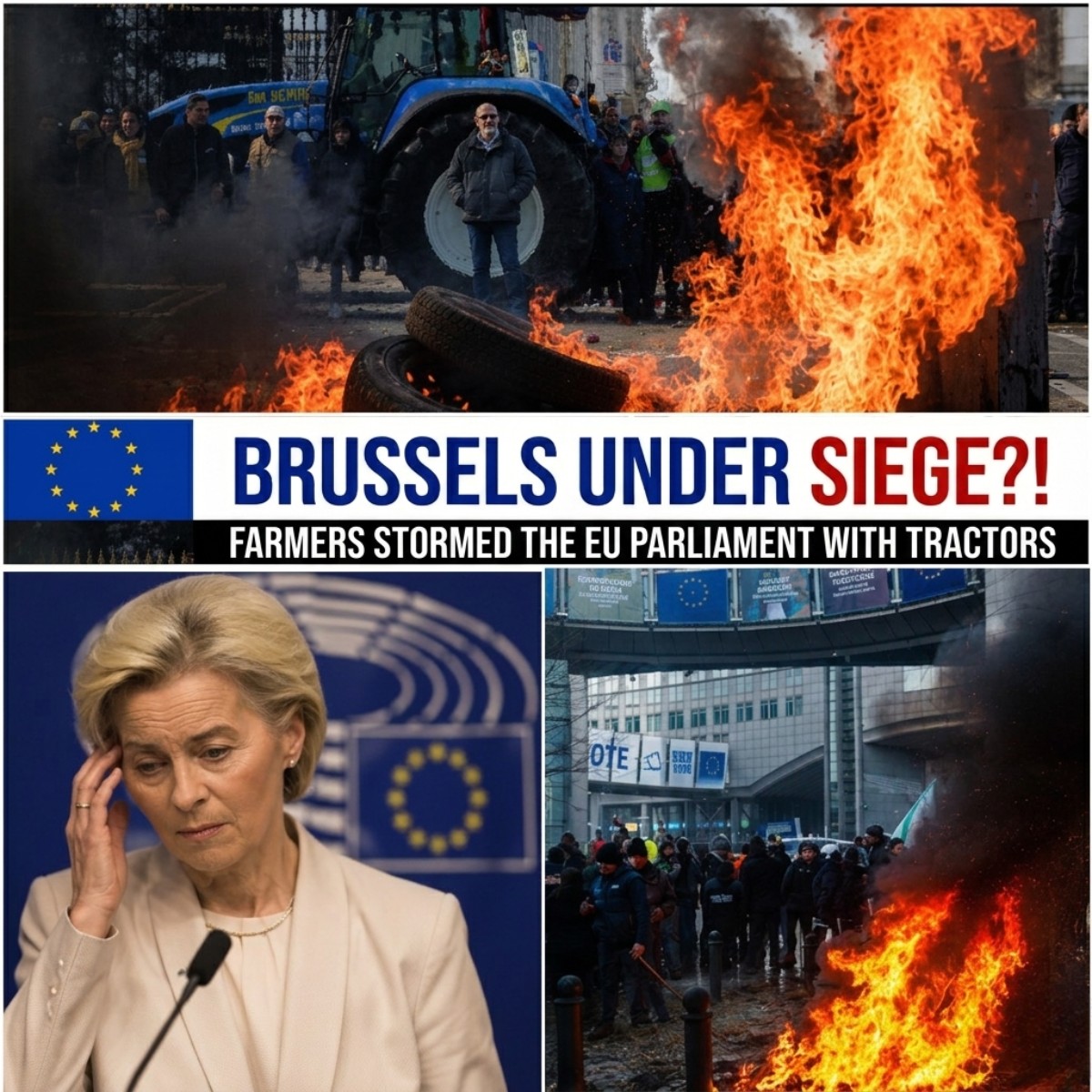
Escalating Tensions in Brussels: Mass Farmer Protest Near the European Parliament!
Escalating Farmer Protests in Brussels Raise Pressure on EU Leaders Over Agricultural Policy

BRUSSELS — A major farmers’ protest near the European Parliament intensified tensions in Belgium’s capital on Wednesday, as hundreds of agricultural producers gathered to denounce European Union agricultural regulations and rising economic pressures.
The demonstration, centered around Luxembourg Square, drew significant attention after protesters arrived with tractors, blocking surrounding streets and disrupting traffic across parts of Brussels. The protest quickly became one of the most visible recent confrontations between farmers and EU policymakers, reflecting deeper frustration over the direction of European agricultural reforms.
Farmers say they are being overwhelmed by bureaucracy while facing rapidly increasing production costs. Fuel and fertilizer prices have surged in recent years, and many producers argue that EU policy is making it harder to remain economically viable.
“This is not just about our livelihood, but our future as well,” said a Belgian farmer representing his family farm. He argued that regulatory demands and unstable market conditions have made agriculture increasingly unpredictable.
Tractors Block Roads as Protest Paralyzes Central Brussels
Luxembourg Square, located near the European Parliament complex, quickly became a symbolic gathering point. Farmers positioned tractors across key access routes, causing widespread delays and forcing authorities to divert traffic.
The use of tractors has become a recurring feature of farmer protests across Europe, serving both as a practical tool to block roads and a symbolic reminder of the agricultural sector’s role in European economies.
City residents reported heavy congestion, while businesses in the surrounding district faced interruptions. The protest also created an atmosphere of tension in a neighborhood that typically hosts EU officials, diplomats, and journalists.
Situation Becomes More Tense as Fires and Smoke Appear
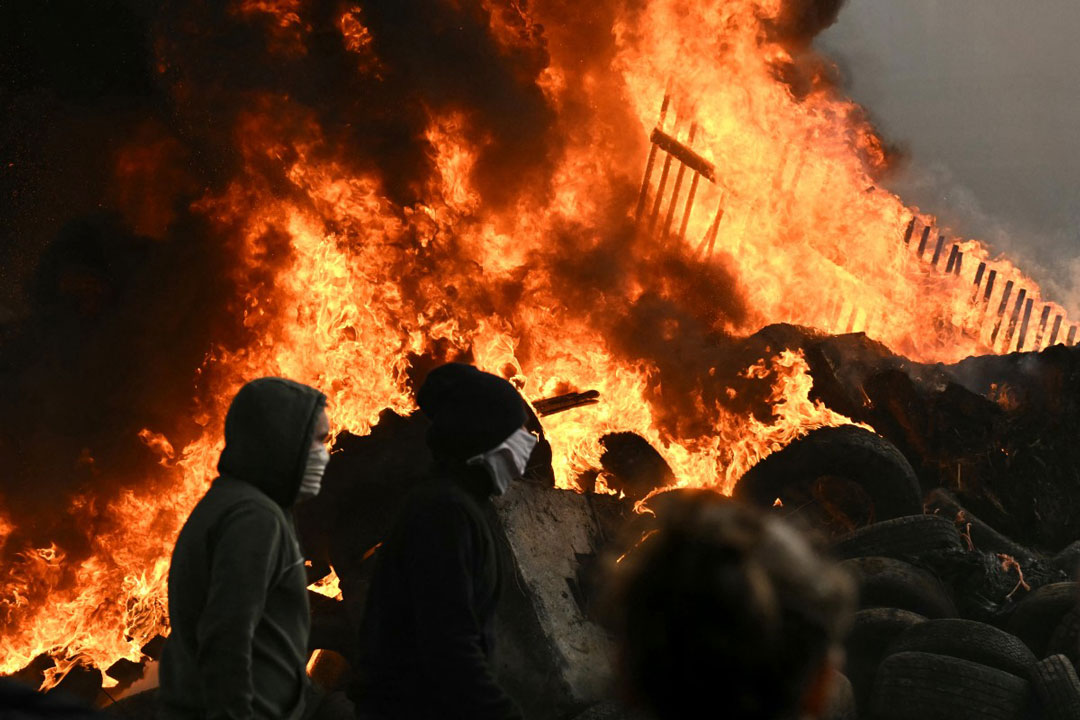
While the protest initially remained largely peaceful, tensions escalated as the day progressed. Some demonstrators reportedly lit fires, with smoke rising above Luxembourg Square and visibly changing the atmosphere around the Parliament district.
The fires created safety concerns for both protesters and residents. The smoke, combined with traffic disruptions, further intensified frustration among local communities and heightened pressure on Belgian authorities to respond.
As the protest grew more volatile, police increased their presence in the area. Authorities secured key locations around the European Parliament, aiming to prevent protesters from moving closer to the institution’s main buildings.
Police Deploy Tear Gas and Water Cannons
According to reports from the scene, Belgian law enforcement used tear gas and water cannons at certain points after a portion of the crowd attempted to push closer to the European Parliament complex.
The deployment of riot-control measures marked a turning point, demonstrating that authorities were concerned the protest could spiral into wider unrest.
While no official casualty figures were immediately confirmed, the use of force highlighted the high level of tension between farmers and policymakers. It also underscored the growing risk that protests could escalate beyond political messaging into broader public disorder.
Farmers Demand Less Bureaucracy and More Economic Support
Farmers attending the protest argued that EU agricultural rules are imposing heavy administrative burdens, requiring extensive documentation and compliance measures that they believe are unrealistic for many rural producers.
They also complained that rising costs are squeezing profit margins. Fuel and fertilizer remain among the most expensive operational necessities, and many farmers say they are unable to pass higher costs on to consumers due to market competition.
For many producers, the combination of higher costs and regulatory pressure has created what they describe as an unsustainable business environment.
Protesters insist they are not rejecting sustainability, but want reforms to reflect the economic realities of farming and rural life.
EU Officials Defend Reforms as Necessary for Sustainability
Representatives of the European Commission have repeatedly stated that agricultural reforms are intended to strengthen sustainability and improve long-term resilience across the sector.
EU policymakers argue that environmental measures are increasingly necessary due to climate risks, soil degradation, and long-term threats to food security.
The Commission maintains that reforms are designed not to punish farmers, but to modernize agriculture and ensure that Europe’s food production remains stable and environmentally responsible in the decades ahead.
However, farmers argue that such goals often translate into immediate financial burdens, with compliance costs hitting small and medium-sized farms hardest.

Short-Term Economic Crisis Meets Long-Term Strategy
Experts observing the protest say the conflict reflects a fundamental policy dilemma.
Farmers are facing immediate financial pressure, including rising production costs and unstable market prices, while the EU is attempting to enforce long-term strategic reforms focused on environmental sustainability and structural modernization.
This gap between short-term survival and long-term planning has become one of the central tensions shaping agricultural politics across Europe.
Analysts say policymakers may have underestimated how quickly farmers’ frustrations could translate into mass demonstrations, especially in an era of inflation and economic uncertainty.
Protests Spread Across Europe in Recent Months
The Brussels demonstration is not an isolated event. Similar farmer protests have erupted across several European countries in recent months, including France, Germany, and the Netherlands.
In many cases, the demands have been consistent: reduced bureaucracy, greater financial support, and more flexible regulatory frameworks.
Farmers in multiple countries have expressed the view that EU agricultural policy has become too rigid and disconnected from the realities of food production. Many also argue that political elites in urban centers do not understand rural economic struggles.
The scale of protests suggests that the issue is now a continent-wide political challenge, rather than a national dispute limited to Belgium.
Political Analysts Warn EU Leaders of Growing Risk
Political analysts say the protests represent a serious warning sign for EU policymakers.
Agriculture remains one of the most sensitive policy areas in Europe, with significant economic weight and deep cultural importance. Rural communities often view farming not only as an industry but as a way of life tied to identity and national tradition.
A failure to address farmer grievances could have political consequences, particularly as populist parties across Europe seek to capitalize on anger against EU institutions.
Analysts note that protests of this scale can influence public opinion, potentially reshaping political debates in the lead-up to European elections and national campaigns.
Public Reaction Divided Between Support and Concern
Public reaction to the protest has been mixed.
Many citizens have expressed sympathy for farmers, acknowledging that rising costs and economic pressures are affecting rural producers across Europe. Supporters argue that farmers are essential to food security and should not be driven out of business by bureaucracy.
However, others have voiced concern over the escalation of protests into violence, particularly the lighting of fires and clashes with police.
For Brussels residents, the most immediate impact has been disruption to daily life, including blocked streets, traffic congestion, and smoke-filled air. Some expressed frustration that protests in the city center create conflict between urban populations and rural demonstrators.
The situation has highlighted wider social divisions between rural communities demanding support and urban residents facing the consequences of unrest.
Economic Uncertainty and Potential Impact on Supply Chains
From an economic perspective, analysts say prolonged unrest in the agricultural sector could have consequences beyond politics.
If protests lead to disruptions in production or distribution, food supply chains could be affected. In turn, this could influence price trends at a time when European consumers are already facing inflationary pressure.
While no immediate supply disruption was confirmed, the broader message from farmers is clear: if agriculture becomes economically unsustainable, the long-term effects could extend into food security and consumer markets.
Experts warn that political instability around farming policy could increase uncertainty for investors, producers, and retailers across Europe.
Symbolic Significance of Protests Near EU Power

The location of the protest carried powerful symbolic meaning.
By gathering directly outside the European Parliament, farmers placed their demands at the center of EU political authority. The demonstration was not only aimed at Belgian officials but at EU decision-makers shaping agricultural policy for the entire bloc.
Observers say this direct confrontation sends a clear message: rural producers want their voices heard in Brussels, not merely in national capitals.
Diplomatic sources indicated that EU leaders are closely monitoring the situation and considering how to open dialogue with farmers’ representatives in an effort to reduce tensions.
What Happens Next
The coming days may prove critical in determining whether the situation calms down or escalates further.
Authorities are expected to maintain a strong police presence around EU institutions, while farmers’ groups may continue mobilizing if they feel their demands are being ignored.
Experts argue that without a credible political response, protests could spread further and intensify across multiple EU member states.
For now, the events in Brussels have underscored a central reality: European farmers are increasingly willing to confront EU institutions directly, and the debate over the future of agricultural policy is rapidly becoming one of the most politically sensitive issues facing Europe.