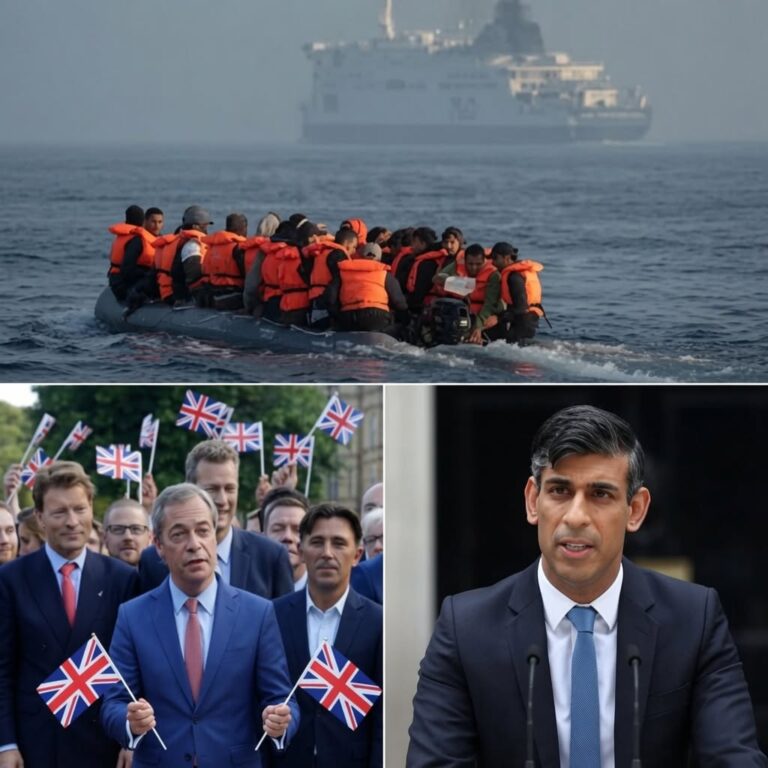
Polish MEP Dominik Tarczyński has sparked renewed debate over Europe’s approach to illegal migration after making a blunt argument for the immediate removal of people who have no legal right to remain.
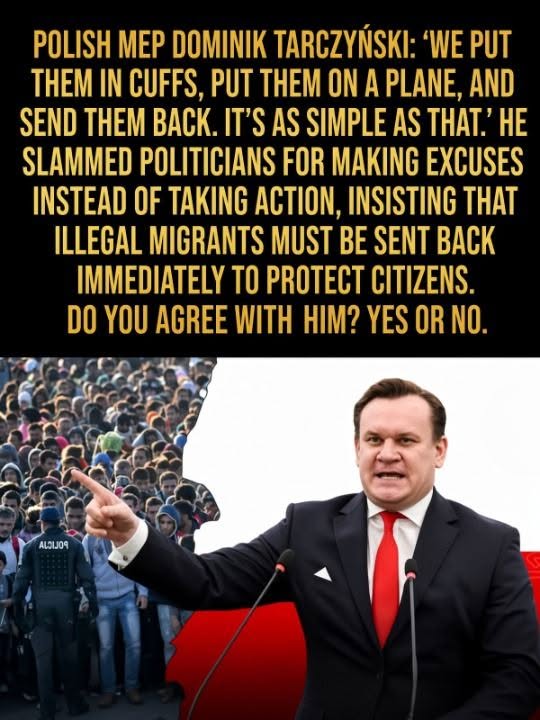
Europe’s Migration Debate Reignited: Dominik Tarczyński Calls for Tougher Action on Illegal Immigration
A familiar political argument has once again moved to the center of Europe’s immigration debate: What should governments do when people remain in a country without a legal right to stay?
Polish Member of the European Parliament Dominik Tarczyński has offered an uncompromising answer — and his words have reignited a heated discussion about illegal migration, deportation, border security, national sovereignty, and the limits of government responsibility.
During an appearance on the PBD Podcast, Tarczyński argued that governments should stop searching for excuses and begin enforcing immigration laws more decisively. His position was blunt: people who are in a country illegally should be detained, placed on a plane, and returned to their countries of origin.
The simplicity of the statement is precisely what makes it politically powerful — and deeply controversial.
For supporters, the argument is straightforward. A country has laws governing who may enter, who may remain, and under what conditions. If authorities issue a deportation order but fail to enforce it, they argue, the immigration system gradually loses credibility. Borders may still exist on paper, but their practical meaning becomes increasingly uncertain.
From this perspective, deportation is not necessarily about hostility toward migrants. It is about the principle that immigration rules must have consequences.
Tarczyński’s comments therefore tap into a frustration that has become increasingly visible across parts of Europe: the belief that governments have created immigration rules without developing an effective mechanism for enforcing them.
But the issue is far more complicated than a single sentence can suggest.
Every deportation involves legal procedures, individual circumstances, international agreements, and questions about human rights. A person facing removal may have appealed a decision, claimed asylum, established family ties, or argued that returning to their country could expose them to serious danger.
That creates a fundamental tension.
On one side is the responsibility of governments to control their borders and enforce democratically established laws. On the other is the responsibility to protect individual rights and ensure that people are not returned to situations where they could face persecution, violence, or other serious harm.
Europe has struggled with this balance for years.
Migration has become one of the most politically sensitive issues across the continent, influencing elections, reshaping political parties, and creating sharp disagreements between national governments and European institutions. Some voters demand stronger border controls and faster deportations. Others emphasize humanitarian protection, integration, asylum rights, and the dangers of treating migration primarily as a security issue.
Neither side can easily dismiss the concerns of the other.
Supporters of stricter enforcement often point to a basic question: What is the purpose of an immigration decision if the government cannot ultimately enforce it?
If an individual has exhausted legal avenues and has been formally determined to have no right to remain, proponents of deportation argue that allowing that person to stay indefinitely may encourage further irregular migration and undermine public confidence in the system.
They also contend that uncontrolled or poorly managed migration can place pressure on housing, public services, border authorities, and local communities. For these voters, stronger enforcement is not necessarily an extreme position; they see it as an essential function of a sovereign state.
Critics, however, warn that slogans such as “put them on a plane” can make an extraordinarily complicated process sound deceptively simple.
Who exactly qualifies for removal? Has every legal appeal been completed? What happens when the country of origin refuses to accept the person? What if there is no safe route for return? How should authorities treat families, children, or people with medical or humanitarian concerns?
These are not minor technical questions. They are at the heart of the debate.
There is also a broader question about language.
Political leaders often use deliberately forceful words because immigration is an issue that generates strong emotions. Supporters may see that directness as refreshing honesty after years of bureaucratic language. Critics may see it as reducing human beings to immigration cases and overlooking the circumstances that brought them to Europe.
The disagreement is therefore not simply about deportation. It is about what governments owe their citizens, what they owe migrants, and how those responsibilities should coexist.
Tarczyński’s intervention is significant because it reflects a wider political shift. Across Europe, migration policy is no longer confined to specialist discussions among lawyers and policymakers. It has become a central question of national identity, public security, political accountability, and electoral politics.
At the same time, governments face a difficult reality: border control can be politically popular, but implementing large-scale removals is legally and practically complex. Effective immigration policy requires more than strong rhetoric. It requires functioning asylum procedures, international cooperation, adequate resources, clear legal standards, and mechanisms capable of distinguishing between people who have a lawful claim to protection and those who do not.
That is why the debate surrounding Tarczyński’s comments is unlikely to disappear anytime soon.
His supporters may argue that Europe has spent too long discussing the problem and not enough time enforcing its own rules. His critics may respond that enforcement without sufficient safeguards can create new injustices and undermine the very legal principles European democracies claim to defend.
Perhaps the most important question is not whether Europe should have borders. Virtually every modern state does.
The harder question is where the line should be drawn between firm enforcement and humanitarian responsibility.
Can governments maintain secure borders while respecting asylum rights? Can deportation policies be efficient without becoming indiscriminate? Can countries protect vulnerable people while also ensuring that immigration laws remain meaningful?
Those questions have no easy answers.
What is clear is that Tarczyński’s remarks have once again placed the issue directly before the public. His approach is deliberately uncompromising, while the political and legal reality surrounding migration is anything but simple.
Ultimately, the debate forces voters to confront a fundamental question about the future of European immigration policy: Should governments prioritize tougher and faster enforcement against people who have no legal right to remain, or should humanitarian and individual-rights considerations place stronger limits on removal?
There may be disagreement over the answer, but the question itself is not going away.
Do you agree with Dominik Tarczyński’s approach to illegal immigration and deportation?
YES or NO?
This article summarizes and discusses public comments and statements for informational and discussion purposes. The views expressed by Dominik Tarczyński are his own and do not necessarily reflect the views of this page.