

QUESTION TIME CLASH: Billy Bragg challenges Richard Tice over Nigel Farage’s response to Donald Trump’s unsupported paracetamol and autism claims, as a resurfaced BBC debate reignites scrutiny of politicians discussing scientific evidence.
A Question Time exchange from last year has started doing the rounds again after Billy Bragg took apart one of Nigel Farage’s stranger arguments in little more than a minute.
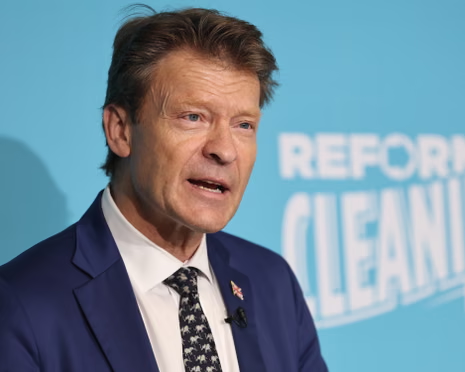
The singer-songwriter was appearing on the BBC programme in September 2025 alongside Reform UK deputy leader Richard Tice when the discussion turned to comments Farage had made during an LBC interview the previous day.

Farage had been pressed by Nick Ferrari over Donald Trump’s claim that taking paracetamol during pregnancy could be linked to autism.
UK medical experts had rejected the claim, but Farage declined to side with them, telling Ferrari that he had “no idea” whether Trump was right and adding that “science is never settled”.
Bragg noticed something rather odd about that scepticism.
Farage had been reluctant to trust the scientific establishment on one subject, but during the very same LBC appearance he had also relied on something a taxi driver told him as evidence for his fears about Sharia law in Britain.
Bragg put the contradiction directly to Tice.
The clip, filmed during Question Time’s 25 September 2025 edition in Bedworth, has now resurfaced as Farage remains at the centre of British politics and continues to present Reform as a potential government in waiting.
Tice responded by telling Bragg that there were more than 80 Sharia councils or courts operating in Britain and asked whether he was aware of them.
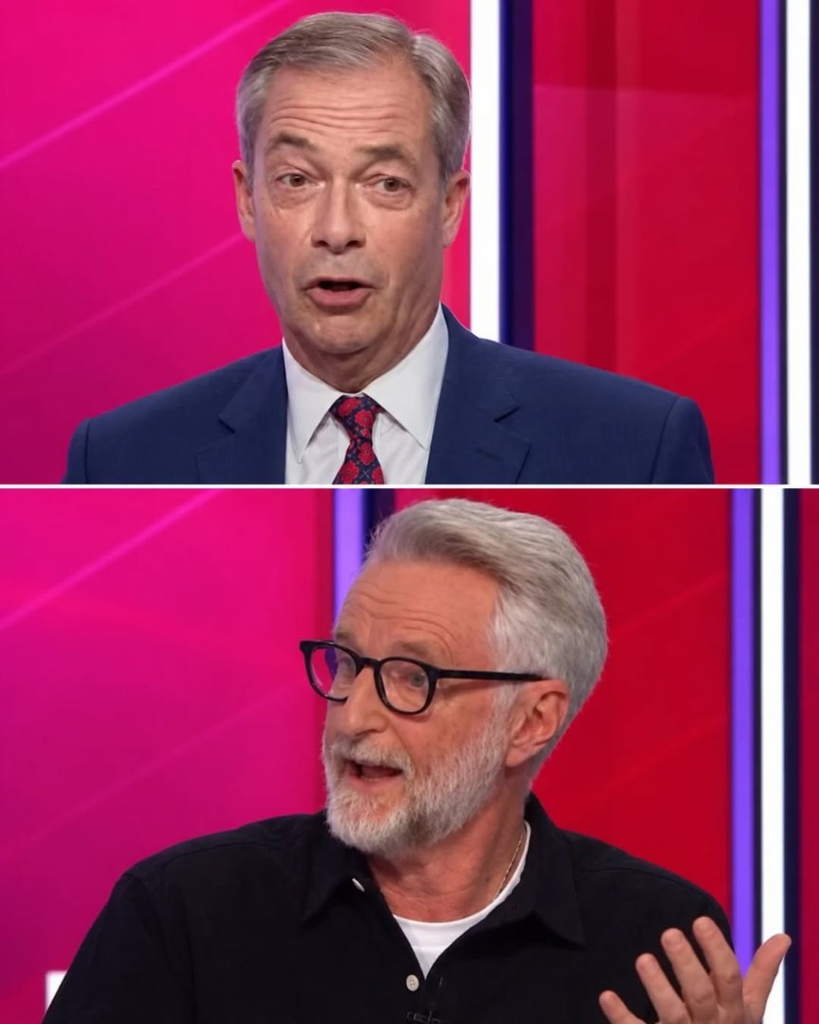
Bragg did not dispute that religious arbitration bodies existed.
Instead, he pointed out that Jewish religious courts also operate in Britain and argued that the existence of religious tribunals was not evidence that Sharia law was somehow replacing British law.
That distinction is important.
Sharia councils do exist in Britain, usually dealing with religious matters such as Islamic divorce, but they do not replace UK law and cannot override decisions made by British courts.
Jewish Beth Din courts also operate in Britain, while arbitration based on religious rules can be recognised in limited civil matters where both parties consent, provided the outcome complies with UK law.
So the argument was not really over whether religious councils existed. It was over what their existence proved.
Farage had invoked a taxi driver’s warning while suggesting Britain was moving towards Sharia law more broadly.
Bragg’s criticism was that this was an extraordinarily weak evidential standard for someone who had been unwilling, only moments earlier, to defer to scientists on a medical question.
The exchange makes more sense when you look at the LBC interview that prompted it.
Trump had claimed there was a connection between paracetamol use during pregnancy and autism, despite medical bodies and researchers saying the evidence did not support such a conclusion.
Asked by Ferrari whether Trump was right, Farage replied:
He also argued that “science is never settled”.
There is nothing unreasonable about saying scientific knowledge can change.
It does, and medicine has plenty of examples where accepted practice was later revised.
The problem was that Farage used that uncertainty to refuse to reject a claim that medical experts said was unsupported, while appearing considerably less demanding about the evidence behind his warnings over Sharia law.
That was the contradiction Bragg seized on.
At the time, British medical experts were unusually clear about Trump’s comments.
Researchers pointed to studies which controlled for genetic and family factors and found no causal link between paracetamol taken during pregnancy and autism.
Professor Bryony Dean Franklin of UCL’s School of Pharmacy said studies taking family effects into account showed “there is no link” and that apparent associations were more likely explained by genetics and other family factors.
Farage was criticised across British politics for refusing to challenge Trump, but he defended his position by arguing that he was simply unwilling to declare scientific questions closed.
His supporters could reasonably argue that scepticism and questioning experts are legitimate parts of public debate.
Bragg’s point, however, was not that politicians should accept every scientific claim without question.
It was that standards of evidence should be applied consistently.
If expert consensus is not enough to persuade you on medicine, a conversation with a taxi driver is an unusual place to set the bar on constitutional and religious change.
That final line, “This guy wants to be prime minister?
You must be joking”, sounded very different in September 2025 from the way it does now.
At the time Reform was already performing strongly, but the prospect of Farage reaching Downing Street still felt distant to many voters.
Since then, the party has become deeply embedded in the national political conversation, raised huge sums of money and repeatedly presented itself as capable of replacing the Conservatives as the main party of the right.
Farage’s personal ambition has become harder to dismiss as theatre.
That is why a year-old clip about evidence, judgement and the standards expected of a potential prime minister has suddenly acquired another life online.
The original clip attracted a huge reaction when it aired, particularly because Tice was sitting beside Bragg while much of the criticism was aimed directly at his party leader.