RUPERT LOWE PRESSES OFFICIALS OVER 100,000-HOME DEFENCE PLAN — THEN THE QUESTIONS TURN TO ASYLUM ACCOMMODATION

A ROUTINE DEFENCE HOUSING HEARING SUDDENLY TOOK A POLITICAL TURN
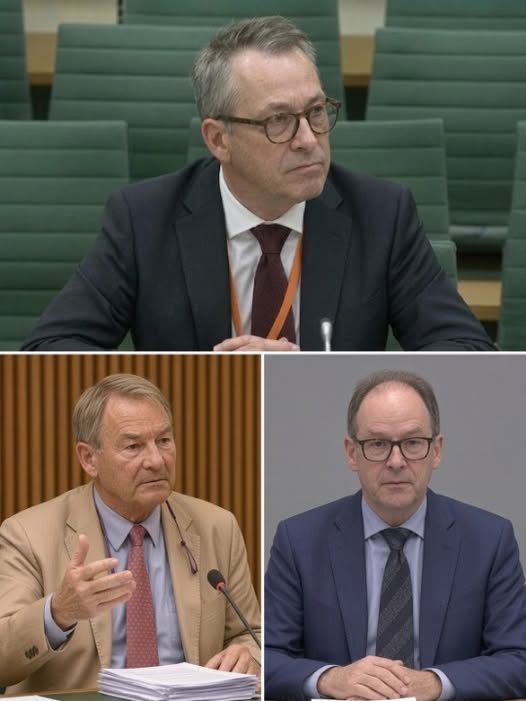
What began as a detailed parliamentary examination of Britain’s military housing system abruptly moved into the country’s explosive immigration debate when MP Rupert Lowe began questioning senior Ministry of Defence officials about a government commitment involving up to 100,000 homes. The Public Accounts Committee hearing on September 10 was formally examining armed forces housing and the Ministry of Defence’s repurchase of service family accommodation from Annington Homes, but Lowe seized on one particular figure that immediately changed the direction of the discussion. Officials explained that surplus defence land could contribute to the delivery of as many as 100,000 homes over the coming decade. Lowe then asked the question hanging over the exchange: were any of those homes connected to asylum seekers, refugees or what he described as economic migrants? The answer from officials was that they were not aware of such a connection. Yet that answer did not end Lowe’s questioning — it opened the door to a much wider confrontation over vacant military properties, Afghan resettlement and government accommodation contracts.
WHERE THE 100,000-HOME NUMBER ACTUALLY CAME FROM
The figure at the centre of the controversy was introduced when Lowe asked what the Ministry of Defence was doing to support the government’s wider housing ambitions by releasing surplus land. National Armaments Director Rupert Pearce told the committee that a Treasury condition attached to the Defence Investment Plan included a commitment to help deliver 100,000 homes for the general population. Pearce said the Defence Housing Service would work over the next decade to free up land capable of supporting those homes. This distinction is crucial: the official evidence did not describe a programme to construct 100,000 homes specifically for migrants. Pearce characterised it as a wider housing commitment associated with surplus defence land, while Permanent Secretary Jeremy Pocklington subsequently said the policy objective was to build 100,000 homes either for military use or for the private market.
LOWE ASKS THE QUESTION THAT CHANGED THE HEARING
Lowe immediately pushed officials on whether the programme had any connection with Britain’s asylum system. He asked whether the homes were intended for the open British market or were in any way connected to asylum seekers, refugees or economic migrants. Pearce replied that he did not believe there was such a connection. Lowe pressed again, asking whether there was “none at all”. Mike Green, chief executive of the Defence Infrastructure Organisation, explained that the intention was to build the homes but that future choices could include retaining some properties for rent or putting them onto the open market. Lowe then turned to Pocklington and sought a firmer commitment that there was no overlap between the housing programme and the migration issue. Pocklington reiterated that the policy objective concerned military housing and the private market, although he noted that the detailed strategy would be published later by the Defence Housing Service.
THEN LOWE TURNED HIS ATTENTION TO THOUSANDS OF VACANT MILITARY HOMES
The exchange became more pointed when Lowe shifted from future construction to the Ministry of Defence’s existing housing stock. He cited figures suggesting that there were roughly 47,700 service family accommodation units, with substantially fewer occupied, and asked whether vacant properties were relevant to the discussion. Officials acknowledged a void rate of around 20%, although Pocklington stressed that empty properties do not automatically represent permanently unused homes. With approximately 15,000 military household moves taking place each year, some properties are inevitably empty while being prepared for incoming families. Pocklington said an optimal void rate would be closer to 10%, suggesting that the current figure was higher than desired. The distinction mattered because Lowe was trying to establish whether spare capacity inside the defence estate could potentially overlap with government migration accommodation.
THE DISCUSSION THEN MOVED TO AFGHAN FAMILIES
Officials confirmed that a limited number of defence properties had previously been used in connection with Afghan resettlement. Green said the number was declining because people placed there temporarily were moving out, although he could not immediately provide Lowe with an exact figure. That prompted another sharp exchange, with Lowe pointing out that the official did not know the number. Later in the hearing, Pearce clarified that the final transitional site on the defence estate used for the Afghan resettlement programme had formally closed in December and said the remaining number was effectively very small. This was an important clarification because Afghan resettlement and the general asylum accommodation system are not interchangeable categories, despite sometimes being combined in political debate.
LOWE DEMANDS “TOTAL TRANSPARENCY”
Lowe explained why he was pursuing the subject. He told the committee that if there were any “spillover” between defence housing and migration accommodation, taxpayers needed to know about it. Green responded that he was not aware of such an overlap, while leaving open the obvious reality that future government policy can change. The confrontation therefore exposed something more complicated than the sensational claim of a hidden 100,000-home migrant scheme. Lowe was raising questions about whether different government housing programmes could overlap; the officials, meanwhile, were saying that the 100,000-home policy before the committee had a different stated purpose. That difference between asking whether something could happen and proving that it is already happening is central to understanding what the hearing actually established.
THEN ONE COMPANY NAME CHANGED THE TEMPERATURE AGAIN
Lowe’s next question pushed the discussion even further away from the formal subject of military housing. He asked officials whether the Ministry of Defence had contracts with Clearsprings Ready Homes. Clearsprings is known for its role in the wider asylum accommodation system, and Lowe told the committee he had been researching the company. Pocklington said he did not know the answer to the contracting question, while Green said he had not heard of Clearsprings. Lowe began outlining concerns about the company and argued that due diligence was important, particularly given the history of the disastrous 1996 Annington housing arrangement that the committee was investigating. At that point, committee chair Sir Geoffrey Clifton-Brown intervened and said Lowe had made his point. Pocklington agreed to provide further information to the committee.
“IT IS IMPORTANT” — LOWE PUSHES BACK AS THE CHAIR INTERVENES
The most dramatic moment came when the chair attempted to move proceedings back to the official subject of the hearing. Lowe objected, saying the issue was important. Clifton-Brown acknowledged that but responded that the committee had to remain on topic. The official transcript therefore does record Lowe being cut off during this part of his questioning — but it does not show the broadcast being terminated or officials ordering a feed to be shut down. Instead, the chair redirected proceedings because the session was specifically examining armed forces housing and the Annington Homes transaction. After Pearce offered an additional clarification about Afghan accommodation, the chair asked Lowe whether he had anything further specifically concerning Annington Homes. Lowe replied that he would wait until his final question. The hearing then continued.
THE BIGGER ASYLUM HOUSING CONTROVERSY IS VERY REAL
Although the hearing did not establish a secret programme reserving 100,000 homes for migrants, Lowe’s questions landed in the middle of a genuine and politically charged controversy over Britain’s asylum accommodation system. Parliament’s Public Accounts Committee reported in June that the Home Office and Ministry of Justice spent around £4.9 billion on asylum in 2024-25, with approximately £2.7 billion of Home Office expenditure going specifically toward asylum accommodation. Separately, the Home Affairs Committee has criticised serious failures in the management of asylum accommodation contracts, reporting that the expected cost of major contracts covering 2019 to 2029 had risen from an original £4.5 billion estimate to £15.3 billion. Those figures explain why questions about government property, private contractors and asylum accommodation can rapidly become politically explosive.
BUT THE NUMBER OF PEOPLE IN ASYLUM HOTELS HAS FALLEN SHARPLY
There is another side to the picture. Home Office statistics show that at the end of June 2026, 93,293 people were receiving asylum support, down 12% from a year earlier. Of those, 16,021 were being housed in hotels — 50% fewer than in June 2025 and 71% below the September 2023 peak of 56,018. The government has also publicly committed to reducing asylum costs and moving away from reliance on hotels. Those numbers do not end the political argument over accommodation, but they provide important context when evaluating claims that the state is secretly preparing an enormous new housing programme specifically for migrants.
THE REAL STORY IS ABOUT TRANSPARENCY — AND WHAT HAS NOT YET BEEN PROVED
The September 10 exchange was unquestionably tense. Lowe repeatedly pressed senior officials about whether defence housing could intersect with migrant accommodation, questioned them about vacant properties, demanded figures on Afghan use of the defence estate and asked about possible contracts involving Clearsprings. Several officials could not immediately provide every answer he requested, and the committee chair eventually redirected him because his questions were moving outside the stated subject of the hearing. Those are documented facts. But the stronger allegation — that officials had been exposed secretly allocating 100,000 newly built homes to economic migrants — is not supported by the committee transcript. The evidence presented at the hearing says the opposite: officials described the 100,000-home commitment as relating to military needs, surplus defence land and the wider housing market.
WHY THIS EXCHANGE COULD KEEP RESONATING
The reason the moment has attracted attention is not simply what Lowe proved or failed to prove. It touches three issues that have become deeply intertwined in British politics: a severe housing shortage, public frustration over the cost of the asylum system and distrust about how government contracts and accommodation decisions are made. Parliament itself has already found substantial weaknesses in asylum accommodation management, including escalating costs and inadequate oversight of private providers. That makes demands for transparency legitimate subjects for parliamentary scrutiny, even when individual allegations remain unproven.
The unanswered questions will therefore continue to matter. How exactly will surplus defence land be developed? How many of the 100,000 homes will ultimately reach the private market? How will existing vacant military accommodation be managed? And what relationships, if any, exist between defence property programmes and companies involved elsewhere in government accommodation contracts?
For now, however, one distinction is essential. Rupert Lowe did challenge officials over whether the 100,000-home programme had any connection to asylum or migration accommodation. The officials said they were not aware of such a connection, and the published parliamentary evidence does not establish that those 100,000 homes have secretly been allocated to migrants.
That may make the story less explosive than some viral descriptions suggest — but the confrontation itself reveals why Britain’s battles over housing, migration, government spending and transparency are becoming increasingly difficult to separate.