
Tens of thousands of protesters took to the streets across Spain on Wednesday, demanding the resignation of Prime Minister Pedro Sánchez. The widespread demonstrations were sparked by public fury over the government’s handling of the recent migrant crisis in the North African enclave of Ceuta.

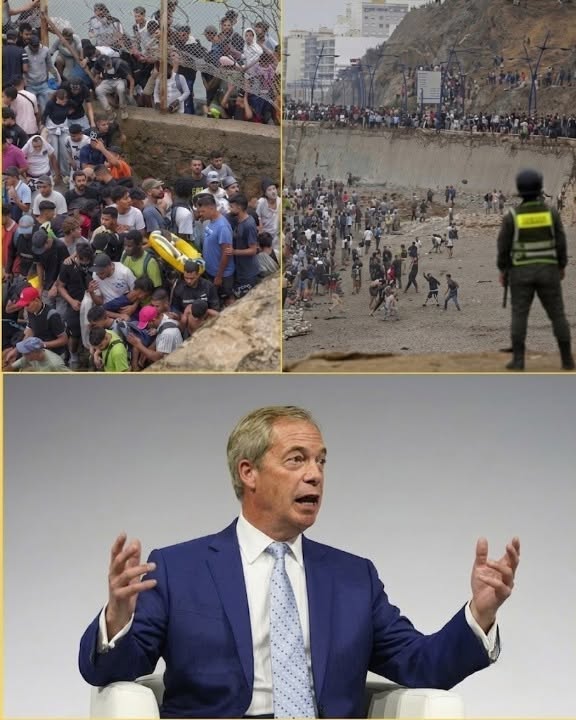
The rallies, organized by various city councils and opposition parties, reflect growing domestic unrest following an influx of migrants last month. More than 72,000 people reportedly breached the border into Ceuta from neighboring Morocco, an event that local residents and political figures have characterized as an invasion .

The largest of Wednesday’s protests occurred in the capital, Madrid, where an estimated 50,000 people gathered. Addressing the crowd, Alberto Núñez Feijóo, leader of the conservative People’s Party (PP), sharply criticized the government’s response, stating that a Spanish city had been “invaded, occupied,” and claimed that this occurred “with the knowledge of the government of Spain” .
Santiago Abascal, leader of the right-wing Vox party, echoed these sentiments, accusing Prime Minister Sánchez of acting as a “lackey of the Moroccan regime” .
The situation in Ceuta remains highly volatile. While authorities have returned a majority of the migrants to Morocco, thousands remain in the enclave, residing in makeshift camps . The sustained presence of the migrants has led to severe tension within the territory. Local reports indicate that furious residents have torched several of the makeshift camps as unrest grips the area. Furthermore, opposition parties allege that residents of Ceuta have been abandoned by the central government amidst reports of daily sexual assaults since the initial influx .

The protests in Ceuta have become a near-daily occurrence, mirroring the broader national demonstrations that spilled onto the mainland, where riot police reportedly deployed tear gas to disperse crowds .
The political pressure on Sánchez is compounded by a report compiled by Spanish police, which accuses Moroccan authorities of “total permissiveness” and effectively encouraging the border breach . However, Sánchez has previously insisted that Moroccan officials were not to blame for the unprecedented event .
The prime minister’s immigration policies are heavily scrutinised by the protesters. Earlier this year, the Sánchez government approved plans to grant legal status to approximately 500,000 undocumented migrants already residing in Spain, a move Sánchez defended in April as “an act of justice and a necessity for the country” . Opponents cite this mass legalization as a core reason for the current discontent, arguing it incentivizes further illegal migration.
International reactions are also emerging. In a snippet from an upcoming interview with GB News, former US President Donald Trump commented on the situation, suggesting that the crisis could lead to Spain becoming a “ruined country” and describing the visual of “thousands of people just bum-rushing your country” as unprecedented and “very sad to watch” .
As protests continue to spread across the mainland and within Ceuta, the Sánchez government faces an escalating political crisis, balancing intense domestic opposition against complex diplomatic relations with Morocco.