Poland’s lower house just backed a bill that could shield soldiers, police and border guards from prosecution when they fire live rounds at the Belarus border.
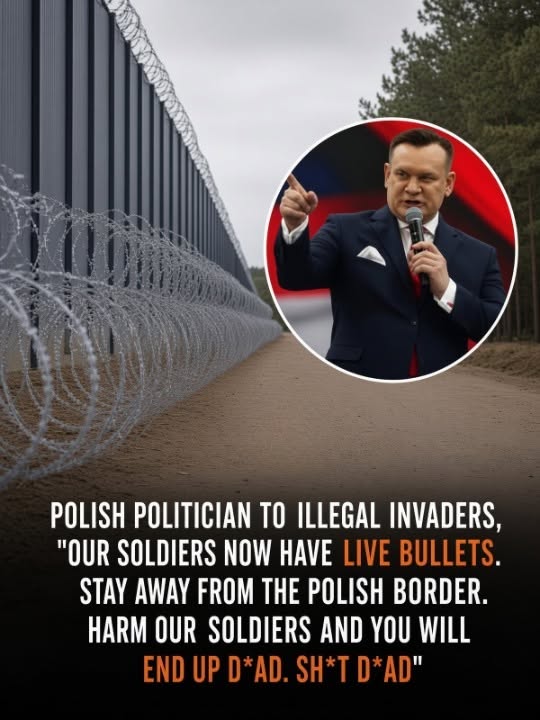
Poland’s Border Dilemma: When Does Defending the Frontier Go Too Far?
Deep in the forests and marshlands along Poland’s eastern frontier, the border with Belarus has become something far more complicated than a line on a map. It is now a security zone, a migration route, a geopolitical pressure point and, increasingly, a testing ground for one of the most difficult questions facing modern European democracies: How much force should the state permit in the name of defending its territory?
That debate exploded into the Polish parliament in the summer of 2024.
On July 12, Poland’s lower house, the Sejm, overwhelmingly backed legislation designed to give soldiers, police officers and border guards greater legal protection when using firearms during certain security operations. The proposal emerged amid growing concern that personnel defending Poland’s border could face criminal prosecution even when confronting violent or rapidly escalating situations. Parliamentary documents show the legislation formed part of a broader package intended to strengthen the ability of the armed forces, police and Border Guard to respond to threats to state security.
The legislation did not simply give officers an unrestricted right to shoot. It established circumstances in which personnel could avoid criminal liability for actions involving weapons or force when defending the frontier, particularly during direct attacks, threats to life or health, and situations demanding immediate intervention. The law also maintained the principle that weapons should generally be treated as an ultimate measure where less severe means cannot achieve the necessary objective.
For supporters, however, the legal language was only part of the story.
The real argument was being made hundreds of kilometres away from parliament, at the Belarusian border itself.
A Border That No Longer Feels Routine
Since 2021, Poland and the European Union have accused Belarusian authorities of facilitating the movement of migrants from the Middle East, Africa and Asia toward the EU’s eastern borders. Warsaw has described the pressure as part of a deliberate “hybrid” campaign intended to destabilize Poland and other European countries.
Belarus has rejected accusations surrounding its role, but there is little dispute that the frontier has become extraordinarily tense.
Poland constructed a metal barrier stretching roughly 190 kilometres along parts of the border and deployed thousands of soldiers, police officers and border guards to the region. By mid-2024, Polish authorities were reporting thousands of attempted irregular crossings, often involving groups attempting to breach or circumvent the barrier.
Then came the incident that transformed an already heated debate into something deeply personal.
In May 2024, 21-year-old Polish soldier Mateusz Sitek was attacked while serving near Dubicze Cerkiewne. Polish authorities said a migrant reached through the metal border barrier and stabbed him in the chest. Sitek died days later from his injuries.
His death sent shockwaves through Poland.
Suddenly, the argument over firearms was no longer an abstract dispute involving statutes, human-rights conventions and parliamentary procedure. Soldiers could point to the death of one of their own.
Prime Minister Donald Tusk responded forcefully, insisting that personnel defending the border had the right to protect both Poland’s territory and themselves. Additional forces were sent to the region, and the government moved toward tougher security measures.
Another controversy added fuel to the political fire. Polish soldiers had been detained after firing warning shots while confronting people crossing from Belarus, prompting outrage among politicians and sections of the public who believed frontline troops were being forced to choose between defending the border and protecting themselves from prosecution. Amnesty International noted that the firearms legislation followed the detention of soldiers accused of exceeding their authority after using live ammunition.
To supporters of the new law, that was precisely the problem.
A soldier facing an aggressive group at a border fence has seconds—not hours—to decide whether someone is carrying a weapon, whether a colleague is in danger, and whether hesitation could cost a life.
Lawmakers sought to give those soldiers greater confidence that a split-second decision made under genuine threat would not automatically end with them sitting in a courtroom.
But critics saw something much more dangerous.
The Fear of a Legal Grey Zone
Human-rights organizations warned that protecting officers from excessive prosecution could easily turn into protecting them from legitimate accountability.
Amnesty International argued that the proposed rules were too broad and risked undermining established international principles governing firearms. The organization stressed that force must be necessary and proportionate and that firearms should face especially strict limitations because of their potentially lethal consequences.
The Council of Europe’s Commissioner for Human Rights, Michael O’Flaherty, raised similar concerns. In a letter to Polish authorities, he warned that the legislation could discourage personnel from respecting proportionality rules and could contribute to a wider lack of accountability, particularly in a border area already shielded from ordinary public scrutiny by restrictions on access.
That concern matters because the Belarusian frontier is not populated exclusively by violent attackers.
It is also traveled by asylum seekers, families, smugglers, vulnerable migrants and people whose individual circumstances may be impossible to determine during chaotic encounters.
Humanitarian organizations have repeatedly accused Polish forces of conducting pushbacks—sending migrants back toward Belarus without allowing meaningful access to asylum procedures. The Polish government has defended its border policies as a necessary response to an orchestrated security challenge and says the border situation cannot be treated like ordinary migration.
The competing narratives could hardly be further apart.
One side sees armed Polish personnel confronted by organized groups, smugglers, hostile Belarusian tactics and sometimes weapons.
The other sees frightened human beings trapped between two states, potentially facing armed officers whose legal exposure for using force has been reduced.
Both realities can exist at the same border.
That is precisely what makes the issue so difficult.
Security Without Impunity
The legislation ultimately continued through parliament and became law. President Andrzej Duda signed the package on August 14, 2024, after both parliamentary chambers approved it. The presidential office described its purpose as improving the ability of Poland’s armed forces, police and Border Guard to operate during threats to national security while providing personnel with additional legal protection.
But passing a law does not settle the deeper argument.
There is a legitimate principle behind Poland’s position: no democracy can reasonably ask soldiers to defend a dangerous border while making them believe that every defensive use of force could destroy their careers.
Yet there is an equally important principle on the other side: the uniform of the state cannot become immunity from scrutiny.
The strongest border policy should therefore require both operational freedom and rigorous accountability.
An officer facing an imminent threat should be able to defend himself, his colleagues and civilians. But every serious use of firearms should remain independently reviewable. Body-camera footage, incident reports, forensic evidence and outside investigation should determine whether force was necessary and proportionate.
That is not weakness.
It is the distinction between lawful force and unchecked force.
Poland’s Belarus frontier is unlikely to become politically quiet anytime soon. Warsaw continues to view the border as part of a broader confrontation involving Belarus and Russia, while humanitarian organizations continue to warn that migrants can become casualties of policies designed primarily around deterrence and national security.
And so the forests remain a place where Europe’s biggest questions collide.
A soldier standing behind a barrier has a right to survive his shift.
A migrant approaching that barrier does not surrender every human right simply by being there.
A government has a duty to protect its frontier.
And a democracy has a duty to ensure that the power to use lethal force never becomes the power to act without accountability.
The line, then, should not be drawn between border security and human rights as if countries must choose one or the other.
The real line must be drawn between force that is necessary to stop a genuine threat—and force that cannot be justified once the immediate danger has passed.
On Poland’s eastern frontier, that distinction may sometimes have to be made in seconds.
But protecting it may define what kind of democracy remains once the crisis is over.