PORT OF DOVER BROUGHT TO A STANDSTILL


Dover Gridlock: Masked Protesters Block Major Roads as Ferry Gateway Is Hit by Disruption
DOVER, England — Britain’s busiest ferry gateway became the scene of dramatic disruption after masked protesters reportedly moved onto major roads around the Port of Dover, blocking traffic and leaving ferry passengers, lorry drivers and local motorists caught in an escalating public-order incident.
Protesters dressed predominantly in black, some wearing balaclavas, were reported to have begun gathering from around 6.45am, before spreading onto important routes serving the port and the surrounding town.
Police were deployed as demonstrators occupied roads and vehicles began backing up. The Port of Dover warned that routes into and out of both the port and town were being affected, raising immediate concerns for passengers attempting to reach ferries and freight drivers using one of Britain’s most important trade corridors.
For those trapped in the disruption, it was more than another political demonstration.
Dover — a crucial artery connecting Britain with continental Europe — had suddenly become the latest front line in the country’s increasingly heated debate over migration and border control.
An Early-Morning Protest Hits a Critical Gateway
The timing could hardly have been more disruptive.
According to accounts of the demonstration, protesters began appearing shortly before 7am, as commercial traffic and passenger vehicles were moving towards the Channel.
Some demonstrators reportedly concealed their faces behind balaclavas and dark clothing as groups positioned themselves around key roads.
As the protest developed, traffic disruption spread.
Drivers heading towards ferry terminals faced uncertainty over whether they would reach scheduled departures, while hauliers faced the prospect of delays on a route essential to Britain’s supply chains.
The Port of Dover urged travellers to remain alert to the situation as access routes were affected.
The precise duration and full economic impact of the disruption would require assessment after normal traffic flows resumed. But even temporary interference around Dover can create consequences far beyond the immediate protest site.
This is not an ordinary stretch of road.
It is one of Britain’s most important international transport links.
Why Dover Matters So Much
Millions of passengers travel through Dover, while vast quantities of freight move between Britain and continental Europe through the port.
The Dover-Calais route represents one of the shortest and most heavily used crossings of the English Channel.
When traffic stops here, the effects can spread rapidly.
Lorries can accumulate on surrounding roads. Ferry passengers can miss crossings. Businesses relying on time-sensitive deliveries can face delays. Police and transport authorities may be forced to introduce traffic-management measures across wider parts of Kent.
But Dover carries political significance too.
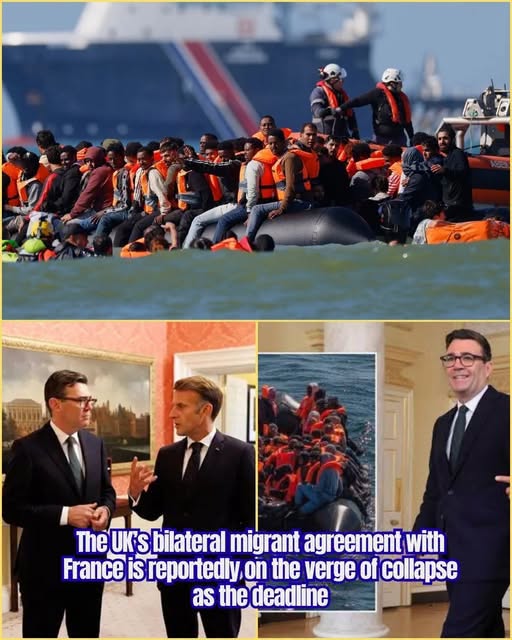
During the years of intense controversy surrounding small-boat crossings, the town has become one of the most recognisable symbols of Britain’s struggle to control irregular migration across the Channel.
Images of migrants being brought ashore, Border Force vessels operating in the Channel and politicians visiting the Kent coastline have repeatedly placed Dover at the heart of the national immigration debate.
For protesters demanding tougher border policies, that symbolism makes the town an obvious target.
Migration Anger Moves From Politics to the Streets
Anti-migration campaigners have repeatedly accused successive governments of failing to stop people reaching Britain in small boats.
The crossings have become one of the most politically damaging aspects of Britain’s asylum system.
Governments have promised tougher enforcement. Opposition politicians have proposed their own solutions. Arguments have erupted over deportations, international law, detention facilities, asylum hotels and cooperation with France.
Yet crossings have continued.
For critics of government policy, that has become evidence of a system that is failing.
Supporters of tougher measures argue that Britain must strengthen deterrence, speed up removals of people whose asylum claims are rejected and prevent organised smuggling networks from exploiting migrants attempting the dangerous journey.
Human-rights and refugee organisations counter that the crisis cannot be reduced simply to enforcement. They argue that governments must also address asylum-processing delays, smuggling networks and the availability of safe and legal routes for people with legitimate protection claims.
On the streets of Dover, however, those complicated policy arguments can quickly become something much more immediate.
A blocked road requires a police response.
Balaclavas Raise the Temperature
The reported presence of masked protesters inevitably attracted attention.
Wearing a balaclava does not in itself prove criminal intent, and individuals may conceal their identities at demonstrations for various reasons.
But large groups of masked participants can change the atmosphere surrounding a protest, particularly when roads are being obstructed and police officers are attempting to maintain public order.
For officers, appearance alone cannot determine who has committed an offence.
Behaviour matters.
Police must simultaneously protect lawful protest, maintain access to critical infrastructure and intervene where conduct crosses legal boundaries.
That creates a difficult operational challenge.
Move too aggressively and police can be accused of suppressing legitimate political expression.
Respond too slowly to serious obstruction and authorities can face accusations that they have allowed demonstrators to paralyse public infrastructure.
At Dover, where disruption can rapidly affect thousands of travellers and freight movements, those decisions become especially sensitive.
Passengers and Lorry Drivers Caught in the Middle
Away from the political slogans, ordinary travellers were confronted with the practical consequences.
A family heading for a ferry does not control immigration policy.
A lorry driver transporting goods across the Channel cannot resolve Britain’s asylum crisis.
Local residents trying to reach work or school have little influence over negotiations between London and Paris.
Yet they can become the people who experience the immediate impact when demonstrations target major transport routes.
That is one reason road-blocking protests — regardless of the political cause behind them — generate such intense reactions.
Supporters may argue that disruption is precisely the point: demonstrations that inconvenience nobody are easier for politicians to ignore.
Critics respond that deliberately obstructing people who have no role in the disputed policy risks alienating the very public protesters hope to persuade.
It is an argument Britain has encountered repeatedly during demonstrations involving environmental, political and social causes.
Now it is playing out around migration.
Police Face a Delicate Test
The policing operation also highlights a broader challenge facing Britain.
Political demonstrations have become increasingly confrontational in recent years, and officers frequently find themselves standing between groups with radically different views.
Authorities must distinguish between peaceful protest, civil disobedience and criminal behaviour.
Road obstruction can potentially lead to police intervention depending on the circumstances and applicable law. Violence, threats and damage are separate matters entirely.
The presence of strategically important infrastructure makes Dover particularly sensitive.
Keeping the port functioning is not simply about convenience. The crossing is part of the country’s economic infrastructure, meaning prolonged disruption can affect freight movements and businesses far beyond Kent.
Dover Becomes a Political Symbol Again
Whatever the eventual scale of the protest, the scenes carry a political message that will be difficult for Westminster to ignore.
Public frustration over migration remains intense.
The debate is no longer confined to parliamentary speeches, election manifestos or television studios. It is increasingly visible outside asylum accommodation, in town centres and around locations associated with Britain’s borders.
Dover stands above almost all of them symbolically.
To supporters of tougher immigration controls, the white cliffs represent the frontier politicians have promised to defend.
To humanitarian organisations, the Channel represents a dangerous migration route on which desperate people continue to risk their lives.
To the government, it represents an extraordinarily difficult combination of border enforcement, international diplomacy and asylum law.
And to the people who actually live in Dover, it is their town.
A Warning From Britain’s Front Door
The most significant question may therefore not be how many hours traffic was disrupted.
It is what the scenes say about the political pressure building around Britain’s migration debate.
Masked protesters occupying roads outside a major international port create dramatic images, but behind those images lies a problem successive governments have struggled to solve.
How can Britain prevent dangerous and unauthorised Channel crossings while fulfilling its legal obligations toward people entitled to protection?
How quickly should unsuccessful asylum seekers be removed?
How far should authorities go in restricting demonstrations that interfere with critical infrastructure?
And at what point does political frustration become unacceptable disruption?
Those questions will remain long after Dover’s traffic begins moving normally again.
For passengers staring at stationary vehicles, lorry drivers watching delivery schedules slip away and police officers confronting demonstrators on the road, however, the consequences were immediate.
Once again, Dover had become more than Britain’s gateway to Europe.
It had become the stage on which one of the country’s deepest political arguments was being fought — not across the benches of Westminster, but on the roads leading directly to Britain’s front door.